Tag Archives: Barrett Brown journalist

Hunting Down Hackers in US: Barrett Brown

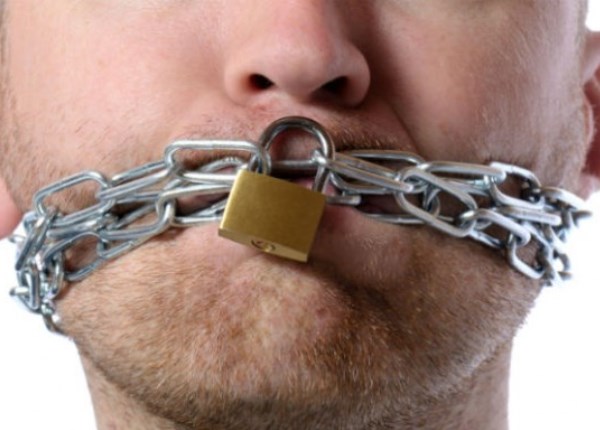
A federal court in Dallas, Texas has imposed a gag order on the jailed activist-journalist Barrett Brown [pdf] and his legal team that prevents them from talking to the media about his prosecution in which he faces up to 100 years in prison for alleged offences relating to his work exposing online surveillance.

The court order, imposed by the district court for the northern district of Texas at the request of the US government, prohibits the defendant and his defence team, as well as prosecutors, from making “any statement to members of any television, radio, newspaper, magazine, internet (including, but not limited to, bloggers), or other media organization about this case, other than matters of public interest.”  It goes on to warn Brown and his lawyers that “no person covered by this order shall circumvent its effect by actions that indirectly, but deliberately, bring about a violation of this order”…

But media observers seen the hearing in the opposite light: as the latest in a succession of prosecutorial moves under the Obama administration to crack-down on investigative journalism, official leaking, hacking and online activism.Brown’s lead defence attorney, Ahmed Ghappour, has countered in court filings, the most recent of which was lodged with the court Wednesday, that the government’s request for a gag order is unfounded as it is based on false accusations and misrepresentations.

The lawyer says the gagging order is a breach of Brown’s first amendment rights as an author who continues to write from his prison cell on issues unconnected to his own case for the Guardian and other media outlets.In his memo to the court for today’s hearing, Ghappour writes that Brown’s July article for the Guardian “contains no statements whatsoever about this trial, the charges underlying the indictment, the alleged acts underlying the three indictments against Mr Brown, or even facts arguably related to this prosecution.”

Brown, 32, was arrested in Dallas on 12 September last year and has been in prison ever since, charged with 17 counts that include threatening a federal agent, concealing evidence and disseminating stolen information. He faces a possible maximum sentence of 100 years in custody.  Before his arrest, Brown became known as a specialist writer on the US government’s use of private military contractors and cybersecurity firms to conduct online snooping on the public. He was regularly quoted by the media as an expert on Anonymous, the loose affiliation of hackers that caused headaches for the US government and several corporate giants, and was frequently referred to as the group’s spokesperson, though he says the connection was overblown.

In 2011, through the research site he set up called Project PM, he investigated thousands of emails that had been hacked by Anonymous from the computer system of a private security firm, HB Gary Federal. His work helped to reveal that the firm had proposed a dark arts effort to besmirch the reputations of WikiLeaks supporters and prominent liberal journalists and activists including the Guardian’s Glenn Greenwald.

In 2012, Brown similarly pored over millions of emails hacked by Anonymous from the private intelligence company Stratfor. It was during his work on the Stratfor hack that Brown committed his most serious offence, according to US prosecutors – he posted a link in a chat room that connected users to Stratfor documents that had been released online. The released documents included a list of email addresses and credit card numbers belonging to Stratfor subscribers. For posting that link, Brown is accused of disseminating stolen information – a charge with media commentators have warned criminalises the very act of linking.

As Geoffrey King, Internet Advocacy Coordinator for the Committee to Protect Journalists, has put it, the Barrett Brown case “could criminalize the routine journalistic practice of linking to documents publicly available on the internet, which would seem to be protected by the first amendment to the US constitution under current doctrine”.

Excerpt, Ed Pilkington, US stops jailed activist Barrett Brown from discussing leaks prosecution, Guardian, Sept. 4, 2014
 

How the US Persecutes Hacktivists

The government is treating hackers who try to make a political point as serious threats.   [T]he state has come down on them with remarkable force. This is in large measure evidence of how poignant, and troubling, their message has been.

Hacktivists, roughly speaking, are individuals who redeploy and repurpose technology for social causes. In this sense they are different from garden-variety hackers out to enrich only themselves. People like Steve Jobs, Steve Wozniak and Bill Gates began their careers as hackers — they repurposed technology, but without any particular political agenda. In the case of Mr. Jobs and Mr. Wozniak, they built and sold “blue boxes,” devices that allowed users to defraud the phone company. Today, of course, these people are establishment heroes, and the contrast between their almost exalted state and the scorn being heaped upon hacktivists is instructive.

For some reason, it seems that the government considers hackers who are out to line their pockets less of a threat than those who are trying to make a political point. Consider the case of Andrew Auernheimer, better known as “Weev.” When Weev discovered in 2010 that AT&T had left private information about its customers vulnerable on the Internet, he and a colleague wrote a script to access it. Technically, he did not “hack” anything; he merely executed a simple version of what Google Web crawlers do every second of every day — sequentially walk through public URLs and extract the content. When he got the information (the e-mail addresses of 114,000 iPad users, including Mayor Michael Bloomberg and Rahm Emanuel, then the White House chief of staff), Weev did not try to profit from it; he notified the blog Gawker of the security hole.  For this service Weev might have asked for free dinners for life, but instead he was recently sentenced to 41 months in prison and ordered to pay a fine of more than $73,000 in damages to AT&T to cover the cost of notifying its customers of its own security failure.  When the federal judge Susan Wigenton sentenced Weev on March 18, she described him with prose that could have been lifted from the prosecutor Meletus in Plato’s “Apology.”

“You consider yourself a hero of sorts,” she said, and noted that Weev’s “special skills” in computer coding called for a more draconian sentence. I was reminded of a line from an essay written in 1986 by a hacker called the Mentor: “My crime is that of outsmarting you, something that you will never forgive me for.”  When offered the chance to speak, Weev, like Socrates, did not back down: “I don’t come here today to ask for forgiveness. I’m here to tell this court, if it has any foresight at all, that it should be thinking about what it can do to make amends to me for the harm and the violence that has been inflicted upon my life.”  He then went on to heap scorn upon the law being used to put him away — the Computer Fraud and Abuse Act, the same law that prosecutors used to go after the 26-year-old Internet activist Aaron Swartz, who committed suicide in January.  The law, as interpreted by the prosecutors, makes it a felony to use a computer system for “unintended” applications, or even violate a terms-of-service agreement. That would theoretically make a felon out of anyone who lied about their age or weight on Match.com.

The case of Weev is not an isolated one. Barrett Brown, a journalist who had achieved some level of notoriety as the “the former unofficial not-spokesman for Anonymous,” the hacktivist group, now sits in federal custody in Texas. Mr. Brown came under the scrutiny of the authorities when he began poring over documents that had been released in the hack of two private security companies, HBGary Federal and Stratfor. Mr. Brown did not take part in the hacks, but he did become obsessed with the contents that emerged from them — in particular the extracted documents showed that private security contractors were being hired by the United States government to develop strategies for undermining protesters and journalists, including Glenn Greenwald, a columnist for Salon. Since the cache was enormous, Mr. Brown thought he might crowdsource the effort and copied and pasted the URL from an Anonymous chat server to a Web site called Project PM, which was under his control…..

Other hacktivists have felt the force of the United States government in recent months, and all reflect an alarming contrast between the severity of the punishment and the flimsiness of the actual charges. The case of Aaron Swartz has been well documented. Jeremy Hammond, who reportedly played a direct role in the Stratfor and HBGary hacks, has been in jail for more than a year awaiting trial. Mercedes Haefer, a journalism student at the University of Nevada, Las Vegas, faces charges for hosting an Internet Relay Chat channel where an Anonymous denial of service attack was planned. Most recently, Matthew Keys, a 26-year-old social-media editor at Reuters, who allegedly assisted hackers associated with Anonymous (who reportedly then made a prank change to a Los Angeles Times headline), was indicted on federal charges that could result in more than $750,000 in fines and prison time, inciting a new outcry against the law and its overly harsh enforcement. The list goes on.

In a world in which nearly everyone is technically a felon, we rely on the good judgment of prosecutors to decide who should be targets and how hard the law should come down on them. We have thus entered a legal reality not so different from that faced by Socrates when the Thirty Tyrants ruled Athens, and it is a dangerous one. When everyone is guilty of something, those most harshly prosecuted tend to be the ones that are challenging the established order, poking fun at the authorities, speaking truth to power — in other words, the gadflies of our society.

Excerpts, By PETER LUDLOW, Hacktivists as Gadflies, NY Times, April 13, 2013