Tag Archives: Afghanistan civilian casualties

How to Break the Rules without Breaking the Law

In 2009,  coalition casualties in Afghanistan had as much as doubled in the space of a year. Civilian casualties climbed to 2412. It was 2009. Coalition forces had been there since 2001 with no end and, to this point, no real campaign plan in sight…

Chris Masters, who was the only journalist to have been embedded with Australian special forces soldiers (SASR) in Afghanistan, believes a desensitisation occurred within the forces that allegedly allowed a “kill count mentality to develop”…SASR’s sabre squadrons are the tips of a trident of land, air and water operators, with the “wateries” an elite within an elite. And like their US counterparts, the Navy SEALs, unquestionable ability can come tinged with arrogance. In SASR, their rock-star persona did not sit easily with everyone when modesty was supposed to be a core value…

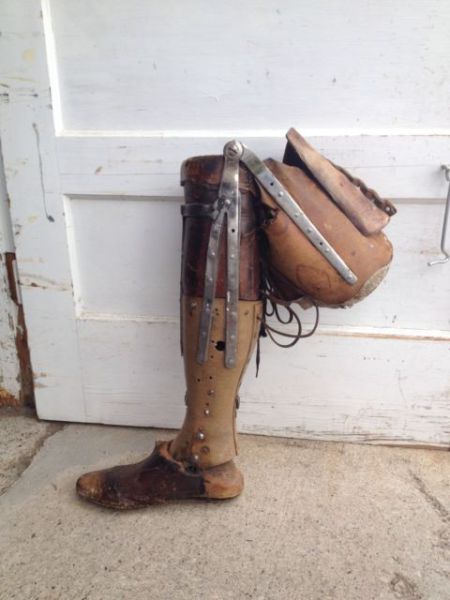
The most prominent allegation is traced to an assault on a compound codenamed Whiskey 108 at Kakarak in Oruzgan on Easter Sunday 2009…As shooting erupted, one operator remembers thinking: “I am going to die today.” Instead, methodically, they closed in on the remaining enemy, killing them one by one.  At this time Australian weapons were again heard firing and soldiers entering the compound saw something hurled from a window. It was an older man with a prosthetic leg, shot and now lying dead. The prosthetic leg was souvenired and returned to Perth to be fashioned into a drinking vessel.  What troubled a range of witnesses was not so much the killing of the men, who whether armed or unarmed were considered Taliban. It was more that the grim task of pulling the trigger had been pushed onto a “rookie”. As one operator told me: “If s— needs to be done, do it yourself.”

In rotations to come, the concept of blooding became well known. What became more disturbing was a suspicion the practise was not only about a first kill but also executing prisoners. ..What was not thought through was how many of the “blooded rookies” would be haunted well into the future by what was done…Soldiers began to refer to some of their members having gone “up the Congo”, into the moral wilderness of novelist Joseph Conrad’s Heart of Darkness. Numerous witnesses have spoken of one SASR team posting a kill board on their door. The patrol commander was heard talking about needing more kills and subsequently of the goal being met….

As the mission wore on, further alleged breaches of the rules of armed conflict began to emerge, conspicuously contained to Special Forces and most particularly to SASR. The “Who Dares Wins” ethos of the regiment encourages the testing of boundaries. As they often tell themselves, “you break the rules but not the law”.

Exceprts from Chris Masters, Australia’s ugly turn in Afghanistan, Sydney Morning Herald, June 8, 2018
Trapped to Death

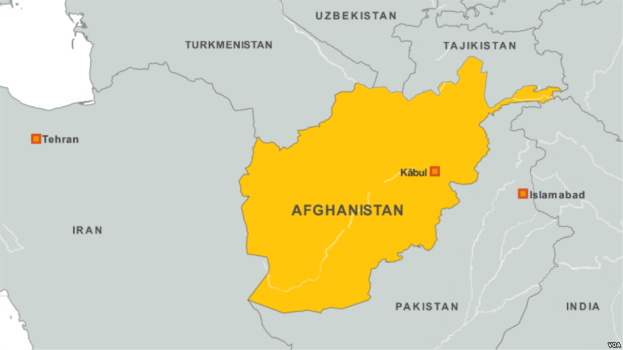
By the start of 2017 the Taliban was pushing hard to take Sangin city’s district centre, Afghanistan, a fortified compound which housed the local security and administrative officials, just a few miles from Hamid Gul’s family home. The compound was the only thing stopping the Taliban from claiming the whole district as their own. The US, which had lost at least 70 of its own troops keeping Sangin out of insurgent hands over the years, scrambled to respond with scores of airstrikes.  Hamid was convinced that his family were still safer behind Taliban lines than in Laskhar Gah, one of the Taliban’s prime targets. But on the morning of February 10 2017, he got an unexpected phone call from a neighbour in Sangin: the family’s house had been flattened.  In that one night Hamid Gul lost his 50 year-old mother, Bibi Bakhtawara, six brothers and a sister. All seven children were under 16 years of age. Bibi Rahmania, his niece, also died. She was just two years old.

By the end of those three days, five women and 19 children were dead
Hamid was not the only person given devastating news on that day. On the same night, a few hours later, a second civilian house, just a few miles away from his own, was also hit. The following night a third one was struck.

To this day, there is no consensus about what happened to those three houses and why. What is clear, however, is that by the end of those three days in early February five women and 19 children were dead, among a full toll of 26 civilians, a Bureau investigation has established.

Three local officials interviewed by Bureau reporters on the ground claimed US airstrikes had destroyed the houses and killed their inhabitants. The United Nations (UN) said the same, in its biannual accounting of Afghan civilians killed in the war, released in July 2017, adding that there appeared to have been no fighting in the area at the time, meaning the attacks may have been pre-planned.

A spokesperson for Resolute Support, the US-led Nato mission in Afghanistan, told the Bureau that after four investigations the organisation could not confirm or deny responsibility for killing the civilians, though he pushed back strongly against the UN’s claims that there was no fighting in the villages at the time. Resolute Support has officially concluded the case as “disputed”, one of four categories for recording allegations of civilian casualties. It was used in this case because Resolute Support cannot decide if insurgents or the Afghan National Security Forces (ANSF) were responsible for the casualties, the spokesperson told the Bureau.

The fact that no-one has taken responsibility for the deaths of 24 women and children offers an insight into the lack of accountability of America’s longest-running conflict, which it now fights largely from the air under opaque rules of engagement against 20-odd armed groups.

Excerpts from  Caught in the crossfire
Civilians are bearing the brunt of conflict in Afghanistan, Bureau of Investigative Journalism, Sept. 30, 2017

Never Ending – War in Afghanistan

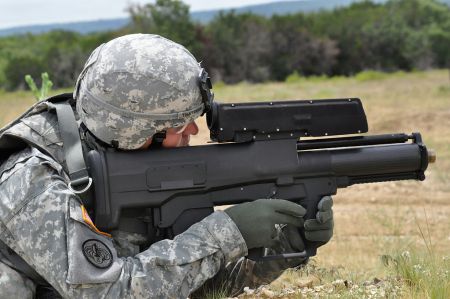
Months after President Obama formally declared that the United States’ long war against the Taliban was over in Afghanistan, the American military is regularly conducting airstrikes against low-level insurgent forces and sending Special Operations troops directly into harm’s way under the guise of “training and advising.”…[I]nterviews with American and Western officials in Kabul and Washington offer a picture of a more aggressive range of military operations against the Taliban in recent months, as the insurgents have continued to make gains against struggling government forces.

Rather than ending the American war in Afghanistan, the military is using its wide latitude to instead transform it into a continuing campaign of airstrikes — mostly drone missions — and Special Operations raids that have in practice stretched or broken the parameters publicly described by the White House.

Western and military officials said that American and NATO forces conducted 52 airstrikes in March 2015 months after the official end of the combat mission. Many of these air assaults, which totaled 128 in the first three months of 2015, targeted low- to midlevel Taliban commanders in the most remote reaches of Afghanistan.,,,“They are putting guys on the ground in places to justify the airstrikes,” one of the officials said. “It’s not force protection when they are going on the offensive.”…Gen. John F. Campbell, vehemently denied accusations that he was putting troops into harm’s way just to enable more airstrikes.….“Washington is going to have to say what they say politically for many different audiences, and I have no issue with that,” General Campbell said. “I understand my authorities and what I have to do with Afghanistan’s forces and my forces. And if that doesn’t sell good for a media piece then, again, I can’t worry about it.”

The operations are continuing during a troubling stretch for the Afghan security forces, as the Taliban are continuing to make gains…Mr. Ghani, who has yet to name a minister of defense, has in many ways outsourced much of the running of the war to General Campbell.

Excerpts from AZAM AHMED and JOSEPH GOLDSTEIN, Taliban Gains Pull U.S. Units Back Into Fight in Afghanistan, NY Times, Apr. 29, 2015