Tag Archives: al-Qaida

The Jihadist View of the World

Al-Qaeda.., including militia groups under the umbrella name of Ansar al-Sharia (Partisans of Islamic Law)in Yemen, Libya, Tunisia, Mali and Egypt that both compete and co-operate with the organisation, have recovered momentum and self-confidence as the hopes invested in the Arab spring have withered. Indeed, the reverses of the Arab spring have been a boon to it.Take Egypt. After the coup that toppled President Muhammad Morsi in July, Mr Zawahiri posted a 15-minute message on jihadist websites arguing that “the crusaders” in the West and their allies in the Arab world will never allow the establishment of an Islamist state…Look to the biggest gift the Arab spring has given al-Qaeda: the increasingly sectarian civil war in Syria.  The prospect of overthrowing Bashar Assad is catnip to jihadists; his Alawite regime is an heretical abomination to the hyper-orthodox Salafis from which al-Qaeda draws its support. Western intelligence thinks most of Syria’s effective rebel militias may now be jihadist, with thousands of fighters from other Muslim countries and hundreds from Europe, especially Britain, France and the Netherlands.

The Islamic State of Iraq and al-Sham (ISIS), formerly al-Qaeda in Iraq (AQI), has recently pushed into eastern Syria from Iraq, following a resurgence there that is part of the more general pattern of ineradicability…Al-Qaeda wants to bring Iraq, Syria and Lebanon together into a single “caliphate”, and ISIS uses foreign fighters drawn to Syria on both sides of the porous border with Iraq. It has also tried to merge with Jabhat al-Nusra (JAN), one of the most militarily formidable rebel militias (and the one with which Mr Qunaibi is associated). …For the time being, ISIS and JAN are focused entirely on the would-be caliphate of the Levant. Most of the network’s affiliates are similarly engaged in regional struggles, the most extensive being that of al-Qaeda in the Islamic Maghreb, the north African branch. AQIM is seeking to make use of Libya’s post-revolutionary chaos, and weapons from Muammar Qaddafi’s former arsenal, to create an “arc of instability” across the Sahara and the Sahel. It provides help and advice to jihadist organisations from Boko Haram in Nigeria to the Shabab in Somalia.In 2012 AQIM commanders allied to an indigenous insurgent group, Ansar Eddine, took control of the northern half of Mali. They ruthlessly implemented sharia law and picked an unnecessary fight with the National Movement for the Liberation of Azawad, a grouping of rebel Tuaregs…

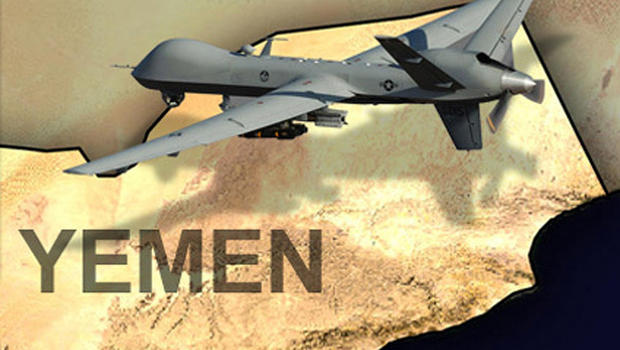
An intense drone campaign has killed several of AQAP’s (al-Qaeda in the Arabian Peninsula) senior leaders; its second-in-command, Said al-Shihri, died on July 16th. Yemeni government operations have driven it out of some of the southern tribal areas it overran in 2011. But it has lost none of its ambition….Bruce Riedel, who has advised four presidents and is now at the Saban Centre for Middle East Policy in Washington, DC, recently warned that al-Qaeda in Pakistan remains embedded in a network of local support groups from the Taliban to Lashkar-e-Taiba. After the departure of NATO combat forces in 2014 it may be able to regenerate itself, rather as ISIS did in Iraq….Thomas Sanderson of the Centre for Strategic and International Studies, also in Washington, says al-Qaeda and its allies in Pakistan are weaving a narrative that equates America’s post-2014 withdrawal with the mujahideen defeat of the Soviet Union, another superpower with feet of clay, 25 years earlier…

One counter-terrorism intelligence source recently observed: “Tactically, we may have defeated the central leadership, but strategically, they are winning.”  While attacks on the far enemy are important both as a deterrent and as a source of jihadist inspiration, they are not al-Qaeda’s main purpose. Its overriding aim remains, as it has been since bin Laden saw the retreat of the Soviet Union, the creation of a new caliphate across the Islamic world based on unswerving adherence to sharia law. That requires the corrupting influence of the “Zionist-Crusader alliance” in the region to be extirpated and all apostate Muslim governments removed.

Seen from that point of view, things are not going badly. Al-Qaeda believes America is in retreat not just in Afghanistan but also across the Middle East. The poisoning of the Arab spring has given it new purpose and ideological momentum. Al-Qaeda itself may be divided and in some places depleted. It may be shunned by some with similar ideologies, and its affiliates may increasingly ignore its ageing leadership. But the Salafi jihadist view of the world that al-Qaeda promotes and fights for has never had greater traction.

Excerpts, The state of al-Qaeda: The unquenchable fire, Economist. Sept. 28, 2013, at 21
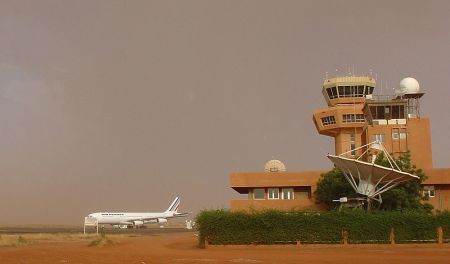
Drone War Moves to West Africa

The newest outpost in the US government’s empire of drone bases sits behind a razor-wire-topped wall outside Niger’s capital Niamey.  The US air force began flying a handful of unarmed Predator drones from here last month (Feb. 2013). The drones emerge sporadically from a borrowed hangar and soar north in search of al-Qaida fighters and guerrillas from other groups hiding in the region’s deserts and hills.  The harsh terrain of north and west Africa is rapidly emerging as yet another front in the long-running US war against terrorist networks, a conflict that has fuelled a revolution in drone warfare.

Since taking office in 2009, President Barack Obama has relied heavily on drones for operations, both declared and covert, in Afghanistan, Iraq, Pakistan, Yemen, Libya and Somalia. US drones also fly from allied bases in Turkey, Italy, Saudi Arabia, Qatar, the United Arab Emirates and the Philippines.  Now they are becoming a fixture in Africa. The US military has built a major drone hub in Djibouti, on the Horn of Africa, and flies unarmed Reaper drones from Ethiopia. Until recently, it conducted reconnaissance flights over east Africa from the island nation of Seychelles.  The Predator drones in Niger, a landlocked and dirt-poor country, give the Pentagon a strategic foothold in west Africa. Niger shares a long border with Mali, where an al-Qaida affiliate and other Islamist groups have taken root. Niger also borders Libya and Nigeria, which are also struggling to contain armed extremist movements.

Like other US drone bases, the Predator operations in Niger are shrouded in secrecy. The White House announced in February that Obama had deployed about 100 military personnel to Niger on an “intelligence collection” mission, but it did not make any explicit reference to drones. Since then, the defense department has publicly acknowledged the presence of drones here but has revealed little else. The Africa Command, which oversees US military missions on the continent, denied requests from a Washington Post reporter to interview American troops in Niger or to tour the military airfield where the drones are based, near Niamey’s international airport.

Government officials in Niger, a former French colony, were slightly more forthcoming. President Issoufou Mahamadou said his government invited Washington to send surveillance drones because he was worried that the country might not be able to defend its borders from Islamist fighters based in Mali, Libya or Nigeria.  “We welcome the drones,” Mahamadou said in an interview at the presidential palace in Niamey. Citing the “feeble capability” of many west African militaries, he said Niger and its neighbors desperately needed foreign help to track the movements of guerrillas across the Sahara and Sahel, an arid territorial belt that covers much of the region.  “Our countries are like the blind leading the blind,” he said. “We rely on countries like France and the United States. We need co-operation to ensure our security.”  The Predator drones in Niger are unarmed, US officials said, though they have not ruled out equipping the aircraft with Hellfire missiles in the future. For now, the drones are conducting surveillance over Mali and Niger….

But the rules of engagement are blurry. Intelligence gathered by the Predators could indirectly help the French fix targets for airstrikes or prompt Nigerien security forces to take action on their territory.  Moreover, US officials have acknowledged that they could use lethal force under certain circumstances. Last month, army general Martin Dempsey, the chairman of the Joint Chiefs of Staff, told Congress that the US military had designated “a handful of high-value individuals” in north Africa for their suspected connections to al-Qaida, making them potential targets for capture or killing.  The Pentagon declined to say exactly how many Predator aircraft it has sent to Niger or how long it intends to keep them there. But there are signs that the US military wants to establish a long-term presence in west Africa.  After years of negotiations, the Obama administration signed an agreement with Niger in January that provides judicial protection and other safeguards for US troops in the country.  Two US defense officials, speaking on the condition of anonymity to discuss internal planning, said the Pentagon ultimately wants to move the Predators to the Saharan city of Agadez, in northern Niger.  Agadez is closer to parts of southern Algeria and southern Libya where fighters and arms traffickers allied with al-Qaida have taken refuge. The airfield in Agadez, however, is rudimentary and needs improvements before it can host drones, officials said.

Excerpts,Craig Whitlock, Drone warfare: Niger becomes latest frontline in US war on terror, Guardian, Mar. 26, 2013

The CIA Drone Program in Yemen: cover up

A rickety Toyota truck packed with 14 people rumbled down a desert road from the town of Radda, which al-Qaeda militants once controlled. Suddenly a missile hurtled from the sky and flipped the vehicle over.  Chaos. Flames. Corpses. Then, a second missile struck.  Within seconds, 11 of the passengers were dead, including a woman and her 7-year-old daughter. A 12-year-old boy also perished that day, and another man later died from his wounds.

The Yemeni government initially said that those killed were al-Qaeda militants and that its Soviet-era jets had carried out the Sept. 2 attack. But tribal leaders and Yemeni officials would later say that it was an American assault and that all the victims were civilians who lived in a village near Radda, in central Yemen. U.S. officials last week acknowledged for the first time that it was an American strike.  “Their bodies were burning,” recalled Sultan Ahmed Mohammed, 27, who was riding on the hood of the truck and flew headfirst into a sandy expanse. “How could this happen? None of us were al-Qaeda.”

More than three months later, the incident offers a window into the Yemeni government’s efforts to conceal Washington’s mistakes and the unintended consequences of civilian deaths in American air assaults. In this case, the deaths have bolstered the popularity of al-Qaeda in the Arabian Peninsula, the terrorist network’s Yemen affiliate, which has tried to stage attacks on U.S. soil several times.

Furious tribesmen tried to take the bodies to the gates of the presidential residence, forcing the government into the rare position of withdrawing its assertion that militants had been killed. The apparent target, Yemeni officials and tribal leaders said, was a senior regional al-Qaeda leader, Abdelrauf al-Dahab, who was thought to be in a car traveling on the same road.

U.S. airstrikes have killed numerous civilians in Afghanistan, Pakistan and other parts of the world, and those governments have spoken against the attacks. But in Yemen, the weak government has often tried to hide civilian casualties from the public, fearing repercussions in a nation where hostility toward U.S. policies is widespread. It continues to insist in local media reports that its own aging jets attacked the truck.

Meanwhile, the Obama administration has kept silent publicly, neither confirming nor denying any involvement, a standard practice with most U.S. airstrikes in its clandestine counterterrorism fight in this strategic Middle Eastern country.  In response to questions, U.S. officials in Washington, who spoke on the condition of anonymity because of the sensitivity of the matter, said it was a Defense Department aircraft, either a drone or a fixed-wing warplane, that fired on the truck. The Pentagon declined to comment on the incident, as did senior U.S. officials in Yemen and senior counterterrorism officials in Washington.

Since the attack, militants in the tribal areas surrounding Radda have gained more recruits and supporters in their war against the Yemeni government and its key backer, the United States. The two survivors and relatives of six victims, interviewed separately and speaking to a Western journalist about the incident for the first time, expressed willingness to support or even fight alongside AQAP, as the al-Qaeda group is known.  “Our entire village is angry at the government and the Americans,” Mohammed said. “If the Americans are responsible, I would have no choice but to sympathize with al-Qaeda because al-Qaeda is fighting America.”…

After Osama bin Laden’s death last year, Yemen emerged as a key battlefield in the Obama administration’s war on Islamist militancy. AQAP members are among those on a clandestine “kill list” created by the administration to hunt down terrorism suspects. It is a lethal campaign, mostly fueled by unmanned drones, but it also includes fixed-wing aircraft and cruise missiles fired from the sea.  This year, there have been at least 38 U.S. airstrikes in Yemen, according to the Long War Journal, a nonprofit Web site that tracks American drone attacks. That is significantly more than in any year since 2009, when President Obama is thought to have ordered the first drone strike.

The Radda attack was one of the deadliest since a U.S. cruise missile strike in December 2009 killed dozens of civilians, including women and children, in the mountainous region of al-  Majala in southern Yemen. After that attack, many tribesmen in that area became radicalized and joined AQAP.,,,

“The government is trying to kill the case,” said Abdul Rahman Berman, the executive director of the National Organization for Defending Rights and Freedoms, or HOOD, a local human rights group. “The government wants to protect its relations with the U.S.”  After the 2009 strike in al-Majala, the Yemeni government took responsibility for the assault. “We’ll continue saying the bombs are ours, not yours,” Saleh told Gen. David H. Petraeus, who was then the head of U.S. Central Command, according to a U.S. Embassy e-mail leaked by the anti-secrecy Web site WikiLeaks…

On extremist Web sites and Facebook pages, grisly pictures of the attack’s aftermath, with bodies tossed like rag dolls on the road, have been posted, coupled with condemnations of the government and the United States. In Sabool and Radda, youths have vowed to join al-Qaeda to fight the United States.

Excerpts, Sudarsan Raghavan,When U.S. drones kill civilians, Yemen’s government tries to conceal it, Washington Post, Dec. 24, 2012

United States,Taliban, and the spin doctors

Days after deciding to blacklist an insurgent group linked to the Taliban and responsible for some of the deadliest attacks in Afghanistan, Secretary of State Hillary Clinton declined to say whether she also would brand the Taliban a foreign terrorist organization.  Asked in an interview yesterday with Bloomberg Radio if the Taliban — whose government gave sanctuary to Osama bin Laden and his al-Qaeda terror network before the 2001 U.S. military actions — should be blacklisted, Clinton didn’t directly answer.

“You know, we do a very intensive analysis before we designate someone as a foreign terrorist organization,” she said. “We have reached that conclusion about the Haqqani Network, and we think it’s the right decision.”  Clinton’s decision on Sept. 7 to designate as a terrorist organization the Haqqani Network — a militant group with operations in Afghanistan and Pakistan that is closely affiliated with the Afghan branch of the Taliban [or simply another name for Taliban]– came after months of inter-agency debate.  One issue was the potential impact on already difficult relations with Pakistan. The Haqqanis operate from havens in Pakistan’s North Waziristan tribal region with what U.S. officials have said are ties to Pakistan’s intelligence agency.  Clinton said in the interview that blacklisting the Haqqanis wasn’t a message aimed at Pakistan.  “No, it is about squeezing” the Haqqanis, she said.  “It’s part of the continuing effort to try to send a message to them — not to anyone else, but to them — because of the really incredibly damaging attacks they have waged against us, against other targets inside Afghanistan, and it’s important that we use every tool at our disposal to go after them,” she said in the interview in Vladivostok, Russia, at the end of an 11-day trip through the Asia-Pacific.  The U.S. had already slapped the Haqqani group’s leaders with individual sanctions, and has long targeted them in military operations and clandestine drone strikes.Adding the Haqqanis to the group blacklist “gives us much greater reach into any financial assets or fundraising that they may engage in, it gives us better traction against assets that they might own,” Clinton said. “It’s important that we use every tool at our disposal to go after them.”

Though the Haqqanis were behind some of the highest-profile attacks on American and NATO interests in Afghanistan, including a day-long assault last year on the U.S. embassy in Kabul and an attack on NATO headquarters there, the debate on whether to blacklist them involved arguments that doing so might hinder U.S. policy goals.

The decision followed months of discussion within the White House, State Department, Pentagon, Treasury Department, Justice Department and the intelligence community over the merits and the timing of blacklisting the Haqqanis, according to officials from different agencies who spoke on condition of anonymity to discuss internal deliberations.

Opponents of blacklisting the Haqqanis had argued that slapping them with a label might hinder prospects for engaging them in reconciliation talks to take them off the battlefield. The same may be said of the Taliban…Another concern about blacklisting the Haqqanis — which can also be said of the Taliban — is that affixing a terror label to the group may affect U.S. relations with Pakistan. Some U.S. officials, including former chairman of the Joint Chiefs of Staff Admiral Mike Mullen, have said Pakistani intelligence and security forces have aided the Haqqanis in order to wield influence in Afghanistan. Clinton and Defense Secretary Leon Panetta have said Pakistan needs to do more to crack down on the group.  Pakistan also has ties with the Afghan Taliban, whose leadership is based in the Pakistani city of Quetta, according to U.S. intelligence officials.  The U.S. wants Pakistan to use its influence with the Taliban to engage them in serious peace talks with the Afghan government to help bring an end to the 11-year conflict.

Excerpts, Indira A.R. Lakshmanan, Clinton Doesn’t Say If Taliban Should Be on Terror List, BusinessWeek, Sept. 9, 2012