Tag Archives: civil war

Facilitating Genocide

Three non-government organisations (NGOs) filed a lawsuit in Paris against French bank BNP Paribas, alleging it knowingly approved a transfer of $1.3 million from the Rwandan central bank to an arms dealer during the Rwandan genocide in 1994.
More than 800,000 ethnic Tutsis and moderate Hutus were slaughtered during a three-month killing spree by Hutu extremists after a plane carrying the president, Juvenal Habyarimana, was shot down.  The three groups – Sherpa, CPCR (Collective of Civil Parties for Rwanda) and Ibuka France – said their suit accused BNP Paribas of complicity in genocide, crimes against humanity and war crimes. They said a UN arms embargo on Rwanda was in effect at the time of the transfer.

The statement from the NGOs said Hutu colonel Théoneste Bagosora agreed the purchase of 80 tonnes of arms with a dealer on June 17, 1994 and these were delivered to Gisenyi in Rwanda via Goma, a city in the Democratic Republic of Congo. The UN Security Council put an arms embargo in place the previous month.  Bagosora (70) is serving a 35-year sentence for crimes against humanity in connection with the Rwandan genocide.

The NGOs said BNP’s predecessor, Banque Nationale de Paris, which merged with Paribas in 2000 to create BNP Paribas, knowingly accepted the transfer of $1.3 million from its client, the Rwandan central bank, to the arms dealer’s Swiss account.

Excerpts from NGOs file suit alleging BNP Paribas complicity in Rwanda genocide, Reuters, June 30, 2017

South Sudan as a State

“There is no evidence to suggest that more weapons are required in South Sudan for the government to achieve a stable security environment,” the UN monitors said. “Rather, the continued influx of weapons … contributes to spreading instability and the continuation of the conflict.”

They said while Sudan had provided small arms, bullets and logistical support to opposition troops, they “found no evidence to date that Sudan – or any other neighbouring country – has provided heavy weapons … which has limited the opposition’s ability to mount large-scale operations.”

Two truckloads of ammunition were transferred to the capital Juba from Uganda in June 2016, while in 2015 South Sudanese army chief Paul Malong asked a Lebanese company to begin developing a small ‘arms ammunition manufacturing facility in Juba, the monitors said.

A UN peacekeeping mission (UNMISS) has been in South Sudan since the country gained independence from Sudan in 2011.The UN monitors said that in rhetoric and action, government-affiliated forces “have actively threatened the operations and personnel of UNMISS and other UN agencies, and both parties have continued to target humanitarian workers.”

During the violence in July 2016, between 80 and 100 uniformed soldiers overran Juba’s Hotel Terrain compound, home to the staff of international organizations, and in four hours killed an ethnic Nuer journalist and raped at least five foreign aid workers and other staff working at the compound, the monitors said.The monitors said given the number of soldiers involved, the number of items stolen and the systematic damage inflicted, “this attack was well co-ordinated and cannot be considered as an opportunistic act of violence and robbery.”,,,

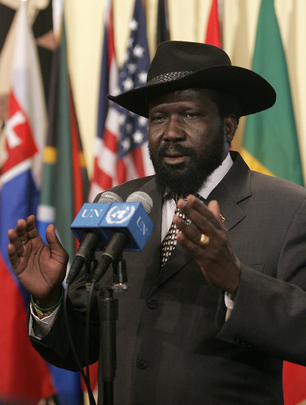
A political rivalry between President Salva Kiir, an ethnic Dinka, and opposition leader Riek Machar, a Nuer, sparked the civil war. The pair signed a shaky peace deal a year ago, but fighting has continued. Machar fled the country after the violence between their troops erupted in July 2016

Excerpts South Sudan buying arms as economy collapses – UN panel, Reuters, Sept, 9 2016

Sexual Violence in Burundi

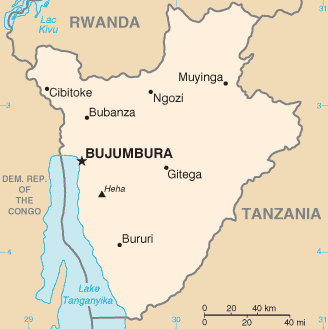
UN High Commissioner for Human Rights Zeid Ra’ad Al Hussein warned on January 15, 2016 that deeply worrying new trends are emerging in Burundi, including cases of sexual violence by security forces and a sharp increase in enforced disappearances and torture cases. He also called for an urgent investigation into the events that took place in Bujumbura on 11-12 December,2015  including the reported existence of at least nine mass graves.

“We have documented 13 cases of sexual violence against women, which began during the search and arrest operations that took place after the December events in the neighbourhoods perceived as supportive of the opposition. The pattern was similar in all cases:  security forces allegedly entered the victims’ houses, separated the women from their families, and raped – in some cases gang-raped – them,” Zeid said…

“Despite these allegations of large-scale arrests, my Office is finding that only a small proportion of them appear to be in official places of detention,” said the High Commissioner. “The increasing number of enforced disappearances, coupled with allegations of secret detention facilities and mass graves is extremely alarming,” he said……In addition, he said, witnesses had reported the existence of at least nine mass graves in Bujumbura and its surroundings – including one in a military camp –containing more than 100 bodies in total, all of them allegedly killed on 11 December 2015. …“My Office is analysing satellite images in an effort to shed more light on these extremely serious allegations,” Zeid said. “All the alarm signals, including the increasing ethnic dimension of the crisis, are flashing red,” he added.

According to information gathered from inhabitants of various neighbourhoods, some of the victims of human rights violations during the search operations that followed the 11 December, 2015 events were targeted because they were Tutsis.

Excerpts from Press Release, Alarming new patterns of violations emerging in Burundi – Zeid , Jan. 15, 2016

Why UN is Failing Congo?

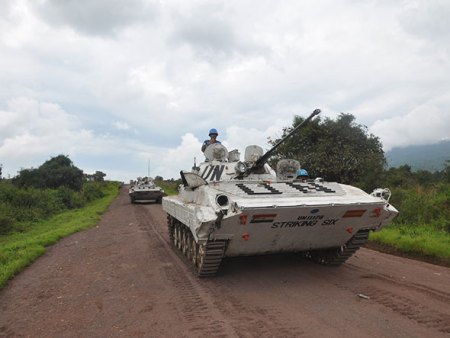
The United Nations said it had launched a comprehensive review of its Congo peacekeeping mission, which suffered a severe blow to its image last month after it stood aside and let rebels seize control of a major eastern city.  But U.N. Security Council diplomats and officials said any changes in the U.N.’s largest peacekeeping force would matter little if authorities in the Democratic Republic of the Congo did not improve their own army, and neighbouring Rwanda and Uganda continued to finance, equip and train rebel groups in mineral-rich eastern Congo.  U.N. officials have defended the U.N. Congo force, MONUSCO, for not preventing the well-equipped M23 rebels from taking the eastern city of Goma last month.  They said any attempt to have done so would have put Goma’s civilian population at risk. But they are painfully aware of the damage to the image of the mission, which U.N. officials say has been quite effective over the years, in Congo and across Africa.  “MONUSCO’s reputation has been severely damaged in the DRC and the region,” a U.N. diplomat told Reuters on condition of anonymity. “The U.N. is looking closely at MONUSCO now to consider whether there can be changes.

U.N. peacekeeping spokesman Kieran Dwyer said the United Nations was launching a comprehensive assessment of MONUSCO, and diplomats said U.N. Secretary-General Ban Ki-moon would present the results to the Security Council early next year…

One idea U.N. officials are considering is the creation of an “enforcement wing” of MONUSCO, that would take a more robust approach to dealing with insurgents in eastern Congo, U.N. diplomats and officials told Reuters on condition of anonymity.  “The idea would be to create a wing of MONUSCO that would do more than simply support the FARDC (Congolese army) but could take on more difficult battlefield tasks,” an envoy said.   Details are sketchy, since the review has just begun. But the idea is that the enforcement wing and the international neutral force could deploy along the Rwandan border, possibly with a separate, beefed-up mandate from the rest of MONUSCO, though they would all be part of the same overall mission.  Diplomats said the idea would have to be approved by troop-contributing countries and the Security Council.

A U.N. panel of experts has said M23 rebels are getting money, sophisticated equipment, training and reinforcements from Rwanda, as well as some additional support from Uganda. Analysts, diplomats and U.N. officials say Rwanda and Uganda have been interfering in eastern Congo for many years.  Rwanda and Uganda deny the charges….

It is not the first time Goma residents have felt let down by blue-helmeted U.N. troops. In 2008, the Security Council increased the size the peacekeeping force by 3,000 troops to help Congo’s weak army confront Tutsi rebels in eastern Congo.  At that time, angry displaced people and residents rioted and hurled stones at the peacekeepers, accusing them of failing to protect them from raping and pillaging Tutsi rebels led by renegade General Laurent Nkunda.  Despite recent setbacks sparked by the M23 rebellion and political instability in Congo, U.N. officials and diplomats say MONUSCO has done much good in Congo, which has seen five different peacekeeping forces over the last five decades…One problem in eastern Congo is that the army itself is in shambles. Not only is it widely seen as incapable of providing security in the region, it routinely faces accusations of rape and other atrocities.  Another problem is the weakness of President Joseph Kabila’s government, which has virtually no control over eastern Congo, an area the size of France. U.N. officials have spoken of Rwanda’s de facto annexation of Congo’s eastern provinces.

By Louis Charbonneau, U.N. launches review of Congo force with battered reputation, Reuters, Dec 13 2012