Tag Archives: israel covert action

The Underground War

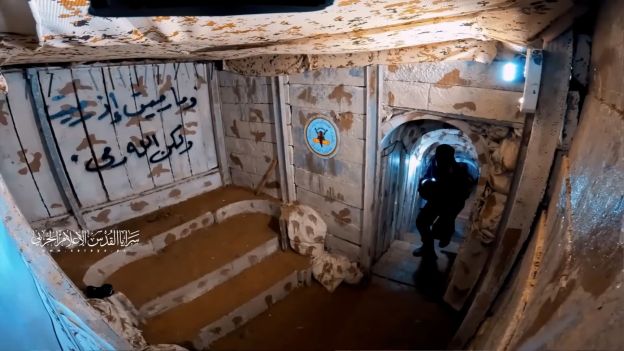
Israeli troops are mapping out the tunnels of eastern Rafah [December 2025], where the local Hamas brigade is trapped, and using massive drills to dig into the underground system and destroy it with explosives, according to Israeli military statements. Israel estimates there were around 100 to 200 fighters in the tunnels when the cease-fire began in October 2025…In some areas, Israel is flooding tunnels with water to push out the trapped fighters…

Rafah, where Hamas first began digging tunnels around two decades ago, has a particularly complicated underground system. Despite having full control above ground in Rafah, Israel’s military is still struggling to fully map out the underground network where the Hamas fighters are hiding…

Excerpt from Summer Said, srael Closes In on Hamas Fighters Trapped in Tunnels, Testing Cease-Fire, WSJ, Dec. 7, 2025

Can Your Smartphone Kill You? You Bet.

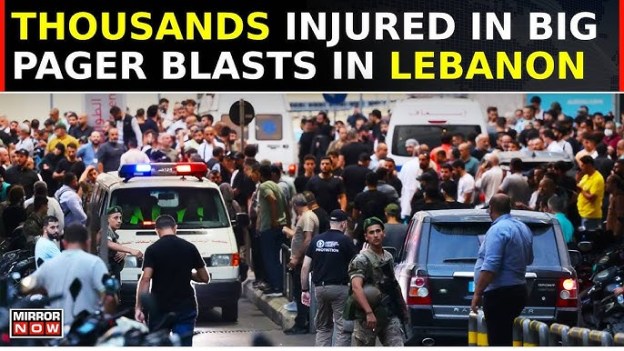
On September 17, 2024, nine people, including a child, have been killed after handheld pagers used by members of the armed group Hezbollah to communicate exploded across Lebanon, the country’s health minister says. Iran’s ambassador to Lebanon was among 2,800 other people who were wounded by the simultaneous blasts in Beirut and several other regions. Hezbollah, which is backed by Iran, said the pagers belonged “to employees of various Hezbollah units and institutions” and confirmed the deaths of eight fighters…Hours before the explosions, Israel’s security cabinet said stopping Hezbollah attacks on the north of the country to allow the safe return of displaced residents was an official war goal.

Hezbollah said an unspecified number of pagers – which the group relies on heavily for communications due to the risk of mobile phones being hacked or tracked – exploded at around 15:30 local time (12:30 GMT) (September 17, 2024) in the capital Beirut and many other areas. One CCTV video showed an explosion in a man’s bag or pocket at a supermarket. He is then seen falling backwards to the ground and crying out in pain as other shoppers run for cover. Hours later, ambulances were still rushing to hospitals overwhelmed with the number of casualties, 200 of whom the health minister said were in a critical condition. Most of the wounds were at the level of the waist, face, eyes and hands, he said, adding: “A lot of casualties have lost fingers, in some cases all of them.”

Overheated lithium-ion batteries can catch fire, but experts said hacking into the pagers and making them overheat would not usually cause such explosions. A former British Army munitions expert, who asked not to be named, told the BBC the pagers would have likely been packed with between 10g and 20g of military-grade high explosive, hidden inside a fake electronic component. Once armed by a signal, called an alphanumeric text message, the next person to use the device would have triggered the explosive, the expert said.

On September 18, 2024, walkie-talkies detonated in Lebanon, killing at least 20 people and wounding 450 in a fresh attack targeting Hezbollah, a day after pager blasts killed at least 12 people, including children, and injured thousands across the country

Excerpt from David Gritten, Hezbollah blames Israel after pager explosions kill nine and injure thousands in Lebanon, BBC, Sept. 18, 2024

Underground Empires: Hamas v. Israel

Senior members of Hamas’s leadership in exile met in Doha, Qatar, earlier in February 2024 amid concerns that its fighters were getting mauled by an Israeli offensive in the Gaza Strip. Enemy troops were killing dozens of militants each day as they methodically overran Hamas strongholds. Then a courier arrived with a message from Yahya Sinwar, the head of Hamas in Gaza, saying, in effect: Don’t worry, we have the Israelis right where we want them.  Hamas’s fighters, the Al-Qassam Brigades, were doing fine, the upbeat message said. The militants were ready for Israel’s expected assault on Rafah, a city on Gaza’s southern edge. High civilian casualties would add to the worldwide pressure on Israel to stop the war, Sinwar’s message said, according to people informed about the meeting… 

Hamas fighters are now trying to avoid large firefights and instead use small-scale ambushes—using tools ranging from rocket-propelled grenades to recorded voices of hostages to lure Israeli troops into traps.  The ambushes have little chance of holding territory against Israel’s armored maneuvers. But they’re tailored to Hamas’s limited capabilities…Many in Israel’s military, from senior commanders to ordinary soldiers who spoke to The Wall Street Journal, worry that their accumulation of tactical wins on the battlefield might not add up to a lasting strategic victory. After nearly five months of intense fighting, Israel is still far from its declared war aim of eliminating Hamas as a significant military and political entity. “Fighting the enemy is like a game of whack-a-mole,” said an Israeli reservist in Khan Younis with the 98th Division….

Degrading Hamas’s capabilities is a realistic goal for Israel’s military, said Hussein Ibish, a scholar at the Arab Gulf States Institute, a think tank in Washington. But sustaining it would require fully occupying Gaza, which would give Hamas a target for a never-ending insurgency, he said. “Recent history shows that you can be an effective insurgency on a shoestring,” said Ibish. “Anyone can make an IED,” or homemade bomb, he said. “It’s easy to get a pistol. If you’re willing to die, you can kill soldiers.” 

Hamas… has shifted to hit-and-run attacks by tiny groups of two or three men, sometimes just one individual….Other Hamas ambushes use so-called sticky bombs, improvised explosives that attach themselves to Israeli armored vehicles with magnets or duct tape.…Hamas also tries to kill Israeli troops by putting booby traps in buildings throughout Gaza, many Israeli soldiers say. Booby traps have been widely found in the homes of Hamas operatives, but also in many civilians’ homes, Israeli soldiers said. Early on the explosives were placed around the buildings’ entrances. The Israelis soon stopped using the front door, instead blasting or bulldozing their way through the walls of a house. Hamas has adapted, placing explosive traps in items inside buildings, from gas storage balloons to children’s’ toys, Israeli soldiers said….In other cases, Hamas used voice recordings of hostages begging for help in Hebrew to try to draw soldiers into an ambush…

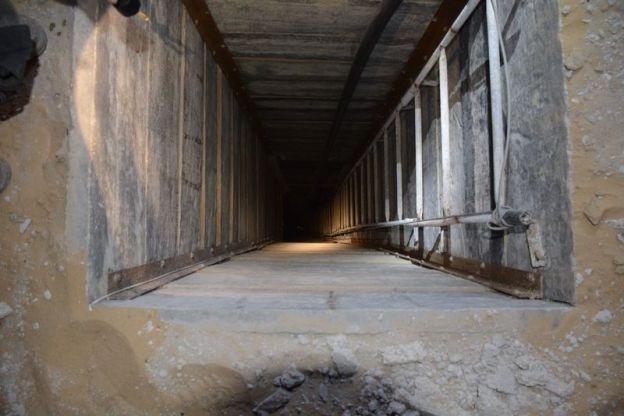
The Israelis have made only partial progress in finding and destroying Hamas’s vast tunnel network. Israeli officials now estimate that Hamas built around 350 miles of tunnels under Gaza, which is less than 30 miles long and up to 8 miles wide. There are thought to be several hundred tunnels under Khan Younis alone, which occupies an area roughly the size of the Bronx in New York…Hamas uses the tunnels as military headquarters, to maneuver across the enclave’s cities, protect its leaders, hide Israeli and other hostages, manufacture weapons and conduct hit-and-run attacks. The tunnels also contain a fixed-line phone system that Hamas used to communicate earlier in the war, along with walkie-talkies, burner SIMs and satellite phones. But with Israel hacking into those systems, the militants have increasingly shifted to using runners to convey verbal or written messages. 

The Israeli army has found no systematic solution for finding and destroying Hamas’s tunnels, many soldiers said. Tunnel entrances have been found in homes, schools, mosques, courtyards, streets and farm fields. Some are covered by steel doors, others by mattresses in a home. Israeli forces have mostly relied on drones and robots to search tunnels, only sending soldiers in later to avoid firefights in the narrow passages.

Excepts from Marcus Walker, Why Hamas Thinks it Still Could Win the War, WSJ, Feb.29, 2024
The Covert War in Sudan: Yarmouk Weapons Factory

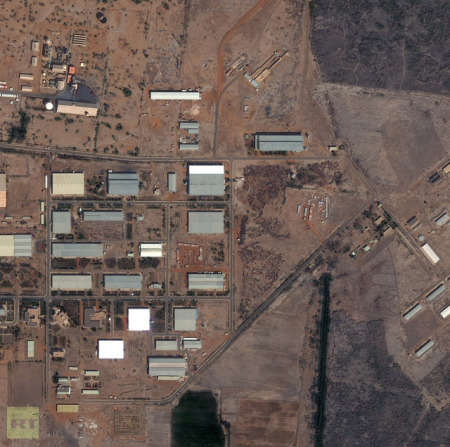
Satellite images of the aftermath of an explosion at a Sudanese weapons factory this past week suggest the site was hit in an air strike, a US monitoring group said Saturday (Oct. 27, 2012) The Sudanese government has accused Israel of bombing its Yarmouk military complex in Khartoum, killing two people and leaving the factory in ruins.  The images released by the Satellite Sentinel Project to the Associated Press on Saturday showed six 52-foot wide craters near the epicenter of Wednesday’s explosion at the compound.  Military experts consulted by the project found the craters to be “consistent with large impact craters created by air-delivered munitions”, Satellite Sentinel Project spokesman Jonathan Hutson said.  The target may have been around 40 shipping containers seen at the site in earlier images. The group said the craters center on the area where the containers had been stacked.

Israeli officials have neither confirmed nor denied striking the site. Instead, they accused Sudan of playing a role in an Iranian-backed network of arms shipments to Hamas and Hezbollah. Israel believes Sudan is a key transit point in the circuitous route that weapons take to the Islamic militant groups in the Gaza Strip and Lebanon.  Sudan was a major hub for al-Qaida militants and remains a transit for weapon smugglers and African migrant traffickers. Israeli officials believe arms that originate in the Iranian port of Bandar Abbas go through Sudan before crossing Egypt’s lawless Sinai desert and into Gaza through underground tunnels.

The Satellite Sentinel Project is a partnership between the Enough Project, a Washington-based anti-genocide advocacy group and DigitalGlobe, which operates three commercial satellites and provides geospatial analysis.  The project was founded last year with support from actor George Clooney, and in the past has used satellite images to monitor the destruction of villages by Sudanese troops in the country’s multiple war zones.

Opened in 1996, Yarmouk is one of two known state-owned weapons manufacturing plants in the Sudanese capital. Sudan prided itself in having a way to produce its own ammunition and weapons despite United Nations and US sanctions.  The satellite images indicate that the Yarmouk facility includes an oil storage facility, a military depot and an ammunition plant.

The monitoring group said the images indicate that the blast “destroyed two buildings and heavily damaged at least 21 others”, adding that there was no indication of fire damage at the fuel depot inside the military complex.  The group said it could not be certain the containers, seen in images taken 12 October, were still there when explosion took place. But the effects of the blast suggested a “highly volatile cargo” was at the epicenter of the explosion.  “If the explosions resulted from a rocket or missile attack against material stored in the shipping containers, then it was an effective surgical strike that totally destroyed any container” that was at the location, the project said.  Yarmouk is located in a densely populated residential area of the city approximately 11km southwest of the Khartoum international airport.  Wednesday’s explosion sent exploding ammunition flying into homes in the neighborhood adjacent to the factory, causing panic among residents. Sudanese officials said some people suffered from smoke inhalation.  A man who lives near the factory said that from inside their house, he and his brother heard a load roar of what they believed was a plane just before the boom of the explosion sounded from the factory.

In the aftermath of Wednesday’s explosion, Sudanese officials said the government has the right to respond to what the information minister said was a “flagrant attack” by Israel on Sudan’s sovereignty and right to strengthen its military capabilities.  In a Friday speech marking Eid al Adha, Islam’s biggest holiday, Sudanese president Omar al-Bashir called Israel “short-sighted,” according to comments published by the Egyptian state-owned paper Al Ahram. The president likened the incident to the 1998 bombing by American cruise missiles of a Khartoum pharmaceutical factory suspected of links to al-Qaida.

Some Israeli commentators suggested that if Israel did indeed carry out an airstrike causing Wednesday’s blast, it might have been a trial run of sorts for an operation in Iran. Both countries are roughly 1,000 miles (1,600km) away from Israel, and an air operation would require careful planning and in-flight refueling.

Satellite pictures suggest Sudanese weapons factory hit by air strike, Associated Press, Oct. 27, 2012