Tag Archives: neocolonialism

The Scramble for Maldives: US/India v. China

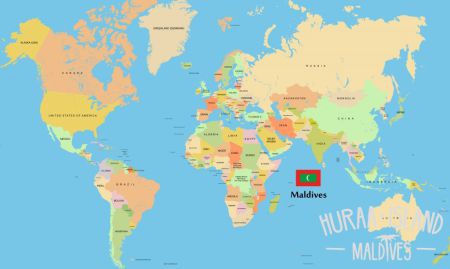
The Maldives archipelago, popular among luxury honeymooners, has become a playing field for geostrategic rivalry as China expands its influence in the Indian Ocean and the U.S. and India push back.

Maldives President Abdulla Yameen Abdul Gayoom, who has steadily swung his country toward Beijing and away from traditional partner New Delhi, has imposed a state of emergency, jailed opponents and clamped down on protests to weaken his opposition, which is led by pro-India ex-President Mohamed Nasheed.

India and the U.S. don’t want Beijing, already dominant in the South China Sea, to entrench itself in these waters. The island nation sits astride shipping lanes that connect China to the oil-supplying countries of the Middle East, via the Strait of Malacca. The location also makes the Maldives vital to Beijing’s Belt and Road plan to develop land and sea trading routes linking China to Europe.

Chinese President Xi Jinping won Mr. Gayoom’s support for the project’s maritime corridor on a visit to the Maldives in 2014, and China began investing in island infrastructure. A Chinese bridge now under construction will connect the capital city, Malé, to a nearby island where its airport is located. A Chinese company is expanding the airport; another has leased an island close by for development. Chinese contractors are building roads and housing units for locals.

Many in the Maldives opposition have raised concerns that Chinese infrastructure loans will turn into “debt traps,” particularly after a major Chinese-financed port in neighboring Sri Lanka passed into Chinese control last year when Colombo couldn’t repay.

U.S. Secretary of State Rex Tillerson…called China’s infrastructure-financing deals an example of “predatory economics” that saddle developing countries with unsustainable debt and could undercut their sovereignty.  Mr. Gayoom steered a constitutional amendment through parliament in 2015 allowing foreigners to own land, a change the government said was meant to attract investment and critics in the country said could help Beijing establish a military foothold.

In recent years, China has built a naval base in Djibouti in East Africa; in addition to the port in Sri Lanka, it operates one in Pakistan. A senior Indian navy officer said Chinese submarines and research vessels are visiting the Indian Ocean more frequently.

The Indian military deploys aircraft specialized in anti-submarine warfare to patrol the ocean, and its government is negotiating the purchase of U.S. drones with advanced surveillance features. India also plans to build new attack submarines, and a military upgrade is afoot in its Andaman and Nicobar Islands, whose capital is around 1,200 nautical miles from Malé.

Excerpts from China-India Rivarly Plays out in Maldives, Wall Street Journal, Mar. 6, 2019
Old and New Colonialists in Africa

External [states]…often come with predefined programmes and they tend to interfere when things do not develop as they would like to see it….Analysis of the security activities of seven major actors in Africa—China, France, Russia, the United Kingdom, the United States, the European Union and the United Nations—shows an increasing use of multilateral approaches, support for the ‘Africanization’ of African security, and the privatization of external security support. These are the main findings of a new SIPRI monograph edited by Olawale Ismail and Elisabeth Sköns and supported by the Open Society Foundation.

Data on Chinese security activities in Africa are difficult to obtain. UN data on peace operations show a strong growth in Chinese contributions to UN peace operations in Africa since 2000. SIPRI data on transfers of major weapons show that China’s arms transfers have focused on a few large deliveries to 2–3 countries at a time (e.g. Namibia, Sudan and Zimbabwe in 2004-2008; and Tanzania, Nigeria and Ghana in 2009–13) and have increased significantly since the early 2000s…. China’s arms sales to some  countries, such as the Democratic Republic of the Congo (DRC), Sudan and Zimbabwe, have come under scrutiny from human rights advocacy groups and Western governments…

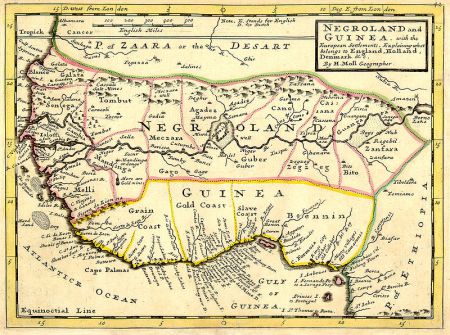
France has a long-term engagement in African security affairs, especially in the countries it previously colonized….  France still retains significant military capacities in sub-Saharan Africa. It is a major contributor of troops and logistical support for military operations in Africa and a trainer of African military and security forces. Rather than renouncing its role as a key actor in Africa’s security, France has found alternative and more cost-effective ways to remain influential.

Russian security-related activities in sub-Saharan Africa seem to have intensified in recent years. These include arms transfers, military training, peacekeeping and anti-piracy operations, and are primarily undertaken in areas that developed strong links with the Soviet Union in the 1970s and 1980s (i.e. the Horn of Africa and southern Africa). However, there are also signs of intensified security relations with states across subSaharan Africa that have relations with Russian firms involved in mineral exploration and exploitation.  Russia is the largest supplier of major weapons to sub-Saharan Africa apart from South Africa, accounting for 30 per cent of the total in 2009-2013.

British security activities in Africa have been placed within a security and development framework and pursued at arms length: the UK has provided training for African forces and support for security sector reform (SSR) and peacebuilding efforts, while committing few troops to peace operations.  The main exception to direct British military involvement in Africa during the 2000s is the UK’s bilateral intervention in Sierra Leone in 2000, which involved a total of 2500 British troops, backed by a naval force. The UK has also participated in EU NAVFOR, the multilateral anti-piracy operation that was launched under the auspices of the EU in 2008. While the SSR agenda is relatively new, British involvement in training African armed forces has been ongoing since the colonial era.

US policies  have included the initiation of counter-terrorism programmes in east Africa and the Sahel in 2001 and of maritime security programmes in east and west Africa during the 2000s; the establishment of a military base in Djibouti in 2002 and the gradual implementation since the early 2000s of a basing system providing access to African military facilities.  The increased US strategic view of Africa is reflected in the establishment in 2008 of AFRICOM, a separate unified military command for Africa,…

Excerpts from SECURITY ACTIVITIES OF EXTERNAL ACTORS IN AFRICA, Stockholm International Peace Research Institute (SIPRI), Nov. 25, 2014