Tag Archives: offshore finance

Tax Havens in the USA

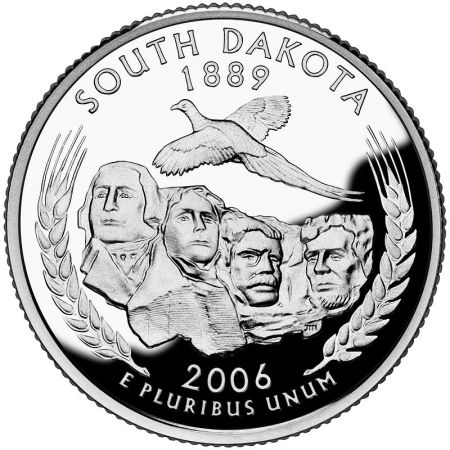
After years of lambasting other countries for helping rich Americans hide their money offshore, the U.S. is emerging as a leading tax and secrecy haven for rich foreigners. By resisting new global disclosure standards, the U.S. is creating a hot new market, becoming the go-to place to stash foreign wealth. Everyone from London lawyers to Swiss trust companies is getting in on the act, helping the world’s rich move accounts from places like the Bahamas and the British Virgin Islands to Nevada, Wyoming, and South Dakota.

Rothschild, the centuries-old European financial institution, has opened a trust company in Reno, Nevada a few blocks from the Harrah’s and Eldorado casinos. It is now moving the fortunes of wealthy foreign clients out of offshore havens such as Bermuda, subject to the new international disclosure requirements, and into Rothschild-run trusts in Nevada, which are exempt.  Others are also jumping in: Geneva-based Cisa Trust Co. SA, which advises wealthy Latin Americans, is applying to open in Pierre, S.D., to “serve the needs of our foreign clients,” said John J. Ryan Jr., Cisa’s president.  Trident Trust Co., one of the world’s biggest providers of offshore trusts, moved dozens of accounts out of Switzerland, Grand Cayman, and other locales and into Sioux Falls, S.D., in December, ahead of a Jan. 1 disclosure deadline….

No one expects offshore havens to disappear anytime soon. Swiss banks still hold about $1.9 trillion in assets not reported by account holders in their home countries, … Still, the U.S. is one of the few places left where advisers are actively promoting accounts that will remain secret from overseas authorities….The offices of Rothschild Trust North America LLC aren’t easy to find. They’re on the 12th floor of Porsche’s former North American headquarters building, a few blocks from the casinos. (The U.S. attorney’s office is on the sixth floor.) Yet the lobby directory does not list Rothschild. Instead, visitors must go to the 10th floor, the offices of McDonald Carano Wilson LLP, a politically connected law firm. Several former high-ranking Nevada state officials work there, as well as the owner of some of Reno’s biggest casinos and numerous registered lobbyists. One of the firm’s tax lobbyists is Robert Armstrong, viewed as the state’s top trusts and estates attorney, and a manager of Rothschild Trust North America.

“There’s a lot of people that are going to do it,” said Cripps. “This added layer of privacy is kicking them over the hurdle” to move their assets into the U.S. For wealthy overseas clients, “privacy is huge, especially in countries where there is corruption.”….

Rothschild’s Penney wrote that the U.S. “is effectively the biggest tax haven in the world.” The U.S., he added in language later excised from his prepared remarks, lacks “the resources to enforce foreign tax laws and has little appetite to do so.”….The U.S. failure to sign onto the OECD information-sharing standard is “proving to be a strong driver of growth for our business” …

In a section originally titled “U.S. Trusts to Preserve Privacy,” he included the hypothetical example of an Internet investor named “Wang, a Hong Kong resident,” originally from the People’s Republic of China, concerned that information about his wealth could be shared with Chinese authorities.  Putting his assets into a Nevada LLC, in turn owned by a Nevada trust, would generate no U.S. tax returns, Penney wrote. Any forms the IRS would receive would result in “no meaningful information to exchange under” agreements between Hong Kong and the U.S., according to Penney’s PowerPoint presentation reviewed by Bloomberg.  Penney offered a disclaimer: At least one government, the U.K., intends to make it a criminal offense for any U.K. firm to facilitate tax evasion.

Excerpt from Jesse Drucker, The World’s Favorite New Tax Haven Is the United States, Bloombert, Jan. 27, 2016
From Switzerland: Stolen Money Trickles Back to Nigeria

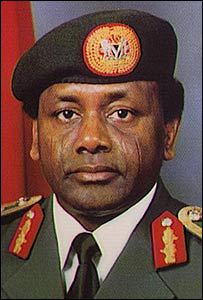
Geneva’s public prosecutor will send $380 million confiscated from the family of Nigeria’s former military ruler Sani Abacha to Nigeria and closed a 16-year investigation into his funds, the prosecutor’s office said.   Abacha stole as much as $5 billion of public money during his five years running Africa’s top oil producing country from 1993 until his death in 1998, according to the corruption watchdog Transparency International.

The return of the $380 million follows an agreement between Nigeria and the Abacha family in July 2014, the prosecutor’s statement said. The agreement provides for Nigeria to receive the frozen funds in return for dropping a complaint against Abba Abacha, Sani’s son.He was charged by a Swiss court with money-laundering, fraud and forgery in April 2005, after being extradited from Germany, and subsequently spent 561 days in custody. In 2006 Switzerland ordered funds held by him in Luxembourg to be confiscated.  The return of the funds is conditional on effective monitoring by the World Bank of how the funds are used.

Switzerland to return $380 million of Abacha’s loot to Nigeria, Reuters, Mar. 19, 2015

Why Chinese Banks Love the UK

Britain’s banks, heirs to empire, have long coveted the riches of China. On October 15, 2013 their hopes of reaping them rose greatly when the chancellor of the exchequer, George Osborne, announced a deal with China that is intended to make Britain the main offshore hub for trading in China’s currency and bonds and for foreign institutions investing in China’s fast-growing economy.But there was a price. Mr Osborne conceded that British regulators would “consider” (which tends to mean “approve”) applications from Chinese banks wanting to enter Britain as branches of their parent banks rather than as subsidiaries. The difference may seem arcane but in the world of banking regulation it is hugely important. Branches are overseen by their parents’ bank supervisors at home. They are not required to have thick cushions of capital to absorb losses or large chunks of cash to see them through hard times. Instead they are expected to call on their parents for help if they run into difficulties. This makes branches much cheaper and more attractive for banks than subsidiaries.

It also explains why regulators generally dislike them. The laxer rules on branches leave them more vulnerable if they or their parent banks get into difficulties. In allowing Chinese banks to use branches, British authorities are in effect betting that if anything goes wrong the Chinese government will bail them out, says Simon Gleeson of Clifford Chance, a law firm.

The chancellor’s decision has raised eyebrows in London’s financial district. Some worry that a supposedly independent regulator has been subjected to political interference and has been forced to lower its standards. Yet critics of the deal overlook two important points. The first is that there is an inevitable tension between a bank regulator’s mission of maintaining financial stability and the wider aim of promoting economic growth. Tension between a regulator and elected officials is not just inevitable but healthy.

Just as important is the tricky balance regulators must find between protecting their own banking systems and encouraging the smooth functioning of global capital markets. Letting banks use branches allows capital to flow more easily around the world. Forcing them into subsidiaries can lead to the creation of stagnant pools of cash and capital.  Although Britain has cast a more sceptical eye over branches of foreign banks since the crisis—particularly after its taxpayers were left out of pocket by the collapse of Icelandic banks and their British branches—it has generally stood on the side of financial globalisation. In this it is increasingly lonely. American regulators are likely soon to force foreign banks to establish fully-capitalised units. EU officials are threatening to do the same. Given this trend, Britain’s stance looks less like an opportunistic grab for Chinese business and more like a last, probably hopeless, stab at keeping alive the dream of a seamless global financial market.

Chinese banks: Open for business, Economist, Oct. 19, 2013, at 62

Tax Evaders and Whistleblowers

What  Edward Snowden is to mass surveillance, Hervé Falciani is becoming to private banking. In 2008 the now 41-year-old native of Monaco walked out of the Geneva branch of HSBC, where he had worked for three years, clutching five CD-ROMs containing data on thousands of account holders. The theft lobbed a bomb into Europe’s private-banking market, spawning raids and tax-evasion investigations continentwide. In the latest, this week, Belgian agents swooped on the homes of 20 HSBC clients, including some with ties to Antwerp diamond dealers.

Mr Falciani went on the run when the Swiss charged him with data theft. After moving to Spain he was imprisoned, but freed when a judge denied a Swiss extradition request. At one point, he claims, he was kidnapped by Mossad agents who wanted a peek at the clients’ names. He has now taken refuge in France, where the government has offered him protection in return for helping it hunt for tax dodgers.

Several countries have used the data to bring cases against suspected evaders. Revelations that dozens of Greek public figures hid money offshore have magnified the tumult in that country’s politics. Spain and France have fingered hundreds of high-level cheats and retrieved €350m ($610m) in back taxes. Mr Falciani maintains that his CDs provided support for an American probe into weak money-laundering controls at HSBC, which led to a $1.9 billion settlement. HSBC disputes this.

Mr Falciani has said he still fears for his safety, despite round-the-clock protection from three armed guards provided by the French. At least he is not short of work. He has been helping France’s tax authorities develop long-term anti-tax-evasion measures. And he recently became an adviser to a new Spanish political party, Partido X (which, ironically, tries to keep its members anonymous).

He insists his motives have always been pure: to repel Switzerland’s “attack” on other countries’ tax laws and exchequers. HSBC says he is no high-minded whistle-blower. He tried to sell the data at first, the bank contends, and started to work with prosecutors only when he was jailed in Spain. It claims he has data on only 15,000 clients (Mr Falciani says it is eight times that) and that the stolen files contain errors.

Either way, many more tax-shy Europeans have reason to sleep fitfully. Other countries are said to want a look at the data, some of which are yet to be decrypted. When Mr Falciani first made the rounds with his discs, there was little interest. The fiscal strains produced by the euro crisis have changed all that.

Banks and tax evasion: Hervé lifting, Economist, Oct. 19, 2013, at 79

Offshore Tax Evasion: US v. Switzerland

Fearful that other banks could suffer the same fate as Wegelin, a venerable private bank that was indicted in New York in 2012 and put out of business, the Swiss government has been seeking an agreement with America that would allow the industry to pay its way out of trouble in one go. Instead, it has had to make do with one covering banks that are not already under investigation, which excludes some of the country’s biggest institutions.

The deal is cleverly structured. Of Switzerland’s 300 banks, 285 will be able to avoid prosecution if they provide certain information about American clients and their advisers, and pay penalties of 20-50% of the clients’ undeclared account balances, depending on when the account was opened and other factors. Banks that persuade clients to make disclosures before the programme starts will get reduced fines. Banks will not have to take part but the legal risks are daunting for those that don’t, even if they hold little undeclared American money. Those with no foreign clients will have to produce independent reports proving they have nothing to hide if they want a clean bill of health.

One Swiss newspaper likened the deal to “swallowing toads”. Another called it “the start of an organised surrender”. The bankers’ association sees it as a necessary evil: the only way to end legal uncertainty, albeit at a cost that will strain some institutions. Small and medium-sized Swiss private banks are already struggling. In 2012 their average return on equity was 3%; the number of private banks fell by 13, to 148, mostly because of voluntary liquidations. KPMG, a consultancy, expects this to fall by a further 25-30% by 2016 as receding legal threats encourage the return of mergers.

Some of the prospective buyers in any future M&A wave still have to make their peace with the Americans. Excluded from the deal are 14 mostly large banks that have been under investigation for some time, including Credit Suisse and Julius Bär. They will have to settle individually, with fines expected to be steep, some perhaps comparable to the $780m paid by UBS in 2009. These banks are also under pressure from European countries that have suffered tax leakage, including Germany, whose parliament has rejected a deal that would have allowed the Swiss to make regular payments of tax withheld from clients while avoiding having to name names.

Swiss bankers gamely argue that bank secrecy remains intact, pointing out that privacy laws have not been dismantled. But banks are being bullied into providing enough information, short of actual client names, to allow the Americans to make robust “mutual legal assistance” requests that leave Swiss courts with no option but to order banks to provide clients’ personal details. The courts still have some flexibility because America has yet to ratify an amended tax treaty with Switzerland, thanks to blocking tactics by Rand Paul, a senator who argues it would violate Americans’ right to privacy. But this obstacle will eventually be cleared or circumvented.

All of which fuels speculation that Switzerland could lose its crown as the leading offshore financial centre, even though it is still well ahead of fast-growing rivals in Asia. It may find comfort in the fact that the Americans plan to use information harvested from the Swiss— including “leaver lists”, which contain data on account closures and transfers to banks abroad—to go after other jurisdictions. This is part of a “domino effect” strategy, says Jeffrey Neiman, a former federal prosecutor, aimed at forcing tax evaders “so far off the beaten path that they can’t be sure if the pirate waiting to take their money will be there when they return.”

Offshore tax evasion: Swiss finished?, Economist, Sept. 7, 2013, at 72

Tax Havens under Attack

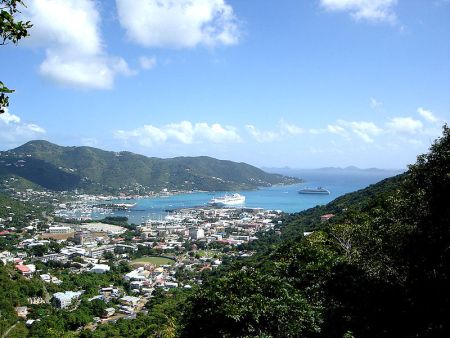
[In] the Cayman Islands,  corruption would have been high on the list of election issues in a society where “everybody expects that you are going into politics to make your money”, as a former auditor-general recently put it. But there is plenty more to worry Caymanians and the inhabitants of Britain’s other remaining scraps of empire in the Caribbean: Anguilla, the British Virgin Islands (BVI), Montserrat and the Turks and Caicos Islands. Tourism and international finance have brought prosperity but the “twin pillars” are showing cracks. Fiscal fumbling has compounded the problem and has strained relations with Britain, which has long provided an economic backstop. The region’s two big tax havens, Cayman and the BVI, are under attack as never before.

The world economic slowdown hit these small, open economies hard…. In some cases Britain has pushed for income taxes to supplement the fees and indirect taxes that the territories rely on. But these do not go down well with footloose offshore types. Under pressure from the Foreign Office, Cayman’s government last year proposed a 10% levy for foreigners, who make up half the 38,000 workforce. This was scrapped when businesses squealed. Wary of scaring away business, the BVI has not raised the $350 fee for incorporation since 2004.

Avoiding fee rises is seen as important at a time when tax havens are under bombardment, especially from Europe. The five territories, Bermuda and others have been arm-twisted into backing a multilateral scheme for the automatic exchange of tax information. A longer-term threat is the growing international call for public registration of the “beneficial” (ie real) owners of companies and trusts. Standards must be applied evenly, says Orlando Smith, premier of the BVI, “otherwise, businesses will simply go to other jurisdictions.”

Offshore optimists note that China and Russia, whose citizens are big users of Caribbean havens, have not signed up to the information-sharing pact. But remaining attractive to clients while complying with ever more stringent international rules is “an increasingly difficult needle to thread”, says Andrew Morriss of the University of Alabama. No wonder the territories are trying to diversify away from finance, which in the BVI’s case accounts for 60% of government revenues. Anguilla is looking at fishing, Cayman toying with medical tourism. But hip replacements will not be as lucrative as hedge funds.

Britain is gently encouraging these efforts, while recognising that, as an official puts it, “There isn’t a long list of options.” It is trying to improve governance, too. After it threatened to veto a Cayman port project which had been awarded to a Chinese company without an open tender, bidding was restarted. Britain retains the power to block laws, suspend constitutions and dismiss governments. The Turks and Caicos constitution has been suspended twice, most recently in 2009 after an inquiry found “a high probability of systemic corruption”. This led to three years of direct rule by the British-appointed governor.

Putting your man in charge is one thing, putting money on the table quite another. To avoid it, Britain will have to play its hand carefully. It has to be seen to join the likes of France and Germany in taking a firm stand against offshore financial shenanigans, especially now that the prime minister, David Cameron, has made tax and transparency themes of this year’s G8 agenda. On May 20th he told Britain’s dependencies to “get [their] houses in order”. But if the havens lose their cash cow, they might have to go cap-in-hand to London. “Taxpayers Bail Out Tax Havens” is the last headline Mr Cameron wants to see.

The Caribbean: Treasure islands in trouble, Economist, May25, 2013, at 35

Tax Havens: Micro-States in Europe

Armed with a cache of more than 2m documents, leaked from two offshore service providers, a group of investigative journalists has spent the past week publishing articles that lift the lid on thousands of companies and trusts set up in the British Virgin Islands and Cook Islands. The vast client list ranges from Asian politicians to Canadian lawyers—and no fewer than 4,000 Americans. For an industry that peddles secrecy and likes to operate in the shadows it is all rather embarrassing.

Opinions vary on the impact of the leaks. Tax campaigners have cheered it as a “game changer”. Offshore operators counter that most of the activity uncovered is legal. So what if President François Hollande’s former campaign treasurer has a Cayman Islands company? So do thousands of banks and hedge funds. Nevertheless, the affair will add to international scrutiny of tax havens. The pressure on them has grown as governments scramble to plug fiscal holes and push for the systematic exchange of tax information across borders. Germany’s finance minister welcomed the leak, hopeful that it would provide leverage to force more co-operation from “those who have been more reticent” to rein in the havens.

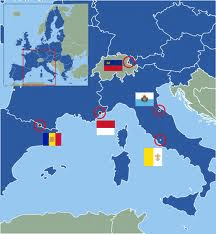
Faced with an end to the days of easy money, offshore jurisdictions are being forced to rethink their strategies. One of the more proactive has been Liechtenstein, nestled between Switzerland and Austria. The principality has long been popular with European tax dodgers, but growth accelerated when Swiss banks hawked Liechtenstein foundations to clients worldwide. This lucrative niche was damaged in 2008 when the former head of Germany’s postal service and many others were caught hiding money in the principality.

Under pressure from Germany and America, Liechtenstein buckled, agreeing to dilute bank secrecy and to exchange tax information. It has since signed many bilateral tax agreements and clamped down on money-laundering. The local financial industry has paid a high price for this. Liechtenstein banks’ client assets declined by almost 30% in the five years to 2011, to SFr110 billion ($118 billion)…

Other offshore centres must also attempt to square this circle. Next may be Luxembourg, a leader in offshore banking and tax avoidance. Bowing to greatly intensified pressure from its neighbours since the Cyprus debacle, the Grand Duchy has dropped its long-held opposition to swapping information about non-resident depositors with other EU countries. Jean-Claude Juncker, the prime minister, said the policy shift was about “following a global movement”, not caving in to German demands. Whether automatic information exchange can be introduced “without great damage”, as he confidently declared, remains to be seen.

Offshore finance: Leaky devils, Economist, April 13, 2013, at 71