Tag Archives: pirates

Pirates and Free Trade

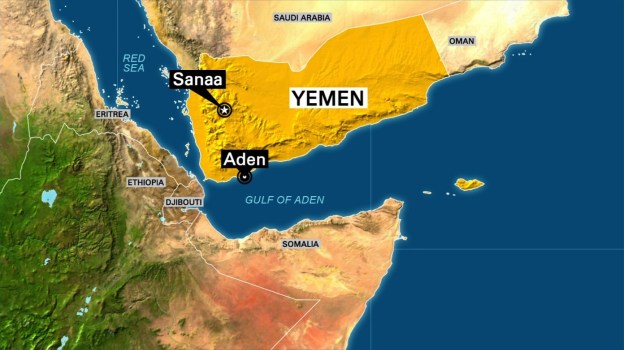
Ships navigating the lawless seas of the Gulf of Aden must keep a constant lookout for Somali pirates. The roots of Somalia’s maritime banditry lie in its desperately poor coastal villages, where the choice between fishing and piracy is an easy one for many.

Anja Shortland and Federico Varese mapped the locations of hijacked ships between 2005 and 2012. They found that hijacked vessels were always anchored far away from regional trading routes, and that big ports were not prone to piracy. There is a reason for that. Somali clans control local trade by issuing licences and charging informal taxes. The researchers reckon that communities which can tax imports and exports refuse to protect pirates because trade is a safer and more lucrative source of revenue than pirate earnings. Only clans that have no other income offer the pirates protection, in return for a share of their loot…..A… solution [to piracy] would be to build new roads and ports, which would allow remote areas to start trading. With alternative sources of income, fewer communities would be willing to harbour pirates….

A former president of Puntland repeatedly requested a road be built to Eyl, a rough-and-ready coastal town, as a quid pro quo for giving up piracy. His request was turned down, and piracy continued. Time for donors to rethink where they spend their pieces of eight.

Crime in Somalia: Pirates v economist, Economist, July 12, 2014, at 42
Business Models of Piracy – Somalia & Niger Delta

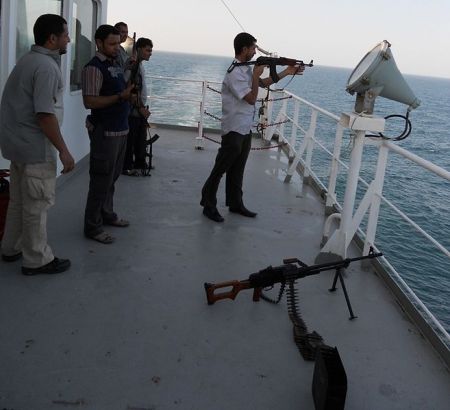
The decline in Somali piracy (which, according to a recent World Bank report, may at its peak have cost the world up to $18 billion a year in extra shipping expenses and lost trade) is partly the result of increasingly sophisticated co-ordination by international naval task-forces. Shipping companies are also making their vessels harder to attack thanks to a range of defensive measures, such as razor wire around decks, high-pressure hoses and maintaining speeds that make boarding hazardous. Armed security guards on many of the ships transiting pirate-infested waters have helped too.But the pirates could still make a comeback. The cost of deterring them is high. Shipping companies may lower their guard if they think the threat has passed, and patrolling naval forces could be needed elsewhere. And although Somali piracy has faded, west Africa has seen a surge in attacks on ships passing through the Gulf of Guinea.

Tom Patterson, a maritime security expert at Control Risks, a consultancy, says these pirates, who largely come from militant groups in the Niger Delta, have a different business model to their Somali counterparts. They tend to hold ships for about two to five days, removing as much of their cargo as possible (usually gas oil) and then auctioning it to the highest bidder. Hostages are taken if potentially valuable. This week five Poles and Russians, held since April 25th when pirates attacked the German-operated City of Xiamen container ship off Nigeria’s coast, were released, doubtless after a ransom payment.

International naval forces are unlikely to intervene. Nigeria has a decent navy of its own which claims to be upping its efforts to contain piracy. But foreign diplomats believe that some military officials turn a blind eye to thefts in return for a share of the spoils

Hijackings on the high seas: Westward Ho!, Economist, May 18, 2013, at 67