
Tag Archives: sovereign borrowing

Vultures and Venezuela Debt after the 2026 US Invasion

After the brazen capture of Venezuelan strongman Nicolás Maduro on January 3, 2026, investors are racing to capitalize on President Trump’s ambitions to dominate the Western Hemisphere. Hedge funds and other investment firms, already boosted by a sharp rally in Venezuelan debt, are mapping out trips to Caracas to scope out on-the-ground opportunities. Some are investigating niche instruments, like arbitration claims and unpaid state debts. Others are eyeing debt in Colombia and Cuba, while shares of a tiny bank in Greenland—another territory in Trump’s sights—have surged recently as the U.S. president pursues his own spin on the Monroe Doctrine that saw 19th-century America claim half of the globe as its sphere of influence…

For years, most money managers deemed Venezuela off-limits, due to a thicket of U.S. sanctions, political repression and economic mismanagement. The country’s bonds, languishing at rock-bottom prices since a 2017 default, were mostly a playground for specialists in emerging markets or distressed-debt contrarians.

Now, investors reckon a combination of political change, U.S. intervention and American investment into Venezuela’s vast oil resources could put a debt restructuring within reach. Some hope investment opportunities could emerge in other industries that languished under Maduro…

Some hedge funds and investment firms are venturing into more-obscure assets, such as arbitration claims from corporations owed money by Venezuela. A range of Western companies whose assets were nationalized by Maduro’s predecessor Hugo Chávez have won settlements from the World Bank’s International Centre for Settlement of Investment Disputes.
With Trump in recent days signaling potential intervention in countries like Colombia, Cuba and Mexico, some investors are considering opportunities in those markets. In one sign of speculative fervor, shares of the tiny Bank of Greenland have surged as much as 42% this year, suggesting market participants anticipate an investment boom in Greenland.

Many emerging-market hedge funds “see the current backdrop less as a single trade and more as the start of a new opportunity set: more regime changes, more policy shocks, more forced sellers and more capital controls or realignments,” said Bruno Schneller, managing partner at the Swiss asset manager Erlen Capital Management.

Excerpt from Caitlin McCabe, Hedge Funds Get Ready for the ‘Donroe Doctrine’ Trade, WSH, Jan. 10, 2026
The Biggest Flaw of Africa

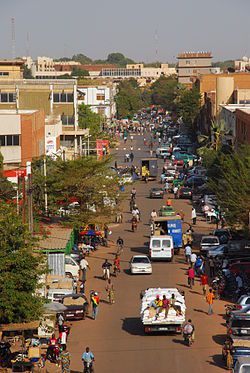
Investors are yanking their cash from African assets, until recently a popular play for the adventurous, as a toxic confluence of factors overhangs the continent.Crashing commodity prices, a Chinese slowdown and a string of policy failures are forcing investors to reassess the risk of investing in Africa after years of optimism about its growth prospects.Stock markets and currencies have been selling off across the continent, especially in commodity-dependent economies. Nigeria, the continent’s largest economy and longtime investor darling, has one of the world’s worst-performing stock indexes this year, down by 14% since the start of 2016. The S&P Zambia Index has fared even worse over the past year, plunging 45% as the country’s copper exports tumbled on softening Chinese demand. President Edgar Lungu last September called for a day of national prayer to petition God to shore up Zambia’s currency, the kwacha. At the time, the kwacha had lost 45% of its value against the dollar in 2015.  The declines mean African equities are performing worse than any other frontier markets. The MSCI Africa index tumbled 19% last year, significantly more than the overall MSCI Frontier Markets index….The upshot is that frontier investors are moving their money from Africa to Asian countries like Pakistan, Bangladesh and Vietnam; net energy and commodity importers which have shown more commitment to industrialization….

The shift has also pushed up the costs of sovereign borrowing, even as African countries slow down their issuance of bonds in international capital markets. In 2014, African sovereigns issued $12 billion worth of bonds in international capital markets; last year it was half that, according to Deutsche Bank.Ghana, mired in an economic crisis, issued the most expensive African Eurobond in history late last year, paying a whopping 10.75% for $1 billion; far higher than the single-digit interest rates the government had become accustomed to paying for international bonds in recent years….

[T]here are important exceptions to the rule: Kenya, which has a more diversified economy, and Ivory Coast, the world’s top producer of cocoa, are still attracting frontier investors…..

“One of the biggest flaws when investors look at Africa is that they think of it as a country and not a continent composed of very unique countries and companies,” says Laura Geritz, who runs U.S.-based Wasatch Frontier Emerging Small Countries with $1.1 billion under management.

Excerpts from  Africa Bruised by Investor Exodus, Wall Street Journal, Feb. 26, 2016