
Tag Archives: al Qaeda Iraq

Kill Operations in Yemen

The Pentagon has quietly ordered new commando deployments to the Middle East and North Africa amid an unprecedented series of American airstrikes in Yemen, counterterrorism officials tell ABC News.  The moves appear to signal that the U.S. military is kicking off a more aggressive counterterrorism campaign… against Qaeda in the Arabian Peninsula (AQAP) and ISIS strongholds in Syria and areas in North Africa.

The Trump administration in late January 2017 launched the first known ground force operation in Yemen in two years followed by an unprecedented two-dozen or more airstrikes the first week of March 2017 targeting al-Qaeda’s most dangerous affiliate, including airstrikes March 2, 2017 night. This week also saw the killing of al-Qaeda’s overall deputy leader in a U.S. drone strike in northwestern Syria….

Un-announced fresh deployments of elite American commando units from the Army’s Delta Force and Navy SEAL teams continue…

But the first known ground force operation in two years on Jan. 28, 2017 raid by the Navy’s “black ops” counterterror unit, SEAL Team Six, came at a high price.  The experienced operators were caught in a withering mountain gunfight with fighters from AQAP, the only terrorist group which has succeeded three times in smuggling sophisticated bombs aboard U.S.-bound jetliners, which were defused before they exploded.

“There were women straight up shooting at the SEALs,” said a counterterrorism official briefed on the fight, describing the unusual battle, which resulted in one SEAL killed in action, some children in the compound killed by crossfire as the SEALs tried to search buildings and then broke contact, leaving the site aboard MV-22 Osprey aircraft. One Osprey had to make a hard landing, which injured three SEALs and the aircraft had to be destroyed in place by the operators….

One computer hard drive and phones containing a wealth of contact information for al-Qaeda operatives around the region were recovered by the SEALs…While the Yemen operation has become politicized in Washington as having “failed,” with some Democrats questioning whether any intelligence gains were worth the high cost of SEAL Ryan Owens’ life, a $75 million aircraft crashed and children killed in crossfire, military analysts continue “docex” — document exploitation — in an eavesdrop-proof sensitive compartmented information facility….

Excerpts from JAMES GORDON MEEK,US special ops step up strikes on al-Qaeda and ISIS, insiders say, Mar. 3, 2017
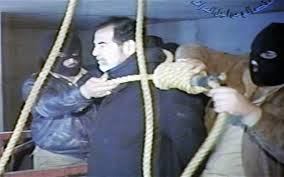
 

The New Saddam Husseins

[The] intelligence network Islamic State has put in place since it seized vast stretches of Iraq and neighbouring Syria… [is overseen by] former army and intelligence officers, many of whom helped keep former Iraqi strongman Saddam Hussein and his Baath Party in power for years. …The Baathists have strengthened the group’s spy networks and battlefield tactics and are instrumental in the survival of its self-proclaimed Caliphate, according to interviews with dozens of people, including Baath leaders, former intelligence and military officers, Western diplomats and 35 Iraqis who recently fled Islamic State territory for Kurdistan.  Of Islamic State’s 23 portfolios – equivalent to ministries – former Saddam regime officers run three of the most crucial: security, military and finance, according to Hisham al-Hashimi, an Iraqi analyst who has worked with the Iraqi government….In many ways, it is a union of convenience. Most former Baathist officers have little in common with Islamic State. Saddam promoted Arab nationalism and secularism for most of his rule.  But many of the ex-Baathists working with Islamic State are driven by self preservation and a shared hatred of the Shi’ite-led government in Baghdad. Others are true believers who became radicalised in the early years after Saddam’s ouster, converted on the battlefield or in U.S. military and Iraqi prisons….

Baathists began collaborating with al Qaeda in Iraq – the early incarnation of what would become Islamic State – soon after Saddam Hussein was ousted in 2003. Saddam had run a brutal police state. The U.S. occupation dissolved the Baath Party and barred senior and even middling party officials from joining the new security services. Some left the country, others joined the anti-American insurgency…..By 2014, the Baathists and the jihadists were back to being allies. As Islamic State fighters swept through central Iraq, they were joined by the Army of the Men of the Naqshbandi Order, a group of Baathist fighters..That has boosted Islamic State’s firepower and tactical prowess….Emma Sky, a former adviser to the U.S. military, believes Islamic State has effectively subsumed the Baathists. “The mustached officers have grown religious beards. I think many have genuinely become religious,” she said.

Among the most high profile Baathists to join Islamic State are Ayman Sabawi, the son of Saddam Hussein’s half brother, and Raad Hassan, Saddam’s cousin, said the senior Salahuddin security official and several tribal leaders. Both were children during Saddam’s time, but the family connection is powerfully symbolic. More senior officers now in Islamic State include Walid Jasim (aka Abu Ahmed al-Alwani) who was a captain of intelligence in Saddam’s time, and Fadhil al-Hiyala (aka Abu Muslim al-Turkmani) whom some believe was a deputy to Islamic State leader Abu Bakr al-Baghdadi until he was killed in an airstrike earlier this year.

The group’s multi-layered security and intelligence agencies in Mosul, the biggest city in northern Iraq, are overseen by an agency called Amniya – literally ‘Security’. The agency has six branches, each responsible for maintaining a different aspect of security…..They also run a network of informants, placing children such as 14-year-old Mohannad in mosques and markets, and women at funerals and family gatherings, according to residents of Mosul…

Islamic State execution squads often arrive in a large bus with tinted windows, another resident said. Police seal off streets surrounding the place where a killing is to be carried out. Men dressed in black with balaclavas either shoot people, or behead them with swords.The bodies of those deemed to have committed the worst offences – cursing God or the group – are thrown in an area called al-Khafsa, a deep natural crater in the desert just south of Mosul, residents in the city said. Those killed for lesser crimes are returned to their families wrapped in a blanket.

Excerpts from  Isabel Coles and Ned Parker, The Baathists: How Saddam’s men help Islamic State rule, Reuters, Dec. 11, 2015

A State from Scratch: the Islamic State

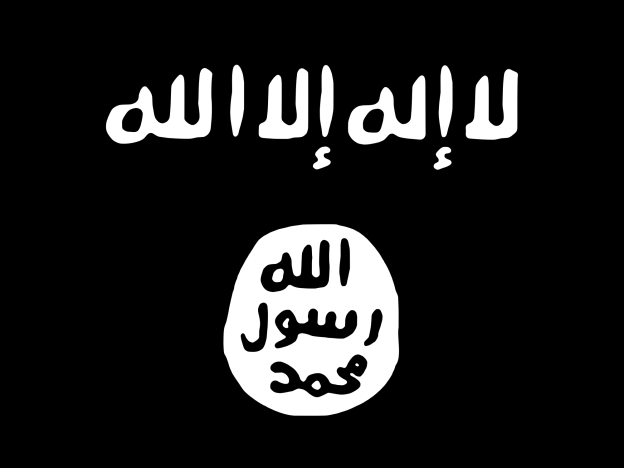
f sentiment in the towns in or bordering the so-called “caliphate” of Islamic State (IS) is anything to go by, the jihadists are winning the war. “IS is here to stay,” a doctor in Falluja says of the group’s grip on Anbar, Iraq’s largest province. It is a sharp reversal from just a few months ago, when the campaign against IS seemed to be going quite well…[A]fter the retreat of Syrian regime forces from Palmyra, the black flag of IS now flies over the ancient city; while Ramadi, the capital of Anbar province, Iraq, fell on May 17th. The idea that IS was in retreat has thus taken a severe jolt.

Barack Obama describes the loss of Ramadi as a mere “tactical setback”. But a blame game has since broken out.   In any case the group’s [IS] recent successes owe more to the weakness of the forces opposing it than to its own strength. The regime of Bashar Assad in Syria is looking wobblier than at any time since 2012. Its army fled Palmyra. Although Iraq’s Shia militias put up a good fight in places, its Shia-dominated and often badly led army is reluctant to fight and die for Sunni territory. Unless it improves the jihadists may advance further. The government remains reluctant to arm the Sunni tribesmen who might defend their homes.

The recent gains by IS also do little to address its weaknesses. It needs to generate huge funds to maintain its pretension to be a caliphate, yet its income streams, such as those from illicit oil sales, ransoms and looted antiquities, are all vulnerable to concerted pressure and windfalls from conquest are dwindling.

Its top-down structure leaves it vulnerable to “kill or capture” raids by American special forces (like one in Syria on May 15th that resulted in the death of Abu Sayyaf, the outfit’s financial brain). A more concerted air campaign could also set it back. Western forces are managing a meagre 15 strikes a day (compared with the 50 a day NATO carried out against Qaddafi’s less formidable forces in Libya). Mr McCain says that 75% of sorties fail to fire a weapon or drop a bomb, because targets are not identified. That might change if America provided forward air controllers.

The state of the caliphate: The fortunes of war, Economist, May 30, 2015