
Tag Archives: blacklisting Chinese entities

Nationalizing a Crown Jewel: the case of Nexperia

U.S. officials’ warning to their Dutch counterparts was stark: If they wanted a Netherlands-based chip maker to avoid being put on a trade blacklist, it would almost certainly have to remove its Chinese owner as CEO. “The fact that the company’s CEO is still that same Chinese owner is problematic,” American officials said in a June 2025 meeting on the topic. The Americans soon got their wish. In September 25, 2025, the Dutch economy ministry seized control of Nexperia from China’s Wingtech Technology. The next day, a Dutch court granted an emergency petition to suspend Wingtech founder Zhang Xuezheng as Nexperia’s CEO and put all but one of the semiconductor company’s shares under external management.

China quickly fired back at the seizure, ordering Wingtech in early October to suspend exports of Nexperia of chips that the company has long sent for packaging and testing in China…The Dutch economy minister said in a letter to parliament that he moved to seize control of Nexperia based on evidence that the CEO was moving quickly to shift production capacity, financial resources and intellectual property to China, not because of pressure from any other country… The Dutch government and Dutch and German executives of the company had tried for months to ringfence the company’s business from Chinese control to accommodate domestic concerns—and avoid being hit by the U.S. blacklist… Dutch officials told Nexperia that the coming expansion of U.S. trade restrictions could lead to restrictions on the business, unless measures were taken to limit the transfer of knowledge and capabilities to China.

In the past, Nexperia relied on its European factories and contract manufacturers in Taiwan to make chips for China. In 2020, Zhang set up a wafer factory in Shanghai. The business, called Wingskysemi, started production in 2023 and has become one of Nexperia’s key suppliers….

Excerpt from Sam Schechner et al, , How U.S. Pressured Netherlands to Oust CEO of Chinese-Owned Chip Maker, WSJ, Oct. 14, 2025
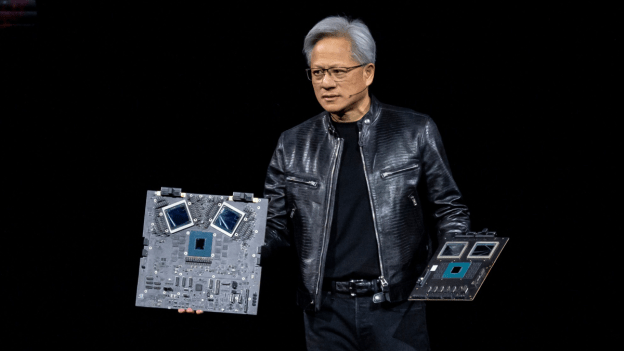
The Cat-and-Mouse Game: US-China, Chip Giants

The U.S. on March 28 2025 added dozens of Chinese companies to a trade blacklist over national security concerns. American businesses seeking to sell technology to these companies will need approval from the government. Among those added were subsidiaries of Inspur Group, China’s largest server maker and a major customer for U.S. chip makers such as Nvidia, Intel and Advanced Micro Devices. Companies linked to China’s largest supercomputer maker, Sugon, were also added…

Nearly 80 companies were put on the Commerce Department’s blacklist, known as the entity list…including the U.S. server maker Aivres Systems that is wholly owned by Inspur Electronic. The latter is one-third owned by Inspur Group, according to corporate records. Aivres has been assembling high-end artificial-intelligence equipment for Nvidia. The AI-chip giant has said that Aivres will make servers using chips in the Blackwell family, Nvidia’s newest and most powerful processors.  Aivres advertises on its website that it sells servers and infrastructure powered by Blackwell chips, which are banned from sale into China…About two months after Inspur Group was added to the trade blacklist in March 2023, California-based Inspur Systems changed its name to Aivres Systems.

Excerpts from Liza Lin, Trump Takes Tough Approach to Choking Off China’s Access to U.S. Tech, WSJ, Mar. 26, 2025

China, the U.S. and the Fentanyl Deaths

Stopping the flow of fentanyl into the U.S. is a Biden administration priority, with the opioid scourge unleashing a wave of deaths across America. U.S. officials see China as having a critical role in that effort. Chinese companies produce chemicals, known as precursors, that are shipped to cartels in Mexico, which use them to produce fentanyl and smuggle it into the U.S…

Chinese officials have been firm with the U.S. for months that removing the police institute from the export blacklist is a precondition for restarting joint work to combat drugs, the people said. ..China maintains the U.S. is seeking to deflect blame for the crisis and that Washington hasn’t done enough to control prescription drugs, choke off domestic demand for illegal ones and raise public awareness of the issue. More than 100,000 people died of drug overdoses in the U.S. in 2022, according to a federal estimate released in May, roughly in line with 2021 levels but significantly above those just a few years earlier.

Excerpts from Brian Spegele and Charles Hutzler, U.S. Weighs Potential Deal With China on Fentanyl, WSJ, July 25, 2023