Tag Archives: regulate trade wars

For the Love of Motherland: the Case of Super Micro Computer

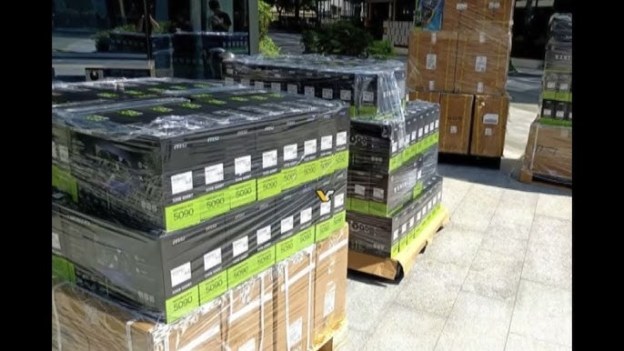
Wally Liaw is the co-founder of server maker Super Micro Computer whose servers contain high-powered Nvidia artificial-intelligence processors. Federal prosecutors say Liaw, 71, helped Chinese customers get $2.5 billion of those servers in violation of U.S. export-control laws. The indictment puts Liaw and Super Micro in the middle of the tech war between the U.S. and China. Based on the indictment Liaw facilitate the shipment of servers containing advanced Nvidia chips, a total $510 million worth of servers, to an Asian pass-through company. All these servers were diverted to China.

Prosecutors also described elaborate efforts to avoid detection. Executives including Liaw allegedly corresponded about bringing in 100 people, including forklift operators, and arranging meals and a 20-person shuttle bus to help stage dummy servers in warehouses before auditors came through. Prosecutors published photos showing one of Liaw’s deputies with an assistant who they said used a hair dryer to remove and affix labels and serial-number stickers to shipping boxes. The goal was to persuade inspectors, including one from the U.S. Commerce Department, that they were looking at genuine Super Micro servers with Nvidia chips inside. Liaw’s team took photographs of the staged servers to send to one of Super Micro’s compliance auditors, who was off-site enjoying entertainment paid for by the Asian pass-through company, the indictment says.

Excerpt from Robbie Whelan et al.,The Silicon Valley Salesman Accused of Helping China Get Nvidia’s Top Chips, WSJ, Mar. 21, 2026

World Bank Sorry for Mistakes of 30 Years

World Bank on March 17, 2026 confessed to an error of more than three decades duration, moving to embrace industrial policy as tariffs, subsidies and a variety of other interventions become increasingly popular with governments in search of growth. Back in 1993, the bank published an assessment of the rapid economic growth achieved by some economies in east Asia, and which appeared to owe something to government interventions in support of selected industries. The bank controversially concluded that their economic success had nothing to do with those interventions, which it instead described as a “costly failure.” As World Bank Chief Economist Indermit Gill wrote in a new report, that conclusion helped “stigmatize” industrial policy just as a leap forward in transport and communications technologies spurred a period of intense globalization. Instead, governments were encouraged to let markets operate without direction or barriers to trade, while keeping inflation low and budget deficits narrow and backing investment in education and vital infrastructure. “That advice has not aged well—it has the practical value of a floppy disk today,” wrote Gill.

Taking a fresh look at the evidence, the new report concludes that the South Korean government’s “big push” during the 1970s in support of heavy industry and chemicals has resulted in the economy being 3% larger each year. In other words, it was very much not a failure, nor was it particularly costly.

Despite the stigma, many economies never entirely lost faith in industrial policy. Indeed, China resorted to a wide variety of interventions during its period of record growth. In emulation, many rich economies—including the U.S.—have begun to implement industrial policies. “Industrial policy—the range of policy tools that governments use to shape what an economy produces rather than leave it to the discretion of markets alone—is back with a vengeance,” the bank said.

Excerpt from Paul Hannon, World Bank Embraces Industrial Policy, Abandoning Three Decades of Stigma, WSJ, May 17, 2026

How Does it Feel to Beg China? Netherlands Knows

Dutch chipmaker Nexperia has publicly called on its China unit to help restore supply chain operations, warning in an open letter published on its website  on November 28, 2025 that customers across industries are reporting “imminent production outages.” Nexperia’s Dutch unit said that is open letter followed “repeated attempts to establish direct communication through conventional channels” but did not have “any meaningful response.” The letter marks the latest twist in a long-running saga that has threatened global automotive supply chains and stoked a bitter battle between Amsterdam and Beijing over technology transfer.

In a statement, Wingtech Technology, Nexperia’s Chinese parent stated that Nexperia’s true intent is to buy time ” to construct a ‘de-China-ized’ supply chain and permanently strip Wingtech of its shareholder rights.”

The situation began in September 2025, when the Dutch government invoked a Cold War-era law to effectively take control of Nexperia. The highly unusual move was reportedly made after the U.S. raised security concerns.

Beijing responded by moving to block its products from leaving China, which, in turn, raised the alarm among global automakers as they faced shortages of the chipmaker’s components.

In an apparent reprieve on November 19, 2025, however, the Dutch government said it had suspended its state intervention at Nexperia following talks with Chinese authorities…But while the measures to seize the Dutch Nexperia subsidiary have been lifted, the restoration of the corporate structure and relation with parent company Wingtech has yet to be accomplished.

Excerpt from Sam Meredith, What’s going on at Nexperia? China’s Wingtech escalates war of words with Dutch chipmaker, CNBC, Nov. 28, 2028

Can the United States Drown in Disease? China has the Answer

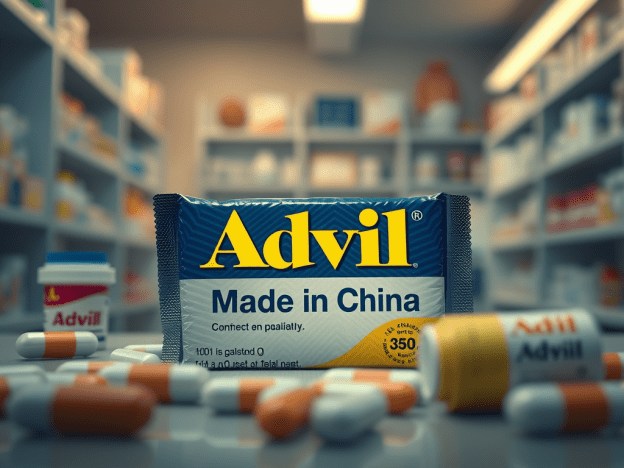
While drugs sold in U.S. pharmacies or over the counter typically don’t say “made in China,” the country often supplies active pharmaceutical ingredients in the drugs or precursor chemicals used to make those active ingredients. Most of the acetaminophen and ibuprofen imported into the U.S. comes from China. Those are the active ingredients in Tylenol and Advil, respectively. China is also a significant producer of antibiotic ingredients. The U.S. imports many branded drugs from Europe, while for generics, it relies heavily on India. Still, a significant amount of the active ingredients used in India-made generics originates in China.

Perhaps aware of the sensitivity of turning medicine into a political tool, China hasn’t often threatened to cut off drug supplies to the U.S. Still, it signaled awareness of its leverage early in the Covid-19 pandemic, when the world faced shortages of masks and personal protection equipment owing to supply disruptions from China. In March 2020, the official Xinhua News Agency said that if China were to restrict exports of medical goods, the “U.S. will be plunged into the vast ocean of coronavirus.”

Excerpt from Yoko Kubota, How China’s Chokehold on Drugs, Chips and More Threatens the U.S., WSJ, Nov.  4, 2025

Nationalizing a Crown Jewel: the case of Nexperia

U.S. officials’ warning to their Dutch counterparts was stark: If they wanted a Netherlands-based chip maker to avoid being put on a trade blacklist, it would almost certainly have to remove its Chinese owner as CEO. “The fact that the company’s CEO is still that same Chinese owner is problematic,” American officials said in a June 2025 meeting on the topic. The Americans soon got their wish. In September 25, 2025, the Dutch economy ministry seized control of Nexperia from China’s Wingtech Technology. The next day, a Dutch court granted an emergency petition to suspend Wingtech founder Zhang Xuezheng as Nexperia’s CEO and put all but one of the semiconductor company’s shares under external management.

China quickly fired back at the seizure, ordering Wingtech in early October to suspend exports of Nexperia of chips that the company has long sent for packaging and testing in China…The Dutch economy minister said in a letter to parliament that he moved to seize control of Nexperia based on evidence that the CEO was moving quickly to shift production capacity, financial resources and intellectual property to China, not because of pressure from any other country… The Dutch government and Dutch and German executives of the company had tried for months to ringfence the company’s business from Chinese control to accommodate domestic concerns—and avoid being hit by the U.S. blacklist… Dutch officials told Nexperia that the coming expansion of U.S. trade restrictions could lead to restrictions on the business, unless measures were taken to limit the transfer of knowledge and capabilities to China.

In the past, Nexperia relied on its European factories and contract manufacturers in Taiwan to make chips for China. In 2020, Zhang set up a wafer factory in Shanghai. The business, called Wingskysemi, started production in 2023 and has become one of Nexperia’s key suppliers….

Excerpt from Sam Schechner et al, , How U.S. Pressured Netherlands to Oust CEO of Chinese-Owned Chip Maker, WSJ, Oct. 14, 2025

How China Plans to Destroy the U.S. AI Industry

China’s restrictions on rare-earth materials announced on October 9, 2025 would mark a nearly unprecedented export control*** that stands to disrupt the global economy, giving Beijing more leverage in trade negotiations and ratcheting up pressure on the Trump administration to respond.

The rule, put out by China’s Commerce Ministry, is viewed as an escalation in the U.S.-China trade fight because it threatens the supply chain for semiconductors. Chips are the lifeblood of the economy, powering phones, computers and data centers needed to train artificial-intelligence models. The rule also would affect cars, solar panels and the equipment for making chips and other products, limiting the ability of other countries to support their own industries. China produces roughly 90% of the world’s rare-earth materials.

Global companies that sell goods with certain rare-earth materials sourced from China accounting for 0.1% or more of the product’s value would need permission from Beijing, under the new rule. Tech companies will probably find it extremely difficult to show that their chips, the equipment needed to make them and other components fall below the 0.1% threshold, industry experts said. The rules could cause a U.S. recession if implemented aggressively because of how important AI capital spending is to the economy… “It’s an economic equivalent of nuclear war—an intent to destroy the American AI industry,” said Dmitri Alperovitch, co-founder of the Silverado Policy Accelerator think tank.

Excerpt from Amrith Ramkumar,et al., China’s Rare-Earth Escalation Threatens Trade Talks—and the Global Economy, WSJ, Oct. 9, 2025

***The new export controls mark the first time China has applied the foreign direct product rule (FDPR)—a mechanism introduced in 1959 by the United States and long used United States to restrict semiconductor exports to China. The FDPR enables the United States to regulate the sale of foreign-made products if they incorporate U.S. technology, software, or equipment, even when produced by non-U.S. companies abroad. In effect, if U.S. technology appears anywhere in the supply chain, the United States can assert jurisdiction. See CSIS

Nvidia CEO Has a Magic Needle

Nvidia’s market share in China fell to 50% from 95% over the past four years under U.S. restrictions, Huang, Nvidia’s CEO,  said in May 2025.  He visited China at least three times in 2025 to reassure Chinese tech executives and government officials that Nvidia was committed to the market…. Huang has met with top executives of Chinese cloud-computing leader Alibaba, smartphone and automaker Xiaomi and OpenAI challenger MiniMax.People in China’s tech industry said they appreciated Huang’s efforts to modify his chips so they could be sold in China. Engineers there nicknamed him “Magic Tailor” for his skill in designing chips to thread the needle of U.S. regulations.

Knowing the importance of the Chinese market to Nvidia, Beijing increased pressure on the company: China’s cybersecurity regulator recently summoned Nvidia representatives to discuss alleged security risks of the H20 chips, citing comments by U.S. lawmakers about the need for a bill to require tracking capabilities for advanced chips sold abroad….

Excerpt from Lingling Wei et al, With Billions at Risk, Nvidia CEO Buys His Way Out of the Trade Battle, WSJ, Aug. 11, 2025