Tag Archives: civil war Sudan

Why and How Dubai Conquered Sudan

U.S. intelligence agencies say the United Arab Emirates sent increasing supplies of weapons including sophisticated Chinese drones to a major Sudanese militia in 2025 bolstering a group that has been accused of genocide and pouring fuel on a conflict that has created one of the world’s worst humanitarian crises…It is the latest example of how the wealthy Gulf state is quietly projecting power to influence the course of conflicts and assert its interests in a region dominated by much larger power brokers, from Saudi Arabia to Turkey and Iran.

A key U.S. partner, the U.A.E. has shipped arms into Sudan to shore up the Rapid Support Forces (RSF) of Sudan after a string of setbacks that culminated with the militia losing control of the capital, Khartoum, in March 2025. Rearmed, the militia survived that potential turning point in the war and launched a renewed offensive against the government that triggered some of the worst destruction of the two-year war. The RSF’s campaign included an expanded assault on North Darfur state, where the militia tightened an 18-month siege of the regional capital of El Fasher, cutting off tens of thousands of people from adequate food and medicine…“The war would be over if not for the U.A.E.,” said Cameron Hudson, a former chief of staff to successive U.S. presidential special envoys for Sudan. “The only thing that is keeping them in this war is the overwhelming amount of military support that they’re receiving from the U.A.E.,” he said of the RSF…The U.A.E. is betting on the RSF to help protect Emirati interests in Sudan. The country is strategically located on the Red Sea, where the Sudanese government canceled a $6 billion Emirati port deal in 2024, and has vast resources of gold, much of which has historically been exported to Dubai. The U.A.E. has invested billions of dollars in the country.

Excerpt from Jared Malsin at al., How U.A.E. Arms Bolstered a Sudanese Militia Accused of Genocide, WSJ, Oct. 28, 2025
How the Drug War has Fueled Sudan’s Conflict

The war in Sudan between the country’s military and the rebel Rapid Support Forces (RSF) has turned in 2024 into a battleground for more foreign powers, drawing in fighters and weapons from as far as Latin America and Europe. Several regional governments are vying to assert their influence as the fighting escalates, led by the United Arab Emirates on one side and Egypt on the other—with devastating consequences for Sudan’s 48 million people, some of whom are now in the grip of famine. At stake is control of Red Sea shipping lanes, some of Africa’s largest gold reserves and the contested waters of the Nile.

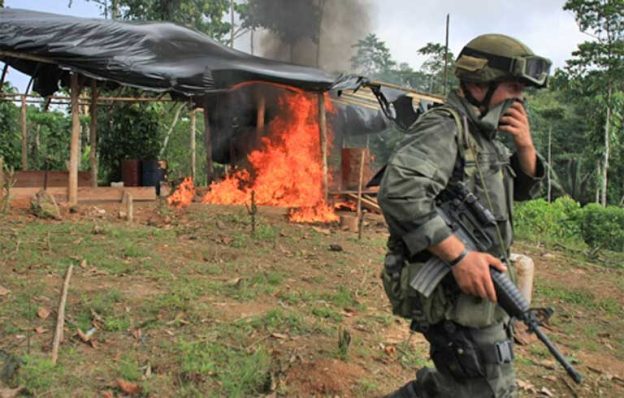
The Colombian fighters seized in November 2024 in Darfur were hired earlier this year by an Abu Dhabi-based company called Global Security Services Group (GSSC)…The company describes itself as the only armed private security provider to the Emirati government and lists as its clients the Gulf state’s ministries of presidential affairs, interior and foreign affairs.  In Uganda, where GSSG has trained local troops in counterterrorism operations and VIP protection, the company presented itself as acting on behalf of the Emirati government, an army spokesman said. 

With its large stock of drug-war veterans trained on American weapons, Colombia has long been a target for recruiters from overseas security and mercenary groups. A decade ago, the U.A.E., through military contractors, sent Colombians to fight in the civil war in Yemen. In September 2024, a Bogotá, Colombia-registered recruitment company called International Services Agency, or A4SI, began posting ads on its website looking for drone operators, cybersecurity specialists and bodyguards to deploy in Africa…

By some estimates, as many as 150,000 people have been killed in Sudan. About 25 million, more than half of the population, are suffering crisis levels of hunger and one in four Sudanese have been forced from their homes. Famine has been declared in a Darfur camp hosting between 500,000 and a million displaced people.

Excerpts from Benoit Faucon and Gabriele Stein, The Global War Machine Supplying Colombian Mercenaries to Fight in Sudan, WSJ, Dec. 11, 2024

Chewing Gum and the Civil War in Sudan

Around 80% of the world’s gum arabic is harvested from Sudan’s acacia trees, which grow in the desert belt that stretches from Sudan’s western border with Chad to its eastern border with Ethiopia, covering an area of roughly 200,000 square miles. Gum arabic is a tasteless and odorless dried sap used as a stabilizer, thickening agent or emulsifier for many foods, drinks, cosmetics and medicines…The sap has become a key source of funding for both sides in the war, according to Sudanese traders. In addition to the RSF (Rapid Support Forces), a paramilitary group, collecting money through its control of most major agricultural routes, the Sudanese military—which runs the country’s de facto government—levies taxes and other tariffs on the gum arabic trade.

The U.S. has accused both sides in the conflict of committing war crimes. In September, 2023 the State Department slapped sanctions on two senior RSF commanders for their alleged involvement in ethnic killings, sexual violence and the looting and burning of communities, among other abuses. . Around 8.5 million Sudanese have been forced from their homes since the start of the war in April 2023. “Proceeds from the gum arabic exports are directly financing this fighting,” says Rabie Abdelaty, a Sudanese academic who has researched the gum arabic industry.

Despite these concerns, few companies have taken steps to make sure they are avoiding Sudanese gum arabic, based on interviews with manufacturers, suppliers and end-users. 

Excerpts from Alexandra Wexler, How Soda, Chocolate and Chewing Gum Are Funding War in Sudan, WSJ, May 23, 2024

Darfur Forever: when a country is not a country

Iran unsuccessfully pressed Sudan to let it build a permanent naval base on the African country’s Red Sea coast, something that would have allowed Tehran to monitor maritime traffic to and from the Suez Canal and Israel, according to a senior Sudanese intelligence official. Iran has supplied Sudan’s military with explosive drones to use in its fight with a rebel warlord and offered to provide a helicopter-carrying warship if Sudan had granted permission for the base…

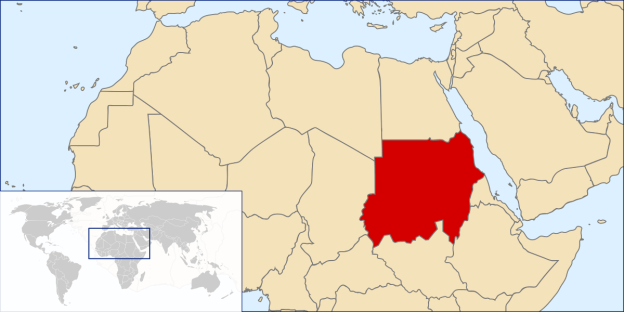
Sudan had close ties with Iran and its Palestinian ally Hamas under longtime strongman Omar al-Bashir. After Bashir’s ouster in a 2019 coup, the leader of the country’s military junta, Gen. Abdel Fattah al-Burhan, initiated a rapprochement with the U.S. in an effort to end international sanctions. He also moved to normalize relations with Israel. Iran’s request to build a base highlights how regional powers are seeking to take advantage of Sudan’s 10-month-old civil war to gain a foothold in the country, a strategic crossroads between the Middle East and sub-Saharan Africa with a 400-mile Red Sea coastline.  Sudan’s military has been fighting the paramilitary Rapid Support Forces (RSF), led by Burhan’s former second-in-command, Lt. Gen. Mohamed Hamdan Dagalo, since mid-April 2023. The conflict has killed tens of thousands of people, displaced millions and triggered one of the world’s worst humanitarian crises The Biden administration has accused both the Sudanese military and the RSF of committing war crimes. The U.S. alleges the RSF also has committed crimes against humanity, including murder, rape and ethnic cleansing in the Darfur region in western Sudan.  U.N. officials have criticized Sudan for aerial bombing of civilian neighborhoods and depriving Sudanese civilians of desperately needed humanitarian aid. U.N. agencies have also accused the RSF of atrocities, including ethnically motivated attacks in Darfur…

The Wall Street Journal reported in October 2023 that Egypt has supplied drones to the Sudanese military and trained Sudanese troops in how to use them. The United Arab Emirates, meanwhile, has been sending weapons to the RSF, the Journal reported in August 2023…Dubai is the biggest importer of Sudanese gold and in 2022 a U.A.E.-based consortium signed a $6 billion deal to build a new port facility on Sudan’s Red Sea coast.

Excerpts from Nicholas Bariyo, Iran Tried to Persuade Sudan to Allow Naval Base on Its Red Sea Coast, WSJ, Mar. 3, 2024