Tag Archives: electromagnetic fields and brain

Mass-Market Brain Manipulation and Human Rights

Scientific advances are rapidly making science-fiction concepts such as mind-reading a reality — and raising thorny questions for ethicists, who are considering how to regulate brain-reading techniques to protect human rights such as privacy.

On 13 July, 2023 neuroscientists, ethicists and government ministers discussed the topic at a Paris meeting organized by UNESCO, the United Nations scientific and cultural agency. Delegates plotted the next steps in governing such ‘neurotechnologies’ — techniques and devices that directly interact with the brain to monitor or change its activity. The technologies often use electrical or imaging techniques, and run the gamut from medically approved devices, such as brain implants for treating Parkinson’s disease, to commercial products such as wearables used in virtual reality (VR) to gather brain data or to allow users to control software… Neurotechnology is now a US$33 billion industry.
One area in need of regulation is the potential for neurotechnologies to be used for profiling individuals and the Orwellian idea of manipulating people’s thoughts and behaviour. Mass-market brain-monitoring devices would be a powerful addition to a digital world in which corporate and political actors already use personal data for political or commercial gain.

Commercial devices are of more pressing concern to ethicists. Companies from start-ups to tech giants are developing wearable devices for widespread use that include headsets, earbuds and wristbands that record different forms of neural activity — and will give manufacturers access to that information.

The privacy of this data is a key issue. Rafael Yuste, a neuroscientist at Columbia University in New York City, told the meeting that an unpublished analysis by the Neurorights Foundation, which he co-founded, found that 18 companies offering consumer neurotechnologies have terms and conditions that require users to give the company ownership of their brain data. All but one of those firms reserve the right to share that data with third parties. “I would describe this as predatory,” Yuste says. “It reflects the lack of regulation.”…Another theme at the meeting was how the ability to record and manipulate neural activity challenges existing human rights. Some speakers argued that existing human rights — such as the right to privacy — cover this innovation, whereas others think changes are needed.

Yuste and his colleagues propose five main neurorights: the right to mental privacy; protection against personality-changing manipulations; protected free will and decision-making; fair access to mental augmentation; and protection from biases in the algorithms that are central to neurotechnology.

Excerpt from Liam Drew, Mind-reading machines are coming — how can we keep them in check?, Nature, July 24, 2023
The Havana/China Syndrome: Who Used Directed-Energy Weapons on US Diplomats?

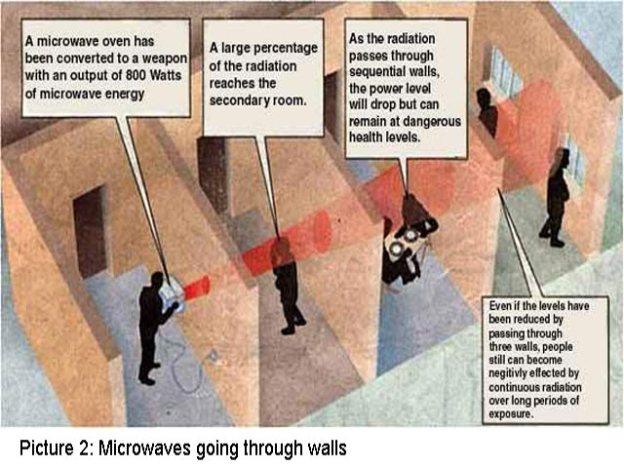
 In December 2020,  U.S. scientific panel has concluded that exposure to a type of directed energy was the most likely culprit for a number of medical symptoms, including dizziness and memory loss, experienced by diplomats posted in Cuba and China. In a new assessment published on December 5, 2020  by the National Academies of Sciences, Engineering, and Medicine, scientists identified “directed, pulsed radio frequency (RF) energy” as the most likely explanation for a series of symptoms experienced by diplomats posted at U.S. facilities—a broad category of energy that can include microwave radiation.

The scientists concluded that the symptoms experienced by a number of U.S. and Canadian diplomats, which included dizziness, headache, fatigue, nausea, anxiety, cognitive difficulties and memory loss, were “unlike any disorder in the neurological or general medical literature.”… Governments, including the former Soviet Union and the U.S., have tested using directed energy as a potential weapon or a tool for espionage or crowd control in the past.

Excerpts from  Byron Tau, U.S. Diplomats’ Illnesses Likely Linked to Pulsed Energy Attack, WSJ, Dec. 7, 2020

Your Brain on Electro-Magnetic Fields

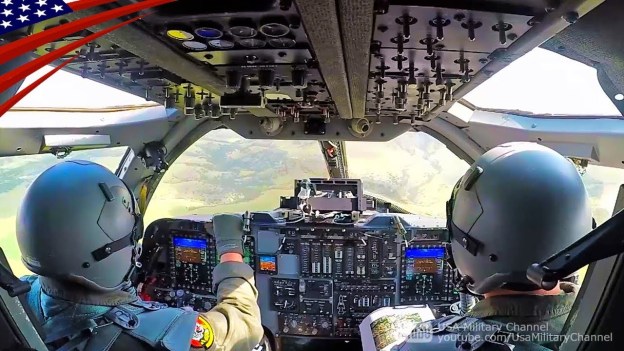
Current cockpits are flooded with radio frequency (RF) noise from on-board emissions, communication links, and navigation electronics, including strong electromagnetic (EM) fields from audio headsets and helmet tracking technologies. Pilots often report minor cognitive performance challenges during flight, and from 1993 to 2013, spatial disorientation in US Air Force pilots accounted for 72 Class A mishaps, 101 deaths, and 65 aircraft lost. It has been hypothesized that the cockpit RF and EM fields may influence cognitive performance including task saturation, misprioritization, complacency and Spatial Disorientation. However, EM fields and radio waves in cockpits are not currently monitored, little effort has been made to shield pilots from these fields, and the potential impacts of these fields on cognition have not been assessed.

Recent DARPA-funded research has demonstrated that human brains sense magnetic fields, like those used by animals for navigation, and that this process is “jammed” (i.e., disrupted) by radio waves (RF), impacting brainwaves and behavior. Furthermore, recent findings were the first to show that even weak RF fields and “earth strength” magnetic fields have measurable, reproducible effects on human brainwaves and unconscious behavior in a controlled environment. Current tactical audio headsets project magnetic fields up to 10 times earth strength, the effects of which can now be measured experimentally in a similar controlled environment.

[Phase II of the project will involve] developing next generation sensor suite capable of measuring the ambient EM/RF conditions in a military aircraft cockpit environment or a suitably similar analogue. This system must enable measurement of RF intensity vs frequency as well as RF absorption by various tissues in the human body and brain…The goal of Phase II experimentation will be to, not only identify any impacts of the cockpit EM/RF conditions that negatively impact pilot cognitive function or physiological sensor function, but also to develop and test various mitigation strategies to protect against these effects…


If this research and development effort reveals negative impacts of cockpit EM/RF environments on human cognitive function or physiological sensor performance, it is expected to generate interest from the commercial airline industry as well as other industries in which humans are exposed to similar EM/RF conditions

Excerpts from Impact Cockpit Electro-Magnetics on Aircrew Neurology (ICEMAN), DARPA, 2020