
The growing craving for eel over the decades, concurrent with the rise of China’s middle class, has triggered overfishing in Japan and Europe, leading to a decline in the species’ population. The European Union banned the import and export of eels in 2010, which led seafood wholesalers to look for alternative sources, bringing the trade—and thousands of poachers—to Canada… Fishermen say elver poachers outnumbered licensed harvesters 10-to-1 during the 2023 abbreviated season, closed after 18 days due to concerns about illegal fishing.
There is a lot of money at stake. Fishers use mesh nets to scoop up baby eels as they enter Canada’s east coast river systems, and sell them on to aquaculture operations in Asia to raise them until they are ready for market. Baby eell demand “has resulted in unsustainable eel fishing,” according to a Justice Department indictment filed in 2022 with the U.S. District Court of New Jersey, in relation to charges filed against a seafood distributor and eight of its employees—four of whom are based in China—on allegations of illegally trafficking large volumes of juveniles. “A multibillion-dollar international black market for freshwater eels flourishes.” At its peak, a pound of elvers fetched about $1,800, but fishers say the price has dropped due to black-market activity…
It is difficult to stamp out illegal harvesting entirely. Officials say it happens in the evening and often in isolated locations. The barrier to entry is low, because all poachers need is a pair of rubber boots, a headlight, and a good-quality dip net purchased from a sporting goods store. Illegally-caught baby eels can still be packaged and shipped to Hong Kong in mislabeled boxes, mixed either with legally-caught eels or other seafood, like lobster, officials say.
Excerpts from Paul Vieira, Guns and Death Threats Spur Canada to Reel in Baby-Eel Fishing, WSJ, Apr. 5, 2024
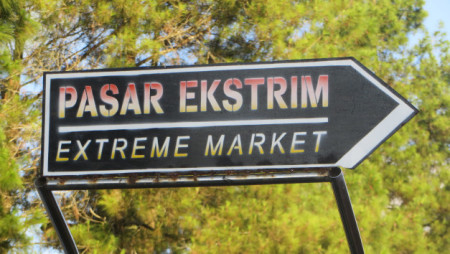
 Tomohon, in the highlands of North Sulawesi, Indonesia is …the “extreme market”. There is certainly something extreme about the serried carcasses, blackened by blow torches to burn off the fur, the faces charred in a rictus grin. The pasar extrim speaks to Sulawesi’s striking biogeography. The Indonesian island straddles the boundary between Asiatic and Australian species—and boasts an extraordinary number of species found nowhere else. But the market also symbolises how Asia’s amazing biodiversity is under threat. Most of the species on sale in Tomohon have seen populations crash because of overhunting (habitat destruction has played a part too)…
 Law-In-Action