Tag Archives: geopolitics

Who is Afraid of China? the Silk Road

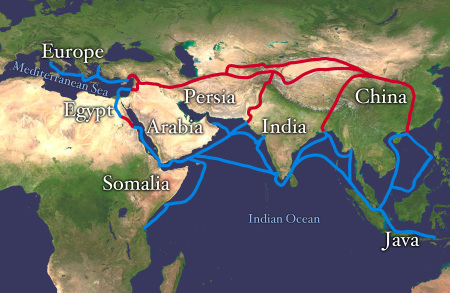
Xi Jinping, China’s president, is leading the new charge. In September 2013 he outlined plans to reinvigorate the ancient Silk Road with a modern network of high-speed rail, motorways, pipelines, ports and fibre-optic cables stretching across the region. The economic highway he envisages follows three routes: one running from central China through Central Asia and the Middle East; a maritime route extending from the southern coast; and a third branching out from Yunna…

Countries bordering on China are wary of its ambitions. They are concerned partly about China’s economic clout, fretting that it will derive disproportionate benefits from the links. (Many of the goods, such as drugs and guns, which Laos and Myanmar have to trade are illegal.) Chinese goods, they worry, may flood their markets and drown their own nascent industries. China enjoys the electricity generated by dams that raise the risk of flash floods downstream. Neighbours grumble that China’s emphasis is on laying tarmac and iron rather than sharing technical know-how, and that it often uses Chinese workers rather than their own citizens.

Stretching the Threads: The New Silk Road, Economist,  Nov. 29, 2014, at 41

In Fear of China: UK, France, Germany

China sees human rights] as a self-serving diplomatic optional extra, to be discarded as soon as they jeopardise other interests. And China, unlike Sri Lanka, is powerful enough to make Western leaders hold their tongues.  Of course Western governments would deny this stoutly. Discussion of human rights, Britain says, is an integral part of its relationship with China. The two countries have held 20 rounds of a bilateral dialogue on the issue and British leaders raise it at every opportunity. But the 20th round was two years ago; and there is little evidence that Chinese leaders see the harping on human rights in private exchanges as more than an irritating quirk, like the British fondness for talking about the weather.

So the version of Mr Cameron’s visit to China believed by many observers is one in which he has swallowed a big chunk of humble pie. After he met Tibet’s exiled spiritual leader, the Dalai Lama, in London last year, an incensed China froze him and his country out. British business complained it was losing out to European competitors. Mr Cameron had to reconfirm that Britain does not advocate Tibetan independence and say that he had no plans to meet the Dalai Lama again.  Only then did China welcome him back, at the head of the biggest British trade mission ever to go there. In the circumstances, he could not risk making provocative public statements about China’s “internal affairs”. It seems unlikely that the leader of any big European country will receive the Dalai Lama again. This week Global Times, a Communist Party paper, crowed that Britain, France and Germany dare not jointly provoke China “over the Dalai Lama issue. Even America’s Barack Obama delayed meeting the Dalai Lama until after his first visit to China in 2009, tacitly conceding China’s point that the meeting was not a matter of principle, but a bargaining chip.

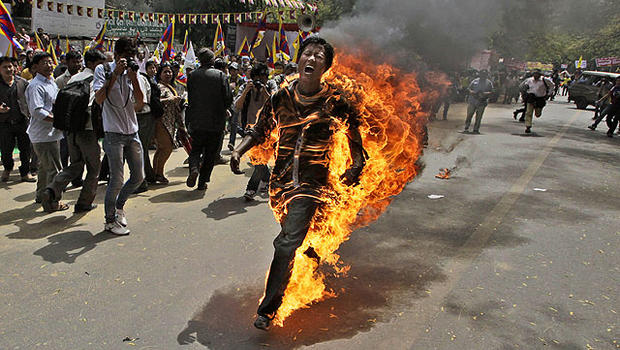
If China is getting its way diplomatically on Tibet, it is not because repression there has eased. Over the past two years, more than 120 Tibetans have set fire to themselves in protest. This week, exiles reported the sentencing of nine Tibetans for alleged separatist activity. Similarly, although freedoms for the majority in China have expanded, dissidents are still persecuted. The most famous of them, Liu Xiaobo, winner of the 2010 Nobel peace prize, remains in jail for no more than advocating peaceful, incremental political reform.

China has succeeded in shifting human rights and Tibet far down the agenda of its international relations for three reasons. One, of course, is its enormous and still fast-growing commercial clout. Not only is it an important market for sluggish Western economies. It is also a big potential investor—in high-speed rail and nuclear projects in Britain, for example.

Second, alarm at China’s expanding military capacity and its assertive approach to territorial disputes is also demanding foreign attention. Joe Biden, the American vice-president, arrived in Beijing from Tokyo on December 4th. Liu Xiaobo and Tibet may have been among his talking-points, but a long way below China’s declaration last month of an Air Defence Identification Zone (ADIZ) over islands disputed with Japan, and the economic issues on which he had hoped to concentrate.

A third factor is China’s tactic of linking foreign criticism to economic and strategic issues. Global Times, not satisfied with Mr Cameron’s contrition, used his visit to chide Britain for the support it has shown Japan over the ADIZ, and for its alleged fomenting of trouble in Hong Kong. China might argue that linkage is something it learned from the West, and the days when its normal trading ties with America were hostage to human-rights concerns. But now China itself seems happy to use commercial pressure to bully Japan or Britain, for example.

Banyan: Lip Service, Economist, Dec. 7, 2013, at 48

Gas as Tool of Foreign Policy: Gazprom

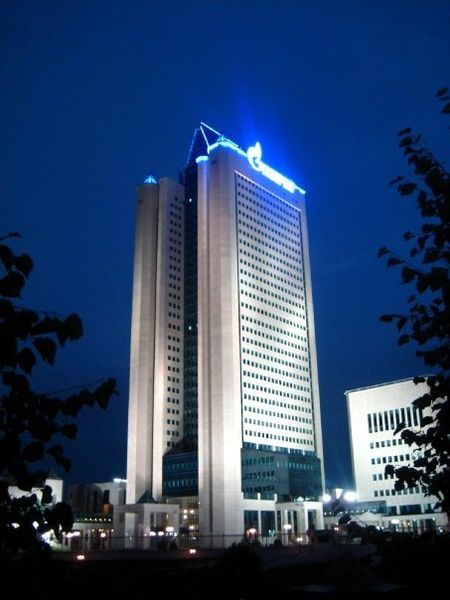
The good times for Gazprom once seemed like they would never end. The world’s largest natural-gas producer, founded out of the old Soviet gas ministry, enjoyed sky-high gas prices for years. The gas flowed along pipelines into Europe; the profits flowed back. Gazprom began work on a $1.9 billion headquarters in St Petersburg and acted as a bottomless wallet for Russia’s rulers. Whatever problems it encountered, it could “drown with money”, as Natalia Volchkova of the New Economic School in Moscow puts it.  All this is now under threat. Its ageing gasfields are in decline. Thanks to America’s shale boom, gas is more plentiful on the world market. Gazprom’s European customers are realising that they have other choices. The prices it can charge are falling, and with them the firm’s prospects.

Years of easy money have made Gazprom fat and slow. It dominates its domestic market, producing 75% of Russia’s gas. It enjoys a monopoly over exports of the stuff. Until recently, it had a tight grip on western Europe, where it supplies around 25% of gas. It retains an even tighter grip on former Soviet-bloc countries in eastern Europe. For a long time, this insulated Gazprom from shifts in global gas markets.

Gazprom is not a normal company. It serves two masters. As a firm that issues shares to outside investors, it should in theory strive to maximise profits in the long run. But since it is majority-owned by the Russian state, it pursues political goals, too.  In practice, it serves one master more assiduously than the other. As President Vladimir Putin consolidated his power in the early 2000s, he built Gazprom into a main instrument of Russia’s new state capitalism. He appointed allies to top positions. He used Gazprom as a tool of foreign policy, for example by cutting off gas supplies to Georgia, Ukraine, Belarus and Moldova during political rows.  Gazprom’s deep pockets have helped Mr Putin at home, too. It sells gas cheaply in Russia, so that the poor do not freeze in winter. Oddly for an energy company, it has bought television stations and newspapers, all of which are now friendly to the Kremlin. Mikhail Krutikhin of RusEnergy, a consultancy, says, “Gazprom has one manager: Putin.”

With friends in high places, Gazprom has enjoyed low taxes and privileged access to gasfields. But its costs are startlingly high…And some projects favoured by Mr Putin are of questionable economic value. For example, he is dead set on building a $21-billion South Stream pipeline between southern Russia and Austria via eastern Europe. This project has political appeal because it would bypass troublesome Ukraine as the main transit route for gas to Europe. But given weak prices and demand, it is “commercial idiocy”, says Mr Krutikhin. The opening in 2011 of Nord Stream, an offshore pipeline to Germany, was a diplomatic coup for Mr Putin, but it is still running far below capacity….

Gas on the spot market is often much cheaper than Russian gas delivered under long-term contracts… Because so many of its customers are tied to contracts, the full effects of the global gas glut on Gazprom’s bottom line will not be felt straight away….   The final threat to Gazprom’s old way of doing business is legal. An antitrust probe launched by the European Commission alleges that Gazprom is using its dominant position in central and eastern Europe to restrict competition and hike prices. If it loses the case, it could face a fine of up to $14 billion and lose the mighty lever of being able to charge some European countries more than others.  An adverse ruling might also threaten its strategy of trying to dominate the European gas market by owning both the supplies and the means of distributing them. Gazprom has quietly bought gas pipelines and storage facilities. It has tried to strike deals whereby it lends money to impoverished European utilities in order to secure their custom. If this strategy stops working, Gazprom will no longer be such a potent foreign-policy tool for the Kremlin….

Gazprom’s future may involve more robust competition even at home. Two domestic rivals have emerged: Novatek, a gas producer part owned by Gennady Timchenko, an old acquaintance of Mr Putin’s, and Rosneft, a state-owned oil firm led by Mr Putin’s trusted adviser, Igor Sechin. Put together, non-Gazprom firms now account for a quarter of all Russian gas production….

The other way to get gas to Asia would be via pipeline. The obvious destination is China, which sits on Russia’s doorstep and is potentially the world’s biggest market for gas. The two countries have haggled unsuccessfully for a decade. In February they revealed they had agreed to everything related to pipeline exports apart from the price. China has signed up to import gas from Central Asia, Australia, the Middle East and west Africa; almost everywhere, in fact, except Russia. China refuses to pay Asian prices; Gazprom won’t budge.

Gazprom: Russia’s wounded giant, Economist, Mar. 30, 2013, at 69
An Independent Kurdistan? Ask the Oil Companies

Iraq is blessed with abundant oil that is cheap to extract and close to newly built export terminals. Production has hit a three-decade high and continues to rise steadily. By 2035, predicts the International Energy Agency (IEA) Iraqi output could more than double, to 8.3m barrels per day (b/d).  But Western oil firms are increasingly reluctant to play a part in this boom. ExxonMobil appears keen to sell its stake in West Qurna, one of the giant fields in southern Iraq that will provide much of the production growth. Royal Dutch Shell and BP are both still working in the south, but unhappily so. Suffocating bureaucracy and onerous contract terms make life difficult. Heavier-than-expected costs and delays to infrastructure undercut profits.

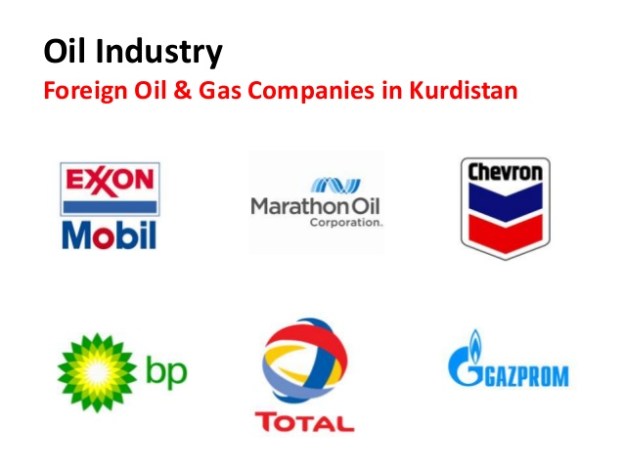
Three years ago when they signed contracts with the Iraqi government, the oil majors were prepared to accept hiccups. But their patience has thinned with the arrival of an alternative source of Iraqi oil. Kurdistan, the semi-autonomous province in the country’s north, has been offering competing and much more lucrative deals. ExxonMobil’s decision last year to acquire six blocks in the region angered the central government, which considers the deal illegal and lays claim to Kurdish oil. But the world’s largest oil company started a trend. In July Total, Chevron and Gazprom all signed contracts with the Kurdistan regional government, potentially dooming their chances of winning future business in the south. BG, a British firm, was in Erbil, the Kurdish capital, on a scouting mission in late October.

“Kurdistan is 11 years ahead of the rest of Iraq in terms of political and commercial development,” says Luay al-Khatteeb, head of the Iraq Energy Institute, a London-based think-tank. Kurdistan’s potential oil reserves of around 45 billion barrels are less than a third of those in southern Iraq. Still, the Kurdish oil minister, Ashti Hawrami, believes output of 1m b/d is possible within three years.

The tricky part is getting the oil to market. The Kurds today export around 200,000 b/d through pipelines controlled by the central government. Mr Hawrami wants to build a new Kurdish-owned pipe to Turkey, feeding long-held dreams of Kurdish independence. That unnerves Turkey which is fighting Kurdish separatists in its south-east. Some Turkish officials seem to acknowledge the possibility of an eventual Kurdish state in northern Iraq and seek to make it commercially dependent on Turkey. Co-operating with the Iraqi Kurds would also generate lucrative transit fees and offer Turkey an alternative to oil from Russia and Iran.

The Iraqi government is pondering how to respond. It could sweeten the terms of its contracts with the oil firms in the south. That might staunch the flow of Western capital to Kurdistan. In the meantime, the main beneficiaries of the majors’ receding interest in southern Iraq are Asian oil firms. Chinese will account for about 2m b/d of Iraq’s production by 2020. Fatih Birol, the IEA’s chief economist, talks of a “Baghdad-to-Beijing” axis.

Iraq’s oil: The Kurdish opening, Economist,Nov. 3, at 49