
Tag Archives: international law export controls

Nationalizing a Crown Jewel: the case of Nexperia

U.S. officials’ warning to their Dutch counterparts was stark: If they wanted a Netherlands-based chip maker to avoid being put on a trade blacklist, it would almost certainly have to remove its Chinese owner as CEO. “The fact that the company’s CEO is still that same Chinese owner is problematic,” American officials said in a June 2025 meeting on the topic. The Americans soon got their wish. In September 25, 2025, the Dutch economy ministry seized control of Nexperia from China’s Wingtech Technology. The next day, a Dutch court granted an emergency petition to suspend Wingtech founder Zhang Xuezheng as Nexperia’s CEO and put all but one of the semiconductor company’s shares under external management.

China quickly fired back at the seizure, ordering Wingtech in early October to suspend exports of Nexperia of chips that the company has long sent for packaging and testing in China…The Dutch economy minister said in a letter to parliament that he moved to seize control of Nexperia based on evidence that the CEO was moving quickly to shift production capacity, financial resources and intellectual property to China, not because of pressure from any other country… The Dutch government and Dutch and German executives of the company had tried for months to ringfence the company’s business from Chinese control to accommodate domestic concerns—and avoid being hit by the U.S. blacklist… Dutch officials told Nexperia that the coming expansion of U.S. trade restrictions could lead to restrictions on the business, unless measures were taken to limit the transfer of knowledge and capabilities to China.

In the past, Nexperia relied on its European factories and contract manufacturers in Taiwan to make chips for China. In 2020, Zhang set up a wafer factory in Shanghai. The business, called Wingskysemi, started production in 2023 and has become one of Nexperia’s key suppliers….

Excerpt from Sam Schechner et al, , How U.S. Pressured Netherlands to Oust CEO of Chinese-Owned Chip Maker, WSJ, Oct. 14, 2025
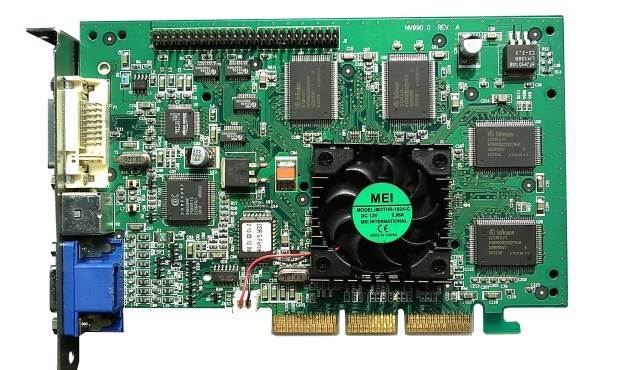
US-China Locked in Perpetual Cat and Mouse Game

Chinese artificial-intelligence developers have found a way to use the most advanced American chips without bringing them to China. They are working with brokers to access computing power overseas, sometimes masking their identity using techniques from the cryptocurrency world. The tactic comes in response to U.S. export controls that have prevented Chinese companies from directly importing sought after AI chips developed by U.S.-based Nvidia. While it is still possible for Chinese users to physically bring Nvidia’s chips to China by tapping a network of gray-market sellers, the process is cumbersome and can’t supply all the needs of big users.

One entrepreneur helping Chinese companies overcome the hurdles is Derek Aw, a former bitcoin miner. He persuaded investors in Dubai and the U.S. to fund the purchase of AI servers housing Nvidia’s powerful H100 chips. In June 2024, Aw’s company loaded more than 300 servers with the chips into a data center in Brisbane, Australia. Three weeks later, the servers began processing AI algorithms for a company in Beijing. “There is demand. There is profit. Naturally someone will provide the supply,” Aw said.

Renting far away computing power is nothing new, and many global companies shuffle data around the world using U.S. companies’ services such as Google Cloud, Microsoft Azure and Amazon Web Services. However, those companies, like banks, have “Know Your Customer” policies that may make it difficult for some Chinese customers to obtain the most advanced computing power.

The buyers and sellers of computing power and the middlemen connecting them aren’t breaking any laws, lawyers familiar with U.S. sanctions say. Washington has targeted exports of advanced chips, equipment and technology, but cloud companies say the export rules don’t restrict Chinese companies or their foreign affiliates from accessing U.S. cloud services using Nvidia chips. The Commerce Department in January 2014 proposed a rule that seeks to prevent malicious foreign entities from using U.S. cloud computing services for activities including training large AI models. U.S. cloud companies argue that the rule won’t prevent abuse and could instead undermine customer trust and weaken their competitiveness.

In platforms used by Aw and others, the billing and payment methods are designed to give the participants a high degree of anonymity. Buyers and sellers of computing power use a “smart contract” in which the terms are set in a publicly accessible digital record book. The parties to the contract are identified only by a series of letters and numbers and the buyer pays with cryptocurrency. The process extends the anonymity of cryptocurrency to the contract itself, with both using the digital record-keeping technology known as blockchain. Aw said even he might not know the real identity of the buyer. As a further mask, he and others said Chinese AI companies often make transactions through subsidiaries in Singapore or elsewhere.

The service of selling scattered computing power is called a decentralized GPU model.

Excerpts from Raffaele Huang, China’s AI Engineers Are Secretly Accessing Banned Nvidia Chips, WSJ, Aug. 26, 2024