Tag Archives: power elite

Having What Nobody Can Have: The Superiors

Travel has always been a key feature of wealthy people’s lives, and more than ever they prioritize privacy, efficiency and customization, industry specialists say. Lauren Beall, owner of Travel Couture in Miami Beach, specializes in arranging custom travel experiences for the ultrawealthy. She has booked private islands for clients and flown in Michelin-starred chefs, yoga instructors and performers.

One coveted offering is a suite above the Christian Dior flagship store in Paris that can be rented, and includes an after-hours shopping excursion and a private dinner at Monsieur Dior restaurant. An estate Beall has reserved in Scotland comes with private chefs, horses to explore the countryside and a helicopter to visit towns for the day.

“We’re into that exclusive access right now—things that other people can’t get,” Beall said. “There’s a huge price tag that goes with it.”

Excerpt from Arias Campo-Flores, The Ultrarich Pay Big for Extreme Privacy, WSJ, Nov. 15, 2025

The Billionaires Who Conquer the World One Country at a Time

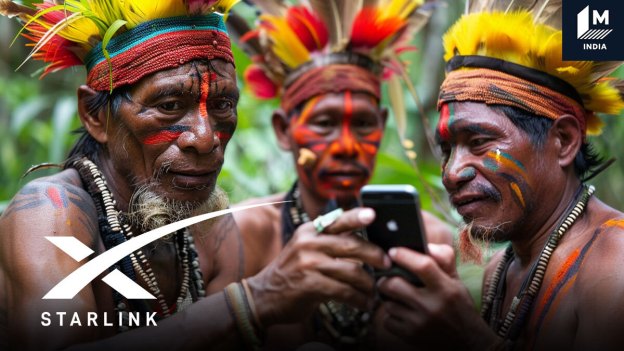
Elon Musk is so popular in this farming region of Brazil that his face is plastered in stores alongside herds of cows, and local magazines depict him as a superhero. The billionaire’s appeal is simple: His satellite company Starlink has connected Brazil’s vast rural and jungle expanses to the internet.  “We were all rooting for Starlink to come to Brazil…we knew what a big change it would make,” said Arthur Cursino, a ginger farmer here who once had to climb a tree to get a cellphone signal and now, thanks to Starlink, runs one of Brazil’s most popular YouTube channels on farming.

But Starlink’s rapid expansion has come as officials in the administration of leftist President Luiz Inácio Lula da Silva have raised concerns about Musk’s growing influence over the country. After getting regulatory approval two years ago, Starlink eclipsed competitors in May 2024 to become the country’s biggest satellite internet provider.  Musk, a billionaire whose companies include social-media platform X and electric-car maker Tesla, has courted right-wing leaders around the world, including da Silva’s predecessor and rival, Jair Bolsonaro. Musk threw his support behind the candidacy of former President Donald Trump.

The regions where Starlink has become popular—Brazil’s agricultural heartland and the Amazon rainforest—are Bolsonaro strongholds where da Silva faces deep political opposition. Now, Brazil’s federal audit court is investigating Starlink’s use by public authorities in the country, threatening to place restrictions on the service. Anatel, the telecoms regulator, has opened a separate inquiry into Starlink, saying that its rapid growth in subscribers of more than 20% a month could crowd out new players.

Excerpt from Samantha Pearson, Brazil Sees Elon Musk’s Starlink as a Political Threat, July 26, 2024

Tax Evaders and Whistleblowers

What  Edward Snowden is to mass surveillance, Hervé Falciani is becoming to private banking. In 2008 the now 41-year-old native of Monaco walked out of the Geneva branch of HSBC, where he had worked for three years, clutching five CD-ROMs containing data on thousands of account holders. The theft lobbed a bomb into Europe’s private-banking market, spawning raids and tax-evasion investigations continentwide. In the latest, this week, Belgian agents swooped on the homes of 20 HSBC clients, including some with ties to Antwerp diamond dealers.

Mr Falciani went on the run when the Swiss charged him with data theft. After moving to Spain he was imprisoned, but freed when a judge denied a Swiss extradition request. At one point, he claims, he was kidnapped by Mossad agents who wanted a peek at the clients’ names. He has now taken refuge in France, where the government has offered him protection in return for helping it hunt for tax dodgers.

Several countries have used the data to bring cases against suspected evaders. Revelations that dozens of Greek public figures hid money offshore have magnified the tumult in that country’s politics. Spain and France have fingered hundreds of high-level cheats and retrieved €350m ($610m) in back taxes. Mr Falciani maintains that his CDs provided support for an American probe into weak money-laundering controls at HSBC, which led to a $1.9 billion settlement. HSBC disputes this.

Mr Falciani has said he still fears for his safety, despite round-the-clock protection from three armed guards provided by the French. At least he is not short of work. He has been helping France’s tax authorities develop long-term anti-tax-evasion measures. And he recently became an adviser to a new Spanish political party, Partido X (which, ironically, tries to keep its members anonymous).

He insists his motives have always been pure: to repel Switzerland’s “attack” on other countries’ tax laws and exchequers. HSBC says he is no high-minded whistle-blower. He tried to sell the data at first, the bank contends, and started to work with prosecutors only when he was jailed in Spain. It claims he has data on only 15,000 clients (Mr Falciani says it is eight times that) and that the stolen files contain errors.

Either way, many more tax-shy Europeans have reason to sleep fitfully. Other countries are said to want a look at the data, some of which are yet to be decrypted. When Mr Falciani first made the rounds with his discs, there was little interest. The fiscal strains produced by the euro crisis have changed all that.

Banks and tax evasion: Hervé lifting, Economist, Oct. 19, 2013, at 79