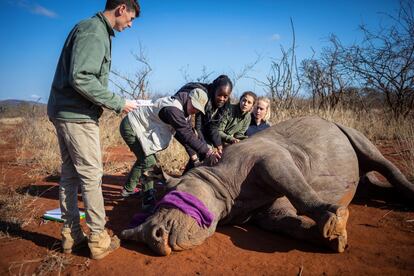
In a pioneering effort to combat wildlife trafficking of the threatened rhinoceros, a South African University began implementing a project supported by the International Atomic Energy Agency (IAEA). The project combines the safe insertion of radioactive isotopes into rhino horns… to deter and detect illegal poaching.
With over 10,000 rhinos lost to poaching in the past decade, South Africa – home to the world’s largest population of rhinos – remains a target for criminals driven by the illegal trade of rhino horn. In the first quarter of 2025 alone, the South African Ministry of Forestry, Fisheries and the Environment reported 103 rhinos poached. In response, this project run by the University of the Witwatersrand is using radiation to support conservation and enforcement efforts.
The Rhisotope Project was created in 2021 with the idea to tag rhino horns with radioactive material. This makes the horns detectable by radiation portal monitors (RPMs) already deployed at borders, ports and airports worldwide. These RPMs, commonly used to detect nuclear and other radioactive material, can now be harnessed against wildlife crime.
Excerpt from Nuclear Science and Nuclear Security Infrastructure to Protect Rare Rhinos: IAEA-Supported Project Marks a Milestone, IAEA News, July 2025
 Law-In-Action