Tag Archives: Sudan war

Why and How Dubai Conquered Sudan

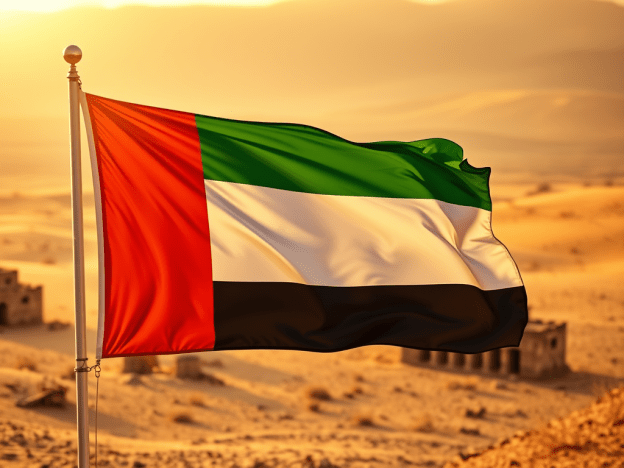
U.S. intelligence agencies say the United Arab Emirates sent increasing supplies of weapons including sophisticated Chinese drones to a major Sudanese militia in 2025 bolstering a group that has been accused of genocide and pouring fuel on a conflict that has created one of the world’s worst humanitarian crises…It is the latest example of how the wealthy Gulf state is quietly projecting power to influence the course of conflicts and assert its interests in a region dominated by much larger power brokers, from Saudi Arabia to Turkey and Iran.

A key U.S. partner, the U.A.E. has shipped arms into Sudan to shore up the Rapid Support Forces (RSF) of Sudan after a string of setbacks that culminated with the militia losing control of the capital, Khartoum, in March 2025. Rearmed, the militia survived that potential turning point in the war and launched a renewed offensive against the government that triggered some of the worst destruction of the two-year war. The RSF’s campaign included an expanded assault on North Darfur state, where the militia tightened an 18-month siege of the regional capital of El Fasher, cutting off tens of thousands of people from adequate food and medicine…“The war would be over if not for the U.A.E.,” said Cameron Hudson, a former chief of staff to successive U.S. presidential special envoys for Sudan. “The only thing that is keeping them in this war is the overwhelming amount of military support that they’re receiving from the U.A.E.,” he said of the RSF…The U.A.E. is betting on the RSF to help protect Emirati interests in Sudan. The country is strategically located on the Red Sea, where the Sudanese government canceled a $6 billion Emirati port deal in 2024, and has vast resources of gold, much of which has historically been exported to Dubai. The U.A.E. has invested billions of dollars in the country.

Excerpt from Jared Malsin at al., How U.A.E. Arms Bolstered a Sudanese Militia Accused of Genocide, WSJ, Oct. 28, 2025
How the Drug War has Fueled Sudan’s Conflict

The war in Sudan between the country’s military and the rebel Rapid Support Forces (RSF) has turned in 2024 into a battleground for more foreign powers, drawing in fighters and weapons from as far as Latin America and Europe. Several regional governments are vying to assert their influence as the fighting escalates, led by the United Arab Emirates on one side and Egypt on the other—with devastating consequences for Sudan’s 48 million people, some of whom are now in the grip of famine. At stake is control of Red Sea shipping lanes, some of Africa’s largest gold reserves and the contested waters of the Nile.

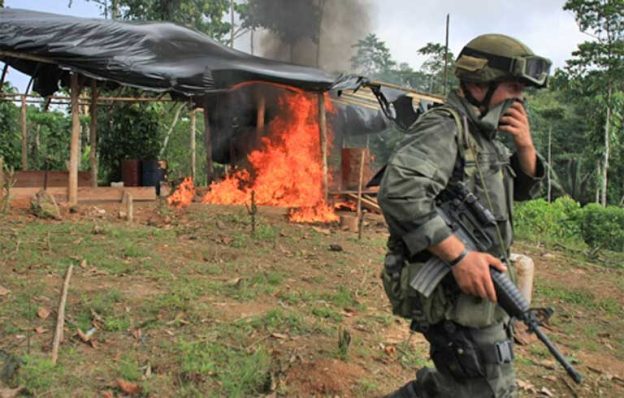
The Colombian fighters seized in November 2024 in Darfur were hired earlier this year by an Abu Dhabi-based company called Global Security Services Group (GSSC)…The company describes itself as the only armed private security provider to the Emirati government and lists as its clients the Gulf state’s ministries of presidential affairs, interior and foreign affairs.  In Uganda, where GSSG has trained local troops in counterterrorism operations and VIP protection, the company presented itself as acting on behalf of the Emirati government, an army spokesman said. 

With its large stock of drug-war veterans trained on American weapons, Colombia has long been a target for recruiters from overseas security and mercenary groups. A decade ago, the U.A.E., through military contractors, sent Colombians to fight in the civil war in Yemen. In September 2024, a Bogotá, Colombia-registered recruitment company called International Services Agency, or A4SI, began posting ads on its website looking for drone operators, cybersecurity specialists and bodyguards to deploy in Africa…

By some estimates, as many as 150,000 people have been killed in Sudan. About 25 million, more than half of the population, are suffering crisis levels of hunger and one in four Sudanese have been forced from their homes. Famine has been declared in a Darfur camp hosting between 500,000 and a million displaced people.

Excerpts from Benoit Faucon and Gabriele Stein, The Global War Machine Supplying Colombian Mercenaries to Fight in Sudan, WSJ, Dec. 11, 2024

How Countries Dissolve: the Conquest of Africa

As Wagner fighters, a Russian mercenary group, play a central role in Russia’s war in Ukraine, the group is quietly expanding its alliances in Africa, penetrating new mineral-rich areas, exploiting the exit of Western powers and creating alliances with local fighters. Wagner fighters and instructors are working with the government of the Central African Republic in a bid to seize areas rich with precious minerals that could be exported through Sudan, say Western security officials. Wagner is also looking to expand its influence in Burkina Faso and Ivory Coast, while consolidating its relationship with the military junta in Mali

With an estimated 5,000 men stationed across Africa, Wagner’s footprint is now almost as large as the U.S.’s 6,000 troops and support personnel on the continent. ..The push aims to create a corridor from Wagner-controlled mines in the Central African Republic through Sudan, where the group works closely with a local strongman, and onto the mineral trading hub of Dubai.

In January 2023,  Mr. Prigozhin, head of Wagner, stressed that sending fighters to Africa was “absolutely necessary.” “There are presidents to whom I gave my word that I would defend them,” he said on his Telegram channel. “If I now withdraw one hundred, two hundred or five hundred fighters from there, then this country will simply cease to exist.”  

Excerpts from Benoit Faucon & Joe Parkinson, Wagner Group Aims to Bolster Putin’s Influence in Africa, WSJ, Feb. 14, 2023

UN as a Lost Cause in Darfur

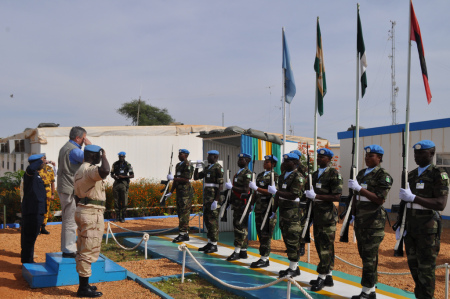
[V]illagers in Darfur say their lives can scarcely get any worse if Sudan insists on international peacekeepers leaving their region.  UNAMID, the joint United Nations-African Union Mission in Darfur, was deployed seven years ago to stem violence against civilians during a civil war in which the Sudanese government was accused of war crimes, crimes against humanity and genocide.  With fighting still dragging on, UNAMID’s shortcomings have drawn criticism from the very people it was deployed to protect and Sudan has told it to devise an exit strategy.

Khartoum’s move elicited indifference rather than opposition in northern Darfur, where much of the violence now rages.  “We won’t be affected if UNAMID leaves because it doesn’t play a significant role in protecting civilians,” said Mohamed Abdullah, a local civilian. “We only hear about UNAMID submitting reports. We don’t know what they do for us….

“Our lives are very difficult since the war began. We cannot grow crops except in a very small area because rebels and gangs come and loot our fields,” said Mohamed Ismail, a resident.Pointing to nearby mountains, Ismail added: “Just six kilometres from here, rebels and bandits dominate the region.”

The Darfur conflict, which erupted in 2003 when mainly African tribes took up arms against the Arab-led government in Khartoum, has killed hundreds of thousands of people and displaced over two million, according to the United Nations.

Tabit was under rebel control for eight years of the war, with the government reasserting its authority in 2010.  But much of that authority is nominal, with gunmen stalking dirt roads to attack military and civilian vehicles alike, preventing villagers from travelling even for healthcare….  With officials standing by during the government-organised press trip, it was difficult to speak freely about the alleged rape of 200 women and girls by Sudan’s forces in Tabit, highlighting the hurdles faced by UNAMID investigators.  UNAMID’s conclusion that there was “no evidence” of the rapes triggered an outcry from rights activists. Khartoum had delayed UNAMID’s first visit to the area in early November and denied it permission to visit a second time…

Last month, an internal U.N. review said UNAMID had failed to provide U.N. headquarters with full reports on attacks against civilians and peacekeepers.The review was ordered after media reports alleged that UNAMID had covered up details of deadly attacks to avoid provoking the government.  “UNAMID is something of a lost cause,” said a Sudan analyst with a conflict-monitoring organisation, asking not to be named.

Excerpts, War-weary Darfuris see grim future with or without UN peacekeepers, Reuters, Nov.25. 2014