World Bank on March 17, 2026 confessed to an error of more than three decades duration, moving to embrace industrial policy as tariffs, subsidies and a variety of other interventions become increasingly popular with governments in search of growth. Back in 1993, the bank published an assessment of the rapid economic growth achieved by some economies in east Asia, and which appeared to owe something to government interventions in support of selected industries. The bank controversially concluded that their economic success had nothing to do with those interventions, which it instead described as a “costly failure.” As World Bank Chief Economist Indermit Gill wrote in a new report, that conclusion helped “stigmatize” industrial policy just as a leap forward in transport and communications technologies spurred a period of intense globalization. Instead, governments were encouraged to let markets operate without direction or barriers to trade, while keeping inflation low and budget deficits narrow and backing investment in education and vital infrastructure. “That advice has not aged well—it has the practical value of a floppy disk today,” wrote Gill.
Taking a fresh look at the evidence, the new report concludes that the South Korean government’s “big push” during the 1970s in support of heavy industry and chemicals has resulted in the economy being 3% larger each year. In other words, it was very much not a failure, nor was it particularly costly.
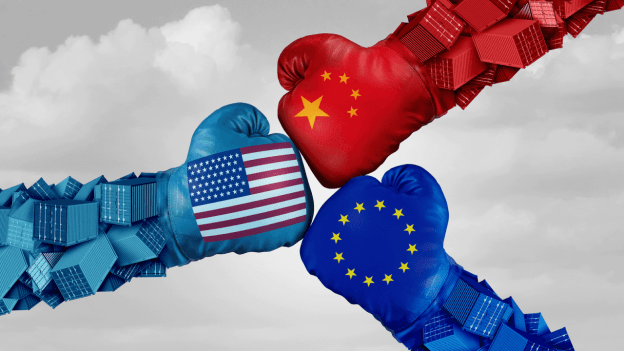
Despite the stigma, many economies never entirely lost faith in industrial policy. Indeed, China resorted to a wide variety of interventions during its period of record growth. In emulation, many rich economies—including the U.S.—have begun to implement industrial policies. “Industrial policy—the range of policy tools that governments use to shape what an economy produces rather than leave it to the discretion of markets alone—is back with a vengeance,” the bank said.
Excerpt from Paul Hannon, World Bank Embraces Industrial Policy, Abandoning Three Decades of Stigma, WSJ, May 17, 2026
 Law-In-Action