Tag Archives: EV-industry supply chain

Chinese Billionaires Helping U.S. Billionaires

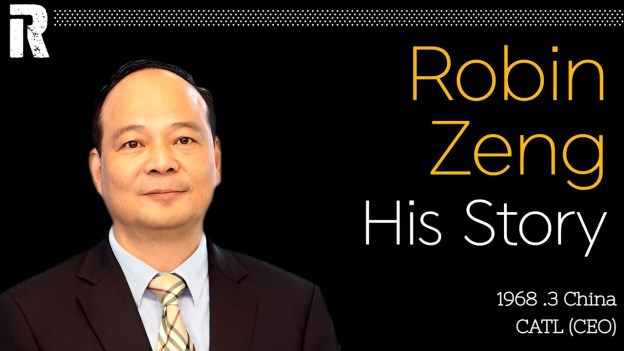
The United States has spent the past few years ghosting Robin Zeng, China’s fourth-richest man. To the U.S. government, Chinese battery maker CATL is a geopolitical threat to be warded off with tariffs and national-security curbs. Yet CATL has grown to become the world’s largest electric-vehicle battery manufacturer thanks to its technology and low costs. It posted record profit of more than $10 billion in 2025, and an estimated one in three EVs sold around the world carries its batteries. Ford recently ditched South Korea’s SK Group as its joint-venture partner for battery projects, focusing instead on its plan to build CATL-designed batteries at a $3 billion factory in Michigan. Ford is paying to license the Chinese company’s intellectual property, a workaround the U.S. allows while it puts up legal and political barriers to prevent CATL from building its own plants. General Motors is set to import China-made batteries from CATL and put them in its new Chevrolet Bolt—also legal, albeit only by swallowing a 60% tariff. And Tesla is using CATL technology for a battery plant in Nevada producing energy-storage systems, a business that is growing strongly while Tesla’s core EV business has stalled.

Critics of China argue that embedding a Chinese battery maker in the U.S. supply chain would make the U.S. even more vulnerable to Beijing’s economic coercion and undercut the chances of American battery companies catching up. CALT was placed in 2025 on a Pentagon list of companies working with China’s military.

Founded just 15 years ago, CATL benefited from a Beijing policy in the second half of the 2010s that gave Chinese EV makers subsidies if they used batteries from approved supplies such as CATL. It also received government money directly—more than $500 million in the first half of 2024 alone, according to CATL filings. Only state-owned petrochemical company Sinopec got more among mainland-China-listed companied. The iron-based battery chemistry, called lithium ferrophosphate, or LFP, costs up to 30% less a kilowatt-hour compared with nickel-manganese-cobalt batteries, the type South Korean and Japanese companies usually produce, industry experts say. In 2025, CATL developed an LFP battery with 500 miles of driving range that can be powered for up to 320 miles in just five minutes.

CATL’s technology is the reason Ford chose it for the Michigan factory tie-up, said Lisa Drake, a Ford executive on the project. “It probably would’ve taken us a decade to catch up and have LFP technology on our own,” Drake said in 2025.  She lamented that LFP batteries were invented in the U.S., but Chinese firms such as CATL figured out how to make them viable in cars. “We just didn’t commercialize that technology,” she said.

Excerpt from Yoko Kubota, The Chinese Billionaire Who Says America’s EV Market Is Doomed Without Him, WSJ, Mar. 23, 2026
The New Opium War: How the World Got Addicted to China

 A fundamental axiom of economics is that when two individuals or countries trade, both are better off. In the decades after World War II, the U.S. was the world’s largest exporter and economy and as it grew, it imported more, helping its partners. As they grew, they bought more of what the U.S. made. Expanding trade helped everyone specialize, leading to more competition, innovation and choice, and lower costs.

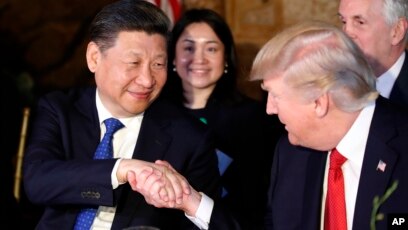
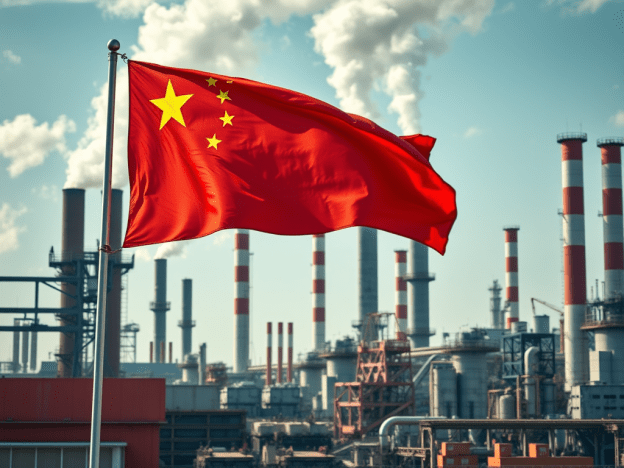
China is now the world’s second-largest economy and its largest exporter, but its philosophy is quite different. It has never believed in balanced trade nor comparative advantage. Even as it imported critical technology from the West, its long-term goal was always self-sufficiency. In 2020, Chinese leader Xi Jinping codified this approach as “dual circulation.” This would, he said, “tighten the international industrial chain’s dependence” on China while ensuring China’s production was “independent” and “self-sustaining.”

And as China expands into high-end manufacturing such as aircraft and semiconductors, Xi has decreed it must not relinquish low-end production such as toys and clothes. Beijing has discouraged Chinese companies that invest abroad from transferring key know-how, such as in the production of iPhones and batteries. Xi has rejected fiscal reforms that would tilt its economy away from investment, exports and saving and toward household consumption and imports.

Excerpt from Greg Ip, World Pays a Price for China’s Growth, WSJ, Dec. 6, 2025

How Does it Feel to Beg China? Netherlands Knows

Dutch chipmaker Nexperia has publicly called on its China unit to help restore supply chain operations, warning in an open letter published on its website  on November 28, 2025 that customers across industries are reporting “imminent production outages.” Nexperia’s Dutch unit said that is open letter followed “repeated attempts to establish direct communication through conventional channels” but did not have “any meaningful response.” The letter marks the latest twist in a long-running saga that has threatened global automotive supply chains and stoked a bitter battle between Amsterdam and Beijing over technology transfer.

In a statement, Wingtech Technology, Nexperia’s Chinese parent stated that Nexperia’s true intent is to buy time ” to construct a ‘de-China-ized’ supply chain and permanently strip Wingtech of its shareholder rights.”

The situation began in September 2025, when the Dutch government invoked a Cold War-era law to effectively take control of Nexperia. The highly unusual move was reportedly made after the U.S. raised security concerns.

Beijing responded by moving to block its products from leaving China, which, in turn, raised the alarm among global automakers as they faced shortages of the chipmaker’s components.

In an apparent reprieve on November 19, 2025, however, the Dutch government said it had suspended its state intervention at Nexperia following talks with Chinese authorities…But while the measures to seize the Dutch Nexperia subsidiary have been lifted, the restoration of the corporate structure and relation with parent company Wingtech has yet to be accomplished.

Excerpt from Sam Meredith, What’s going on at Nexperia? China’s Wingtech escalates war of words with Dutch chipmaker, CNBC, Nov. 28, 2028

China Against United States at the World Trade Organization

China filed a complaint in March 2024  at the World Trade Organization over the U.S.’s Inflation Reduction Act, saying that it was discriminatory and distorted fair competition.  Under the Inflation Reduction Act, which President Biden signed into law in August 2022, consumers in the U.S. won’t be able to claim a $7,500 clean-vehicle tax credit if they buy cars containing battery components from a “foreign entity of concern” starting in 2024. The policy will extend to the minerals that go into battery components in 2025. The move was seen by industry players as a way to reduce China’s role in the U.S. EV-industry supply chain.

The definition covers any firm based in China, including subsidiaries of U.S. companies, as well as companies elsewhere that are 25% or more owned by state-backed entities from China. The rules also apply to Iran, North Korea and Russia. In February 2024, Biden ordered the U.S. Commerce Department to open an investigation into foreign-made software in cars, citing Chinese technology as a potential national-security risk. The probe could lead to restrictions on the use of certain parts in cars in the U.S.

In 2023, China became the world’s biggest car exporter, surpassing Japan and Germany, while China’s EV maker BYD overtook Tesla  to become the bestselling pure EV maker in the world in the fourth quarter of 2023.

Excerpts  from Sha Hua, China Files WTO Complaint Against U.S. Over Electric-Vehicle Subsidies, WSJ, Mar. 26, 2024