
Tag Archives: whistleblowing

Iceland as a Privacy Haven

A former NATO airbase in Iceland  looks  like nothing more than a huge warehouse from the outside.  But the barbed-wire fence surrounding it and surveillance cameras atop its gates betray  its importance.  This facility, which began operating in February 2012, is one of several data centres in Iceland. It’s run by Verne Global, a company that allows its customers to store data on servers here.

Tate Cantrell, the company’s chief technical officer, explained why Verne Global favoured this tiny Nordic nation of all places. “In Iceland, you’ve got this ideal situation: energy, excellent connectivity for data, and a constant cool climate. So Iceland was an obvious choice.”  Iceland’s abundant renewable energy from geothermal and hydroelectric plants means the costs of running these data centres are low. And the Gulf Stream current keeps the temperature in Iceland more or less stable throughout the year, avoiding the need to provide cooling for the servers and computers.

Data centres based here have another advantage, too: Iceland is in the initial stage of implementing the most progressive data-privacy laws in the world, a major selling point especially after whistleblower Edward Snowden’s revelations regarding widespread surveillance by the United States’ National Security Agency (NSA).  A recent paper published by Verne Global stated that Iceland was “uniquely positioned as a data privacy haven” because of the new regulations.

The International Modern Media Institute (IMMI), a non-profit organisation, has played an instrumental role in designing and promoting the legal framework for Iceland’s new data privacy laws….Birgitta Jónsdóttir is IMMI’s spokeswoman and now represents the Pirate Party in the Icelandic parliament.  In 2010, the IMMI, then known as the Icelandic Modern Media Initiative, proposed a resolution to change Icelandic law to ensure data privacy and freedom of speech. The proposal includes protection for whistleblowers and journalists’ sources, as well as an “ultra-modern Freedom of Information Act” based on elements from existing laws in Estonia, the United Kingdom, and Norway.

The data centres would benefit from a clause in the law that ensures the protection of intermediaries such as internet service providers and telecommunications carriers.The resolution was passed by the Icelandic parliament that same year, and is now being implemented into law, piece by piece.  “A bit more than half of what IMMI proposed has been made into law – somewhere between 50 and 70 percent,” Jonsdottir said…

Despite the new measures, Icelandic journalist Jón Bjarki Magnusson said he thinks his country still has a long way to go when it comes to media freedom.  “IMMI for me is a bit like a fairy tale, reality on the ground is different from the idea,” he told Al Jazeera at a café in downtown Reykjavik. “I like the idea but Iceland is far from being a haven for free journalism.”Earlier this year, Magnusson worked on an investigative story for DV newspaper, in which he wrongly identified an assistant to Iceland’s interior minister as being under police investigation.  Magnusson and his colleagues quickly realised their mistake and issued an apology within a few hours of publishing. But that didn’t stop the official from pressing criminal libel charges against Magnusson and a colleague of his, Johann Pall Johannsson, demanding a sentence of up to two years in prison.

Watchdog group Reporters Without Borders (RSF) has issued a statement condemning the steps against the reporters as disproportionate. The group said that freedom of information in Iceland has declined over the past two years, citing the libel case and budget cuts for public broadcasters.

Excerpt from Felix Gaedtke, Can Iceland become the ‘Switzerland of data’?, Al Jazeera, Dec. 28, 2014
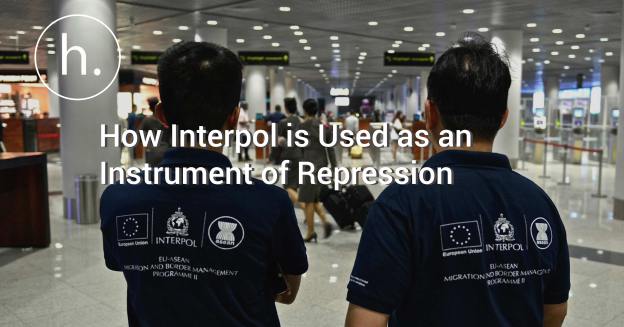
Interpol Used for Political Suppression

‘Red Notices’, international wanted person alerts published by INTERPOL at national authorities’  request, come with considerable human impact: arrest, detention, frozen freedom of movement,  employment problems, and reputational and financial harm. These interferences with basic  rights can, of course, be justified when INTERPOL acts to combat international crime.

However, our casework suggests that countries are, in fact, using INTERPOL’s systems against exiled  political opponents, usually refugees, and based on corrupt criminal proceedings, pointing to a  structural problem. We have identified two key areas for reform.  First, INTERPOL’s protections against abuse are ineffective. It assumes that Red Notices are  requested in good faith and appears not to review these requests rigorously enough. Its interpretation of its cardinal rule on the exclusion of political matters is unclear, but appears to  be out of step with international asylum and extradition law. General Secretariat review also  happens only after national authorities have disseminated Red Notices in temporary form across  the globe using INTERPOL’s ‘i-link’ system, creating a permanent risk to individuals even if the  General Secretariat refuses the Red Notice. Some published Red Notices also stay in place  despite extradition and asylum decisions recognising the political nature of the case.

Excerpt from the Executive Summary of “Strengthening respect for human rights, strengthening INTERPOL” published by Fair Trials International, an NGO

Full Report, Nov. 2013

Tax Evaders and Whistleblowers

What  Edward Snowden is to mass surveillance, Hervé Falciani is becoming to private banking. In 2008 the now 41-year-old native of Monaco walked out of the Geneva branch of HSBC, where he had worked for three years, clutching five CD-ROMs containing data on thousands of account holders. The theft lobbed a bomb into Europe’s private-banking market, spawning raids and tax-evasion investigations continentwide. In the latest, this week, Belgian agents swooped on the homes of 20 HSBC clients, including some with ties to Antwerp diamond dealers.

Mr Falciani went on the run when the Swiss charged him with data theft. After moving to Spain he was imprisoned, but freed when a judge denied a Swiss extradition request. At one point, he claims, he was kidnapped by Mossad agents who wanted a peek at the clients’ names. He has now taken refuge in France, where the government has offered him protection in return for helping it hunt for tax dodgers.

Several countries have used the data to bring cases against suspected evaders. Revelations that dozens of Greek public figures hid money offshore have magnified the tumult in that country’s politics. Spain and France have fingered hundreds of high-level cheats and retrieved €350m ($610m) in back taxes. Mr Falciani maintains that his CDs provided support for an American probe into weak money-laundering controls at HSBC, which led to a $1.9 billion settlement. HSBC disputes this.

Mr Falciani has said he still fears for his safety, despite round-the-clock protection from three armed guards provided by the French. At least he is not short of work. He has been helping France’s tax authorities develop long-term anti-tax-evasion measures. And he recently became an adviser to a new Spanish political party, Partido X (which, ironically, tries to keep its members anonymous).

He insists his motives have always been pure: to repel Switzerland’s “attack” on other countries’ tax laws and exchequers. HSBC says he is no high-minded whistle-blower. He tried to sell the data at first, the bank contends, and started to work with prosecutors only when he was jailed in Spain. It claims he has data on only 15,000 clients (Mr Falciani says it is eight times that) and that the stolen files contain errors.

Either way, many more tax-shy Europeans have reason to sleep fitfully. Other countries are said to want a look at the data, some of which are yet to be decrypted. When Mr Falciani first made the rounds with his discs, there was little interest. The fiscal strains produced by the euro crisis have changed all that.

Banks and tax evasion: Hervé lifting, Economist, Oct. 19, 2013, at 79