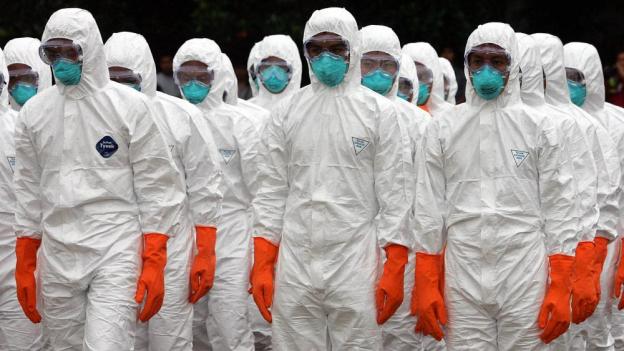
 U.S. military forces are the front line of U.S. national security, but as a globally deployed force they are also on the front line of any new pathogen-based health threat that may emerge [including also due to biological warfare]. As overall human activity pushes ever further into previously undeveloped territory, the likelihood of exposure to new pandemic diseases increases. The 2009 Army Posture Statement, cites a World Health Organization estimate of between 20 and 50 percent of the world’s population being affected if a pandemic were to emerge. WHO forecasts “it may be six to nine months before a vaccine for a pandemic virus strain becomes available.” In a separate report on pandemic influenza, the WHO describes several challenges to producing sufficient volumes of vaccine using current, egg-based protein-production technology, including the likelihood that two doses per person could be required due to the absence of pre-existing immunity.
In short, the potential for a pandemic exists and current technological limitations on defensive measures put the health and readiness of U.S. military forces at risk. A technological solution to increase the speed and adaptability of vaccine production is urgently needed to match the broad biological threat.
DARPA’s Blue Angel program seeks to demonstrate a flexible and agile capability for the Department of Defense to rapidly react to and neutralize any natural or intentional pandemic disease. Building on a previous DARPA program, Accelerated Manufacture of Pharmaceuticals, Blue Angel targets new ways of producing large amounts of high-quality, vaccine-grade protein in less than three months in response to emerging and novel biological threats. One of the research avenues explores plant-made proteins for candidate vaccine production.“Vaccinating susceptible populations during the initial stage of a pandemic is critical to containment,” said Dr. Alan Magill, DARPA program manager. “We’re looking at plant-based solutions to vaccine production as a more rapid and efficient alternative to the standard egg-based technologies, and the research is very promising.”
In a recent milestone development under Blue Angel, researchers at Medicago Inc. produced more than 10 million doses (as defined in an animal model) of an H1N1 influenza vaccine candidate based on virus-like particles (VLP) in one month….“The results we’ve achieved here with plant-based production of vaccines represent both significant increase in scale and decrease in time-to-production over previous production capabilities in the same time period. The plant-made community is now better positioned to continue development and target FDA approval of candidate vaccines,” Magill said. “Once the FDA has approved a plant-made vaccine candidate, the shorter production times of plant-made pharmaceuticals should allow DoD to be much better prepared to face whatever pandemic next emerges.”
DARPA Makes 10 Million Strides in the Race to Contain a Hypothetical Pandemic, July 25, 2012


 Law-In-Action