Tag Archives: assassinations

Assassinations and Top Secret Chemicals: the case of Novichok Nerve Agent

In 2018, one of the Novichok nerve agents was used in an attempt to assassinate a former Russian spy on U.K. soil—spurring the United States and allies to lift the veil of secrecy and mount a drive to outlaw the obscure class of nerve agents, concocted in a Soviet weapons lab during the height of the Cold War. Now, their effort to amend the Chemical Weapons Convention (CWC) is about to pay off.

On 9 October, the Executive Council of the Organisation for the Prohibition of Chemical Weapons (OPCW), the body that administers the treaty, reviewed a revised proposal from Russia that would bring Novichoks under the treaty’s verification regime, along with a class of potential weapons known as carbamates. If the Russian proposal and a similar one from the United States, Canada, and the Netherlands are approved at a treaty review meeting in December 2019.

The newfound glasnost on Novichoks, also known as fourth-generation nerve agents, should spur research on their mechanism of action and on countermeasures and treatments.   Chemical weapons experts had been whispering about Novichoks for decades.   Treaty nations have long resisted adding Novichoks to the CWC’s so-called Schedule 1 list of chemical weapons, which compels signatories to declare and destroy any stockpiles. “People were worried about a Pandora’s box,” fearing such a listing would force them to regulate ingredients of the weapons, Koblentz says. That could hamper the chemical industry and might clue in enemies on how to cook them up. (Who has the agents now is anyone’s guess.) Indeed, the U.S. government for years classified the Novichok agents as top secret. “There was a desire among Western countries to keep the information as limited as possible to avoid proliferation issues,” Koblentz says.

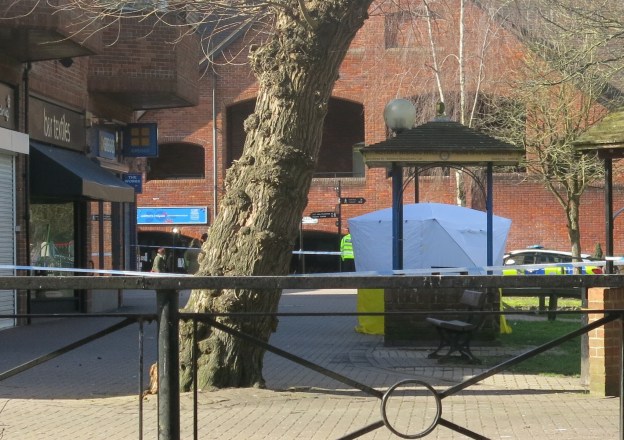
The 2018 assassination attempt against former Russian spy Sergei Skripal in Salisbury, U.K., thrust the Novichok agents into the spotlight. The botched attack gravely sickened Skripal, his daughter Yulia, two police officers who investigated the crime scene, and a couple—Charlie Rowley and Dawn Sturgess—who a few months later happened on a perfume bottle containing the agent. After long hospitalizations, the Skripals, the officers, and Rowley recovered; Sturgess died. The United Kingdom charged two Russian men, reportedly military intelligence officers, as the alleged assailants, and obtained a European warrant for their arrest; they remain at large in Russia.

Excerpts from Richard Stone, Obscure Cold War nerve agents set to be banned, Science, Oct. 25, 2019

Lethal Operations Against US Citizens Lawful: secret memo

A confidential Justice Department memo concludes that the U.S. government can order the killing of American citizens if they are believed to be “senior operational leaders” of al-Qaida or “an associated force” — even if there is no intelligence indicating they are engaged in an active plot to attack the U.S.The 16-page memo, a copy of which was obtained by NBC News, provides new details about the legal reasoning behind one of the Obama administration’s most secretive and controversial polices: its dramatically increased use of drone strikes against al-Qaida suspects abroad, including those aimed at American citizens, such as the September 2011 strike in Yemen that killed alleged al-Qaida operatives Anwar al-Awlaki and Samir Khan. Both were U.S. citizens who had never been indicted by the U.S. government nor charged with any crimes….The undated memo is entitled “Lawfulness of a Lethal Operation Directed Against a U.S. Citizen who is a Senior Operational Leader of Al Qa’ida or An Associated Force.” It was provided to members of the Senate Intelligence and Judiciary committees in June by administration officials on the condition that it be kept confidential and not discussed publicly.

Although not an official legal memo, the white paper was represented by administration officials as a policy document that closely mirrors the arguments of classified memos on targeted killings by the Justice Department’s Office of Legal Counsel, which provides authoritative legal advice to the president and all executive branch agencies. The administration has refused to turn over to Congress or release those memos publicly — or even publicly confirm their existence. A source with access to the white paper, which is not classified, provided a copy to NBC News.

“This is a chilling document,” said Jameel Jaffer, deputy legal director of the ACLU, which is suing to obtain administration memos about the targeted killing of Americans. “Basically, it argues that the government has the right to carry out the extrajudicial killing of an American citizen. … It recognizes some limits on the authority it sets out, but the limits are elastic and vaguely defined, and it’s easy to see how they could be manipulated.”…..

The completeness of the administration’s public accounts of its legal arguments was also sharply criticized last month by U.S. Judge Colleen McMahon in response to a lawsuit brought by the New York Times and the ACLU seeking access to the Justice Department memos on drone strikes targeting Americans under the Freedom of Information Act. McMahon, describing herself as being caught in a “veritable Catch-22,” said she was unable to order the release of the documents given “the thicket of laws and precedents that effectively allow the executive branch of our government to proclaim as perfectly lawful certain actions that seem on their face incompatible with our Constitution and laws while keeping the reasons for the conclusion a secret.”  In her ruling, McMahon noted that administration officials “had engaged in public discussion of the legality of targeted killing, even of citizens.” But, she wrote, they have done so “in cryptic and imprecise ways, generally without citing … any statute or court decision that justifies its conclusions.”……..

“A lawful killing in self-defense is not an assassination,” the white paper reads. “In the Department’s view, a lethal operation conducted against a U.S. citizen whose conduct poses an imminent threat of violent attack against the United States would be a legitimate act of national self-defense that would not violate the assassination ban. Similarly, the use of lethal force, consistent with the laws of war, against an individual who is a legitimate military target would be lawful and would not violate the assassination ban.”

Excerpts from Michael Isikoff. EXCLUSIVE: Justice Department memo reveals legal case for drone strikes on Americans, NBC News, Feb. 6, 2012