Tag Archives: assisted evolution

Can We Save the Giant Kelp?

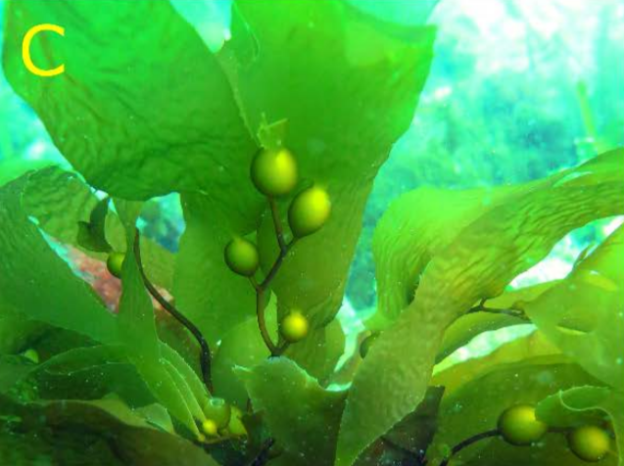
At a salmon farm in Tasmania Australia is an experiment that researchers hope can save an entire ecosystem from warming oceans. Beneath the waves, scientists are growing several types of giant kelp—which in the wild can grow up to 175 feet tall—on rope to track which ones can thrive in hotter conditions. Rising water temperatures, more frequent marine heat waves and invasive sea urchins have already destroyed some 95% of the giant kelp forests in Tasmania, scientists say. The island south of Australia’s mainland is a global hot spot for ocean warming, with sea temperatures in the island’s east rising faster than the global average, a dynamic that has already wreaked havoc on some marine species in a place where fishing remains a key industry.

In Tasmania, scientists are conducting experiments to identify heat-tolerant giant kelp, plan to use artificial intelligence and genetic analysis to better understand why some types fare better than others, and will then have to figure out a way to plant them in the wild without it costing a fortune. Eventually, they could use the genetic information to breed kelp to be even more heat tolerant…But success is far from guaranteed. Running lab tests on kelp can be tricky, given the great size the plants can reach. Efforts to control the invasive long-spined sea urchins, including with government subsidies that encourage fishermen to catch them, could fail. Marine heat waves could increase beyond the ability of any kelp to cope. Scientists also still aren’t sure to what extent genetic factors allow giant kelp to survive in warmer water, or whether environmental factors—such as nutrient and light availability—are more important.

Excerpts from Mike Cherney, Inside the Quest for a Super Kelp That Can Survive Hotter, WSJ, Feb. 22, 2024
De-Extinction: Horse Revival


A little baby horse named Kurt is a symbol of renewed hope for the survival of his kind. Born on 6 August 2020, he is the world’s first ever successfully cloned Przewalski’s horse, an endangered wild horse native to the steppes of central Asia. What makes Kurt even more exciting is that he was cloned from genetic material cryopreserved 40 years ago – reviving genetic diversity thought to have been lost decades ago…

Przewalski’s horses roaming the steppes declined dramatically after World War II, due to a combination of factors such as hunting, competition with livestock as humans moved into their territory, and severe winters. The last confirmed sighting of a Przewalski’s horse in the wild was in 1969. Luckily, some of the horses still remained in zoos. But not many. A total of 12 horses made up the ancestors of a captive breeding program – 11 Przewalski’s horses wild-caught between 1899 and 1902, and another caught in 1947. Thanks to this breeding program, there are around 2,000 individuals today. That’s incredibly impressive, but the growing population isn’t without problems.

Those 12 ancestor individuals represent what is known as a population bottleneck – when a species undergoes a severe reduction in numbers. From that point, a population can recover, but it can also be the beginning of the end. One of the reasons for that is lower genetic diversity. With less variation, a population is less able to adapt to potential stressors or changes to their environment…

Enter a Przewalski’s horse named Kuporovic, who lived from 1975 to 1998. An analysis of the captive breeding pedigree revealed that Kuporovic’s genome had unique ancestry from two wild founders. This meant he offered significantly more genetic variation than any of his living relatives, so in 1980, scientists took a sample and preserved it in San Diego Zoo’s Frozen Zoo.  San Diego Zoo partnered with wildlife conservation group Revive & Restore and pet cloning company ViaGen Equine to create an embryo using Kuporovic’s genetic material. This embryo was implanted in a domestic horse (Equus ferus caballus) surrogate, and was born healthy after a normal pregnancy.

Excerpt from Scientists Clone an Endangered Przewalski’s Horse For The First Time, Science Alert, Sept 7, 2020