Tag Archives: China and Argentina

Cold War Tactics: Taunting America in its Backyard

In  June 2024, China renewed a multibillion-dollar portion of a currency swap, alleviating concerns that Argentina would need to pay back the funds from its depleted reserves. Argentine President Javier Milei, who often derided China during his presidential campaign, calling its leaders “assassins,” thanked Beijing, saying the extension provided financial relief. His office said mutual respect with China is vital to Argentina’s development and prosperity. Milei, an unshakable opponent of communism, has taken a more pragmatic approach to Beijing, saying Chinese investments and trade are essential to Argentina’s future, while maintaining closer relations with the U.S. China has deepened its ties with Argentina in key economic sectors, from the lithium mining companies in the arid north to the agricultural industry on the farm belt’s vast open plains… 

China is Argentina’s second biggest trade partner, after neighboring Brazil, racking up about $20 billion in commerce in 2023, compared with $14 billion for the U.S. Argentina’s exports to China have increased eightfold over the past two decades, as the Asian country invested in mining, oil and gas, finance and construction. China’s stock of foreign direct investments is up 500% since 2015, to more than $3 billion,

Argentina recently bought U.S.-made jet fighters, forgoing an offer to purchase Chinese ones. A Chinese company, Shaanxi Coal and Chemical Industry Group, reached a deal in 2022 with officials in the province of Tierra del Fuego to build a port in Argentina’s far south, giving Beijing a strategic location for accessing Antarctica and a crucial shipping route through the Strait of Magellan. That project has now been shelved, an adviser to the Milei government said….

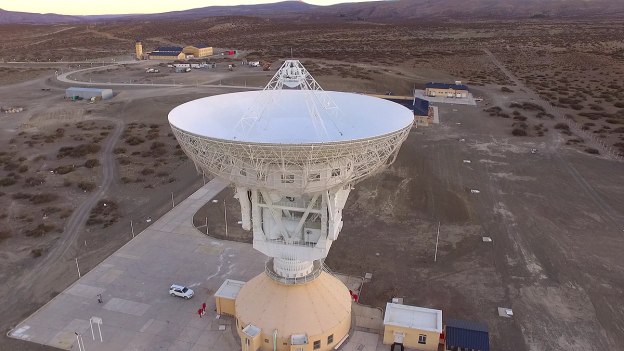
Particularly worrisome to Washington has been a Chinese space station in the windswept plains of Neuquén that has little oversight from the Argentine government. U.S. military officials worry the remote base, which has a 35-meter-wide antenna, could be used for global surveillance by targeting U.S. satellites. 

Excerpt from Ryan Dubé, Argentina’s Milei Finds It Hard to Decouple From China, WSJ, Aug. 18, 2024
What Ails the West: the Forgotten Art of Industrialization

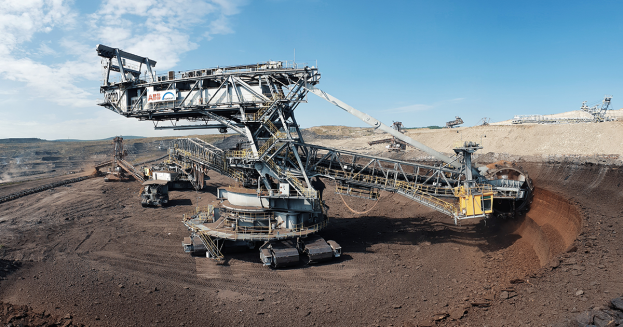
For the past few years, the West has been trying to break China’s grip on minerals that are critical for defense and green technologies. Despite their efforts, Chinese companies are becoming more dominant, not less. They are expanding operations, supercharging supply and causing prices to drop. Their challengers can’t compete. Take nickel, which is needed for electric-vehicle batteries. Chinese processing plants that dot the Indonesian archipelago are pumping out vast quantities of the mineral from new and expanding facilities, jolting the market. Meanwhile, Switzerland-based mining giant Glencore is suspending operations at its nickel plant in New Caledonia, a French territory, concluding it can’t survive despite offers of financial help from Paris. The U.K.’s Horizonte Minerals, whose new Brazilian mine was expected to become a major Western source, said last month that investors had bailed, citing oversupply in the market. Lithium projects in the U.S. and Australia have been postponed or suspended after a surge in Chinese production at home and in sub-Saharan Africa. 

The only dedicated cobalt mine in the U.S. also suspended operations last year, five months after local dignitaries attended its opening ceremony. Its owners say they are struggling against a flood of Chinese-produced cobalt from Indonesia and the Democratic Republic of Congo.

Last year, non-Chinese production of refined cobalt declined to its lowest level in 15 years… The share of lithium mining done within China or by Chinese companies abroad has grown from 14% in 2018 to 35% this year… Over the same time, lithium processing done within China has risen from 63% in 2018 to 70%…China has many advantages in the race to lock up minerals. Its miners are deep-pocketed and aggressive, making bets in resource-rich countries that Western companies have long viewed as corrupt or unstable, such as Indonesia, Mali, Bolivia and Zimbabwe. State banks provide financing for power plants and industrial parks abroad, paving the way for further private Chinese investment.

China’s rapid industrial development also means its companies have spent decades fine-tuning the art of turning raw ore into metals. They can set up new facilities quickly and cheaply. A paper published in February by the Oxford Institute for Energy Studies pegs the costs of building a lithium refinery outside China as three to four times higher than building one within the country. In eastern Indonesia, Chinese companies have built a fleet of highly efficient nickel and cobalt plants over the past few years after mastering a technology Western miners long considered glitchy and expensive. The plants run on coal power, some of it new, at a time when the world is looking to phase out dirty energy. “It’s just a simple, straightforward engineering capability that the Chinese have that has been lost in the rest of the world,” said Jim Lennon, managing director for commodities strategy at Macquarie, an Australian bank. “The Chinese have this overwhelming competitive advantage now that can’t really be addressed.”….

Excerpts from Jon Emont, China Is Winning the Minerals War, WSJ, June 19, 2024

Squeezing the U.S.–China’s Foothold in Latin America

China has gone from from hardly trading with Latin America at the turn of the century to overtaking the United States to become the top trading partner for South America, and the second almost everywhere else in Latin America. Annual goods trade between China and Latin America rose to $445bn in 2021, up from $12bn in 2000…. Latin America is increasingly useful to China in geopolitical terms, too.

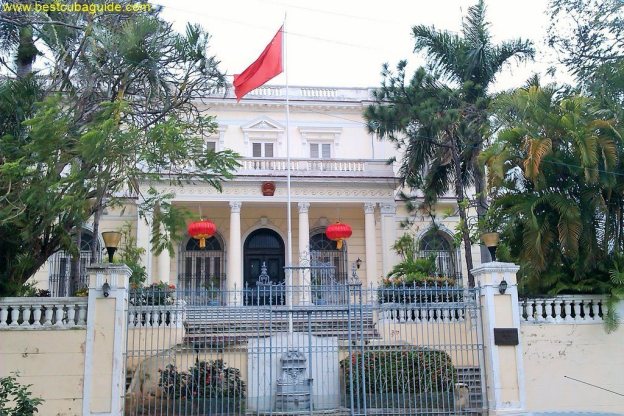
On June 8th, 2023 the Wall Street Journal reported that the Communist government of Cuba had secretly agreed to allow China to set up an electronic-spying facility in the country. At first American and Cuban officials denied the story. Two days later the White House admitted that a base has existed for some time…China has long been thought to have a small military presence in Cuba and access to listening stations. It has several satellite ground-stations in Latin America, which are believed to also have spying purposes. A space observatory in Argentina is run by the Chinese army and its activities are opaque.

Deepening geopolitical ties follow closer economic ones. China is a big source of cash for the region. Between 2005 and 2021 Chinese state-owned banks loaned $139bn to Latin American governments. It has invested billions of dollars in the region, mainly in energy and mining. Some 21 countries in Latin America and the Caribbean have signed up to China’s Belt and Road Initiative, a massive global infrastructure-building spree.

Latin American countries are also turning to the yuan for trade and to include in their central-bank reserves. On June 2nd, 2023 Argentina doubled its currency-swap line with China, meaning that around a third of its central-bank reserves, which stand at $32bn, will effectively be in yuan. Last year, the yuan surpassed the euro to become the second-most important foreign currency in Brazil’s central-bank vaults… In April 2023 a Chinese state-owned power company reached an agreement to purchase two power suppliers in Peru that would give China a near-monopoly over the country’s energy grid. Some fret over Chinese construction of ports in the region, such as the Chancay megaport near Lima in Peru, fearing that they could be repurposed to military ends….China…has trained police forces from countries including Argentina and Brazil, donated cars and investigative equipment to Nicaragua and Costa Rica, and sold surveillance equipment to Ecuador….

Excerpts from China and Latin America: Comrades Across Continents, Economist, June 15, 2023