Tag Archives: CIA drone program

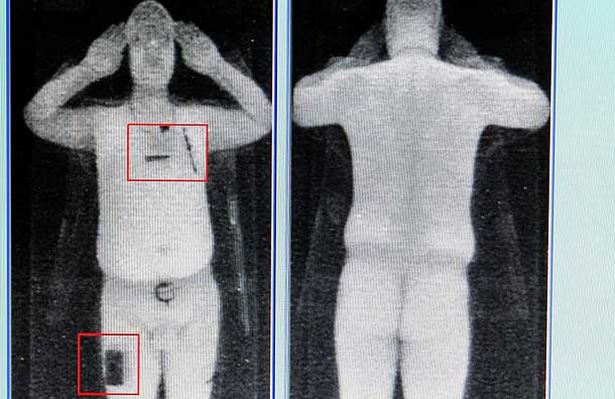
Surgically Implanted Explosive Devices and Drone Strikes

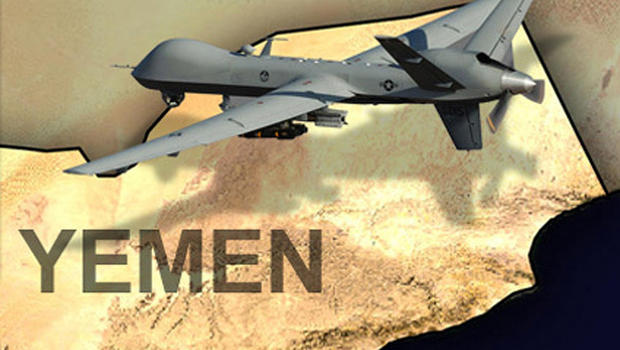
The documents, provided to the Guardian by NSA whistleblower Edward Snowden and reported in partnership with the New York Times, discuss how a joint US, UK and Australian programme codenamed Overhead supported the strike in Yemen in 2012….

British officials and ministers follow a strict policy of refusing to confirm or deny any support to the targeted killing programme, and evidence has been so scant that legal challenges have been launched on the basis of single paragraphs in news stories.

The new documents include a regular series of newsletters – titled Comet News – which are used to update GCHQ personnel on the work of Overhead, an operation based on satellite, radio and some phone collection of intelligence. Overhead began as a US operation but has operated for decades as a partnership with GCHQ and, more recently, Australian intelligence.

The GCHQ memos, which span a two-year period, set out how Yemen became a surveillance priority for Overhead in 2010, in part at the urging of the NSA, shortly after the failed 2009 Christmas Day bomb plot in which Umar Farouk Abdulmutallab attempted to detonate explosives hidden in his underpants on a transatlantic flight.  Ten months later a sophisticated plot to smuggle explosives on to aircraft concealed in printer cartridges was foiled at East Midlands airport. Both plots were the work of al-Qaida in the Arabian Peninsula (AQAP), the Yemen-based al-Qaida offshoot.

One Comet News update reveals how Overhead’s surveillance networks supported an air strike in Yemen that killed two men on 30 March 2012. The men are both described as AQAP members.  In the memo, one of the dead men is identified as Khalid Usama – who has never before been publicly named – a “doctor who pioneered using surgically implanted explosives”. The other is not identified…

US officials confirmed to Reuters in 2012 that there had been a single drone strike in Yemen on 30 March of that year. According to a database of drone strikes maintained by the not-for-profit Bureau of Investigative Journalism, the only incident in Yemen on that date targeted AQAP militants, causing between six and nine civilian casualties, including six children wounded by shrapnel.  Asked whether the strike described in the GCHQ documents was the same one as recorded in the Bureau’s database, GCHQ declined to comment.

The incident is one of more than 500 covert drone strikes and other attacks launched by the CIA and US special forces since 2002 in Pakistan, Yemen and Somalia – which are not internationally recognised battlefields.  The GCHQ documents also suggest the UK was working to build similar location-tracking capabilities in Pakistan, the country that has seen the majority of covert strikes, to support military operations “in-theatre”.

A June 2009 document indicates that GCHQ appeared to accept the expanded US definition of combat zones, referring to the agency’s ability to provide “tactical and strategic SIGINT [signals intelligence] support to military operations in-theatre, notably Iraq and Afghanistan, but increasingly Pakistan”. The document adds that in Pakistan, “new requirements are yet to be confirmed, but are both imminent and high priority”….

By this point NSA and GCHQ staff working within the UK had already prioritised surveillance of Pakistan’s tribal areas, where the majority of US covert drone strikes have been carried out. A 2008 memo lists surveillance of two specific sites and an overview of satellite-phone communications of the Federally Administered Tribal Areas, in which nearly all Pakistan drone strikes have taken place, among its key projects.

British intelligence-gathering in Pakistan is likely to have taken place for a number of reasons, not least because UK troops in Afghanistan were based in Helmand, on the Pakistani border.One of the teams involved in the geo-location of surveillance targets was codenamed “Widowmaker”, whose task was to “discover communications intelligence gaps in support of the global war on terror”, a note explains.

Illustrating the close links between the UK, US and Australian intelligence services, Widowmaker personnel are based at Menwith Hill RAF base in Yorkshire, in the north of England, in Denver, Colorado, and in Alice Springs in Australia’s Northern Territory.

Other Snowden documents discuss the difficult legal issues raised by intelligence sharing with the US….The UK has faced previous legal challenges over the issue. In 2012, the family of a tribal elder killed in Pakistan, Noor Khan, launched a court case in England in which barristers claimed GCHQ agents who shared targeting intelligence for covert strikes could be “accessory to murder”. Judges twice refused to rule on the issue on the grounds it could harm the UK’s international relations.

Excerpts from Alice Ross and James Ball,  GCHQ documents raise fresh questions over UK complicity in US drone strikes,  Guardian, June 24, 2015
The CIA Drone War: 2014 Deaths Update

US drone strikes kill 28 unknown people for every intended target, new Reprieve report reveals. US drone strikes in Yemen and Pakistan have killed as many as 1,147 unknown people in failed attempts to kill 41 named individuals, a report by human rights charity Reprieve has found.The report looks at deaths resulting from US drone strikes in Yemen and Pakistan between November 2002 and November 2014. It identifies 41 men who appeared to have been killed multiple times – drawing into question the Obama administration’s repeated claims that the covert drone programme is ‘precise.’

While the US drone programme is shrouded in secrecy, security sources regularly brief the media on the names of those suspected militants targeted or killed in the strikes. Frequently, those individuals are reported to have been targeted or killed on multiple occasions.

Reprieve’s assessment is the first to provide an estimate of the number of people – including in some cases children – who are killed each time the US apparently attempts to assassinate a ‘high value target.’ Due to the US Government’s refusal to publish any information relating to the programme, or the ‘Kill List’ said to determine its targets, the analysis is limited to existing, publicly-available data from media reports and The Bureau of Investigative Journalism.

Key findings of the report include:

In Pakistan, 24 men were reported as killed or targeted multiple times. Missed strikes on these men killed 874 people, including 142 children.
In Yemen, 17 men were reported killed or targeted multiple times. Missile strikes on these men killed 273 others and accounted for almost half of all confirmed civilian casualties and 100% of all recorded child deaths.
In targeting Ayman al Zawahiri, the CIA killed 76 children and 29 adults. They failed twice, and Ayman al Zawahiri is reportedly still alive.
It took the US six attempts to kill Qari Hussain, a Pakistani target. During these attempts, 128 people were killed, including 13 children.

Each assassination target on the US government’s so-called Kill List ‘died’ on average more than three times before their actual death.

The US government’s drone programme has come under increasing scrutiny after a number of strikes that hit large numbers of civilians by mistake. It was recently revealed – as a result of investigations by Reprieve – that the US government compensates civilian victims of drone strikes in Yemen.

Excerpt from US drone strikes kill 28 unknown people for every intended target, new Reprieve report reveals, Nov. 25, 2014

Drone War 2014 – Covert and Lethal

A UN counter-terrorism expert has published the second report of his year-long investigation into drone strikes, highlighting 30 strikes where civilians are reported to have been killed.  The report, by British lawyer Ben Emmerson QC, identifies 30 attacks between 2006 and 2013 that show sufficient indications of civilian deaths to demand a ‘public explanation of the circumstances and the justification for the use of deadly force’ under international law.

Emmerson analysed 37 strikes carried out by the US, UK and Israel in Afghanistan, Pakistan, Yemen, Somalia and Gaza, to arrive at a ‘sample’ of strikes that he believes those nations have a legal duty to explain.

Britain and the US conduct strikes as part of the armed conflict in Afghanistan, and the US also conducts covert strikes in Pakistan, Yemen and Somalia.  Although Israel has never officially acknowledged using armed drones, Emmerson met with Israeli officials in the course of preparing his report and lists seven attacks in Gaza among those requiring investigation.

This report expands on an argument for the legal obligation for states to investigate and account for credible claims of civilian casualties, which Emmerson first laid out in his previous report, presented to the UN General Assembly in October (2013).

He writes: ‘in any case in which there have been, or appear to have been, civilian casualties that were not anticipated when the attack was planned, the State responsible is under an obligation to conduct a prompt, independent and impartial fact-finding inquiry and to provide a detailed public explanation of the results.

A February 2010 attack in Afghanistan serves as a ‘benchmark’ of the kind of disclosure that should follow claims of civilian casualties. After a US drone attack on a convoy of trucks reportedly killed up to 23 civilians, the International Security Assistance Force (Isaf), which runs international operations in Afghanistan, partially declassified the findings of its internal investigation. Emmerson writes that this report strongly criticised the crew’s actions and revealed ‘a propensity to “kinetic activity” [lethal action]‘.  This level of transparency is rare.

The most recent incident featured in Emmerson’s report is a December 2013 attack that hit a wedding procession near Rada’a in Yemen, killing at least 12. Multiple sources have identified numerous civilian casualties among the dead, including a Human Rights Watch investigation published last week.   Three unnamed US officials told Associated Press after the publication of Human Rights Watch’s report that an internal investigation had found only alleged militants were killed – but no results of this investigation have yet been officially released.

Information is particularly scarce for activity in Somalia, Emmerson notes. The only strike from the country in the report is the February 2012 strike that killed former British citizen Mohamed Sakr, whose case the Bureau has reported on as part of its investigation into the British government’s deprivation of citizenship.

Neither the US nor the UK routinely publish details of their drone operations. The UK states that it has killed civilians in only one incident in Afghanistan, a March 2011 strike that killed four civilians.  The US has repeatedly dismissed the Bureau’s estimate that at least 400 civilians have died in Pakistan drone strikes as ‘ludicrous’; the CIA director John Brennan has said that claims of high civilian casualties amount to ‘disinformation’.

Emmerson notes that operations that kill civilians are not necessarily illegal under international law, but states have a duty of transparency where there are credible allegations of non-combatants being harmed.  The report does not take a position on the legality of drone strikes away from the battlefield, but says there is an ‘urgent and imperative need’ for international agreement on the legal arguments advanced in favour of covert lethal action.

The US has argued that its strikes are legal on two grounds: they are legitimate acts of self-defence against an imminent threat, and they are part of an armed conflict against an enemy, al Qaeda, and its ‘associated forces’. Emmerson asks a series of questions – about the thresholds for action in self-defence, the definition of ‘imminent’ threat, al Qaeda’s current state, and more – on which he says the international community must reach consensus.  Last week the European Parliament voted 534 to 49 in favour of a motion calling on the EU to develop a ‘common position’ on drone strikes and other targeted killings.  To date, Europe has remained largely silent on the issue, but the motion expressed ’grave concern’ over drone strikes ‘outside the international legal framework’ and called on member states not to ‘facilitate such killings by other states’.

The UK has refused to clarify whether it shares intelligence with the US that could lead to drone strikes in Pakistan; in January the Court of Appeal ruled that any attempt to force the government to disclose such information could endanger international relations. In December, Emmerson told a meeting in parliament that such intelligence-sharing is ‘inevitable’ owing to the closeness of the relationship between the US and UK. ‘It would be absurd if it were not the case,’ he added.

Alice K. Ross, UN report identifies 30 drone strikes that require ‘public explanation, Bureau of Investigative Journalism, Mar. 1, 2014

Naming the Dead in the CIA Drone War

Naming the Dead is a project run by the Bureau of Investigative Journalism, a not-for-profit research organisation based in London. The project aims to identify those killed in CIA drone strikes on Pakistan.  Over the past nine years, the tribal region of Pakistan’s north west has been hit by hundreds of drone attacks as the CIA has sought to stamp out al Qaeda fighters and the militant groups that have given them shelter.  Missiles launched from these high-tech, unmanned aircraft have hit homes, cars, schools, shops and gatherings. At least 2,500 people have been killed, according to data already collected by the Bureau as part of our wider Covert Drone War research.

Senior US officials have described drones as highly precise weapons that target and kill enemies of the US. John Brennan, who oversaw the development of the drone campaign and is now director of the CIA, has called drone technology an ‘essential tool’ for its ‘surgical precision – the ability, with laser-like focus, to eliminate the cancerous tumour called an al Qaeda terrorist while limiting damage to the tissue around it.’

Those killed by drones include high-ranking militant leaders – figures such as Abu Yahya al Libi, al Qaeda’s feared second-in-command, or Baitullah Mehsud, commander of the Pakistan Taliban (TTP).  But according to credible media reports analysed by the Bureau, the dead also include at least 400 civilians. Some were unlucky enough to be nearby when militants were attacked. Others were killed alongside their husbands or fathers, who were believed to be militants. Still others were mistaken for terrorists by drone operators sitting thousands of miles away.

In most cases, there is little information available about who the drones are really killing. Most of the dead – an estimated four-fifths of those killed – are believed to be militants. But their deaths are typically reported as a number – their names, origins and livelihoods remain a mystery.  For so many people to die in obscurity, unnamed and unacknowledged, is a tragedy. But it is a further tragedy that the public, and even policy makers, are unable to properly test whether drones are ‘highly precise weapons’ when so little is known about who is actually dying.

Through Naming the Dead, the Bureau aims to increase the transparency around this conflict and inform the public debate. Initially this project will record all names published in open-source material – in credible reports by journalists, in legal documents presented in court, in academic studies and in field investigations carried out by human rights groups.  In the future, the Bureau aims to identify more of the dead on a regular basis, and to uncover more details of those who have been killed. Where possible we will provide further identification – where they were killed, and their occupations, full names and ages. In the remote areas of Pakistan where drone strikes take place, official identification is rare. Few people possess identification cards, birth certificates, or even documents recording their relatives’ deaths. But wherever possible this project will provide documentation recording a person’s death.

Photographs of the destruction of a particular site are included in the database. Affidavits, photos, hospital records, student identification and transcripts of interviews with researchers are all provided when available. Over time, the Bureau aims to build on such currently scarce records in an attempt to properly scrutinise the little that is reported, and the claims being made – on all sides.

Bureau of Investigative Journalism

Double-Tap Drone Strikes: attacking rescuers

A field investigation by the Bureau of Investigative Journalism in Pakistan’s tribal areas appears to confirm that the Central Intelligence Agency (CIA) last year briefly revived the controversial tactic of deliberately targeting rescuers at the scene of a previous drone strike. The tactic has previously been labelled a possible war crime by two UN investigators.  The Bureau’s new study focused mainly on strikes around a single village in North Waziristan – attacks that were aimed at one of al Qaeda’s few remaining senior figures, Yahya al-Libi. He was finally killed by a CIA drone strike on June 4 2012. The Bureau’s field researcher found five double-tap strikes took place in mid-2012, one of which also struck a mosque.

Congressional aides have previously been reported as describing to the Los Angeles Times reviewing a CIA video showing Yahya al-Libi alone being killed. But the Bureau’s field research appears to confirm what others reported at the time – that al-Libi’s death was part of a sequence of strikes on the same location that killed up to 16 people.  If correct, that would indicate that Congressional aides were not shown crucial additional video material.

The CIA has robustly rejected the charge. Spokesman Edward Price told the Bureau: ‘The CIA takes its commitment to Congressional oversight with the utmost seriousness. The Agency provides accurate and timely information consistent with our obligation to the oversight Committees. Any accusation alleging otherwise is baseless.’

The Bureau first broke the story of the CIA’s deliberate targeting of rescuers in a February 2012 investigation for the Sunday Times. It found evidence of 11 attacks on rescuers – so-called ‘double-tap’ strikes – in Pakistan’s tribal areas between 2009 and 2011, along with a drone strike deliberately targeting a funeral, causing mass casualties.  Reports of these controversial tactics ended by July 2011. But credible news reports emerged a year later indicating that double-tap strikes had been revived.  International media including the BBC, CNN and news agency AFP variously reported that rescuers had been targeted on five occasions between May 24 and July 23 2012, with a mosque and prayers for the dead also reportedly bombed.

The Bureau commissioned a report into the alleged attacks from Mushtaq Yusufzai, a respected journalist based in Peshawar, who reports regularly for NBC and for local paper The News.  Over a period of months, Yusufzai – who has extensive government, Taliban and civilian contacts throughout Waziristan – built up a detailed understanding of the attacks through his sources.  His findings indicate that five double-tap strikes did indeed take place again in mid-2012, one of which also struck a mosque. In total 53 people were killed in these attacks with 57 injured, the report suggests.  Yusufzai could find no evidence to support media claims that rescuers had been targeted on two further occasions.  No confirmed civilian deaths were reported by local communities in any of the strikes. A woman and three children were reportedly injured in one of the attacks. Yusufzai says: ‘It is possible some civilians were killed, but we don’t know’.

However a parallel investigation by legal charity Reprieve reports that eight civilians died in a double-tap strike on July 6 2012 (see below), with the possibility of further civilian deaths in a July 23 attack.  Islamabad-based lawyer Shahzad Akbar says Reprieve’s findings are based on interviews with villagers from affected areas…

The rescuer strikes examined by Yusufzai all appear to have been aimed at very senior militants – so-called High Value Targets. Under international humanitarian law, the greater the threat a target represents, and the more imminent that threat is deemed to be, the greater the leeway for targeting. The Bureau’s findings suggest that strikes on rescuers are still permitted in certain circumstances, such as in the pursuit of a high value target such as Yahya al-Libi….

Bureau field researcher Mushtaq Yusufzai notes that civilians now rarely appear to take part in rescue operations, and are often prevented from doing so by militants. They also fear further CIA attacks, he says.

Chris Woods,Bureau investigation finds fresh evidence of CIA drone strikes on rescuers, Aug. 1, 2013

Secret Info: 94 kids killed by US drones in Pakistan

A secret document obtained by the Bureau of Investigative Journalism  reveals for the first time the Pakistan government’s internal assessment of dozens of drone strikes, and shows scores of civilian casualties.  The United States has consistently claimed only a tiny number of non-combatants have been killed in drone attacks in Pakistan – despite research by the Bureau and others suggesting that over 400 civilians may have died in the nine-year campaign.

The internal document shows Pakistani officials too found that CIA drone strikes were killing a significant number of civilians – and have been aware of those deaths for many years.  Of 746 people listed as killed in the drone strikes outlined in the document, at least 147 of the dead are clearly stated to be civilian victims, 94 of those are said to be children.

The confidential 12-page summary paper, titled Details of Attacks by Nato Forces/Predators in FATA was prepared by government officials in Pakistan’s Federally Administered Tribal Areas (FATA).  Based on confidential reports from a network of government agents in the field, it outlines 75 separate CIA drone strikes between 2006 and late 2009 and provides details of casualties in many of the attacks. Five attacks alleged to be carried out by Nato or other unspecified forces are also listed.

The numbers recorded are much higher than those provided by the US administration, which continues to insist that no more than 50 to 60 ‘non-combatants’ have been killed by the CIA across the entire nine years of Pakistan bombings. New CIA director John Brennan has described claims to the contrary as ‘intentional misrepresentations‘.  The document shows that during the 2006-09 period covered, when Pakistan’s government and military were privately supporting the CIA’s campaign, officials had extensive internal knowledge of high civilian casualties.

Excerpt, Chris Woods, Exclusive: Leaked Pakistani report confirms high civilian death toll in CIA drone strikes, Bureau of Investigative Journalism, July 22, 2013

Pakistan Knows about US Drone Strikes

Pakistan reached an understanding with the United States on drone strikes targeting Islamist militants and the attacks can be useful, according leaked remarks from a former intelligence chief.

Pakistan publicly condemns US missile attacks on Taliban and Al-Qaeda operatives as a violation of its sovereignty, but the new revelations are the latest sign of double-dealing in private…Ahmed Shuja Pasha, who headed Pakistan’s premier Inter-Services Intelligence (ISI) agency at the time of bin Laden’s killing in 2011, told investigators that drone strikes had their uses.  “The DG (director general) said there were no written agreements. There was a political understanding,” the report said.

The Americans had been asked to stop drone strikes because they caused civilian casualties, but “it was easier to say no to them in the beginning, but ‘now it was more difficult’ to do so,” it quoted the former spymaster as saying.  “Admittedly the drone attacks had their utility, but they represented a breach of national sovereignty. They were legal according to American law but illegal according to international law,” the report quoted the ISI chief as saying.  He also confirmed that Shamsi air base, in southwestern Pakistan, had been used for US drone strikes against people in the country.  Pakistan ordered US personnel to leave the base after botched US air strikes killed 24 Pakistani soldiers in November 2011.

His interviews also laid bare extraordinary levels of distrust between Pakistan and the United States, particularly in 2011 when relations plummeted over the US raid that killed bin Laden and a CIA contractor who shot dead two Pakistanis.  Pasha said US arrogance “knew no limits” and accused the Americans of waging “psychological warfare” over the whereabouts of Taliban leader Mullah Omar and bin Laden’s successor Ayman al-Zawahiri.  He quoted a US intelligence officer as saying “you are so cheap… we can buy you with a visa,” and said himself that systemic failures showed Pakistan was a “failing state”.  The Pakistani report condemned the US raid as an “American act of war” and said the military should have responded much more quickly to a three-hour operation, 100 miles inside its territory.  It was Pakistan’s “greatest humiliation” since East Pakistan seceded in 1971, it said.

Pakistan-US had ‘understanding’ on drone strikes, AFP, July 9, 2013

The Playbook of Targeted Killings

The Obama administration is nearing completion of a detailed counterterrorism manual that is designed to establish clear rules for targeted-killing operations but leaves open a major exemption for the CIA’s campaign of drone strikes in Pakistan, U.S. officials said.  The carve-out would allow the CIA to continue pounding al-Qaeda and Taliban targets for a year or more before the agency is forced to comply with more stringent rules spelled out in a classified document that officials have described as a counterterrorism “playbook.”

The document, which is expected to be submitted to President Obama for final approval within weeks, marks the culmination of a year-long effort by the White House to codify its counterterrorism policies and create a guide for lethal operations through Obama’s second term.

A senior U.S. official involved in drafting the document said that a few issues remain unresolved but described them as minor. The senior U.S. official said the playbook “will be done shortly.”  The adoption of a formal guide to targeted killing marks a significant — and to some uncomfortable — milestone: the institutionalization of a practice that would have seemed anathema to many before the Sept. 11 , 2001, terrorist attacks.Among the subjects covered in the playbook are the process for adding names to kill lists, the legal principles that govern when U.S. citizens can be targeted overseas and the sequence of approvals required when the CIA or U.S. military conducts drone strikes outside war zones.

U.S. officials said the effort to draft the playbook was nearly derailed late last year by disagreements among the State Department, the CIA and the Pentagon on the criteria for lethal strikes and other issues. Granting the CIA a temporary exemption for its Pakistan operations was described as a compromise that allowed officials to move forward with other parts of the playbook.The decision to allow the CIA strikes to continue was driven in part by concern that the window for weakening al-Qaeda and the Taliban in Pakistan is beginning to close, with plans to pull most U.S. troops out of neighboring Afghanistan over the next two years. CIA drones are flown out of bases in Afghanistan.

Excerpt, Greg Miller, Ellen Nakashima and Karen DeYoung, CIA drone strikes will get pass in counterterrorism ‘playbook,’ officials say, Washington Post., Jan 19, 2012

The CIA Drone Program in Yemen: cover up

A rickety Toyota truck packed with 14 people rumbled down a desert road from the town of Radda, which al-Qaeda militants once controlled. Suddenly a missile hurtled from the sky and flipped the vehicle over.  Chaos. Flames. Corpses. Then, a second missile struck.  Within seconds, 11 of the passengers were dead, including a woman and her 7-year-old daughter. A 12-year-old boy also perished that day, and another man later died from his wounds.

The Yemeni government initially said that those killed were al-Qaeda militants and that its Soviet-era jets had carried out the Sept. 2 attack. But tribal leaders and Yemeni officials would later say that it was an American assault and that all the victims were civilians who lived in a village near Radda, in central Yemen. U.S. officials last week acknowledged for the first time that it was an American strike.  “Their bodies were burning,” recalled Sultan Ahmed Mohammed, 27, who was riding on the hood of the truck and flew headfirst into a sandy expanse. “How could this happen? None of us were al-Qaeda.”

More than three months later, the incident offers a window into the Yemeni government’s efforts to conceal Washington’s mistakes and the unintended consequences of civilian deaths in American air assaults. In this case, the deaths have bolstered the popularity of al-Qaeda in the Arabian Peninsula, the terrorist network’s Yemen affiliate, which has tried to stage attacks on U.S. soil several times.

Furious tribesmen tried to take the bodies to the gates of the presidential residence, forcing the government into the rare position of withdrawing its assertion that militants had been killed. The apparent target, Yemeni officials and tribal leaders said, was a senior regional al-Qaeda leader, Abdelrauf al-Dahab, who was thought to be in a car traveling on the same road.

U.S. airstrikes have killed numerous civilians in Afghanistan, Pakistan and other parts of the world, and those governments have spoken against the attacks. But in Yemen, the weak government has often tried to hide civilian casualties from the public, fearing repercussions in a nation where hostility toward U.S. policies is widespread. It continues to insist in local media reports that its own aging jets attacked the truck.

Meanwhile, the Obama administration has kept silent publicly, neither confirming nor denying any involvement, a standard practice with most U.S. airstrikes in its clandestine counterterrorism fight in this strategic Middle Eastern country.  In response to questions, U.S. officials in Washington, who spoke on the condition of anonymity because of the sensitivity of the matter, said it was a Defense Department aircraft, either a drone or a fixed-wing warplane, that fired on the truck. The Pentagon declined to comment on the incident, as did senior U.S. officials in Yemen and senior counterterrorism officials in Washington.

Since the attack, militants in the tribal areas surrounding Radda have gained more recruits and supporters in their war against the Yemeni government and its key backer, the United States. The two survivors and relatives of six victims, interviewed separately and speaking to a Western journalist about the incident for the first time, expressed willingness to support or even fight alongside AQAP, as the al-Qaeda group is known.  “Our entire village is angry at the government and the Americans,” Mohammed said. “If the Americans are responsible, I would have no choice but to sympathize with al-Qaeda because al-Qaeda is fighting America.”…

After Osama bin Laden’s death last year, Yemen emerged as a key battlefield in the Obama administration’s war on Islamist militancy. AQAP members are among those on a clandestine “kill list” created by the administration to hunt down terrorism suspects. It is a lethal campaign, mostly fueled by unmanned drones, but it also includes fixed-wing aircraft and cruise missiles fired from the sea.  This year, there have been at least 38 U.S. airstrikes in Yemen, according to the Long War Journal, a nonprofit Web site that tracks American drone attacks. That is significantly more than in any year since 2009, when President Obama is thought to have ordered the first drone strike.

The Radda attack was one of the deadliest since a U.S. cruise missile strike in December 2009 killed dozens of civilians, including women and children, in the mountainous region of al-  Majala in southern Yemen. After that attack, many tribesmen in that area became radicalized and joined AQAP.,,,

“The government is trying to kill the case,” said Abdul Rahman Berman, the executive director of the National Organization for Defending Rights and Freedoms, or HOOD, a local human rights group. “The government wants to protect its relations with the U.S.”  After the 2009 strike in al-Majala, the Yemeni government took responsibility for the assault. “We’ll continue saying the bombs are ours, not yours,” Saleh told Gen. David H. Petraeus, who was then the head of U.S. Central Command, according to a U.S. Embassy e-mail leaked by the anti-secrecy Web site WikiLeaks…

On extremist Web sites and Facebook pages, grisly pictures of the attack’s aftermath, with bodies tossed like rag dolls on the road, have been posted, coupled with condemnations of the government and the United States. In Sabool and Radda, youths have vowed to join al-Qaeda to fight the United States.

Excerpts, Sudarsan Raghavan,When U.S. drones kill civilians, Yemen’s government tries to conceal it, Washington Post, Dec. 24, 2012

The CIA Drone Program and Right to Information

A London court  has ruled against examining intelligence-sharing by [Government Communications Headquarters] GCHQ  that leads to CIA drone strikes, claiming it would ‘imperil relations’ with the US.   The case was brought by Noor Khan, a Pakistani national whose father was killed in a drone strike in March 2011. The strike, which killed over 40 people, mostly civilians who had gathered to resolve a mining dispute, is one of the bloodiest on record. Khan has also launched court action against drone strikes in Pakistan. His UK case was supported by legal charity Reprieve and solicitors Leigh Day & Co.

Khan’s lawyers argued that in cases where the UK shared intelligence with the US security services on the location of suspects, knowing that this may be used to kill them with drone strikes, the GCHQ agents responsible may be committing crimes including accessory to murder. The case was an application for a judicial review of the UK’s intelligence-sharing policy in cases where the information might lead to drone strikes.  But Lord Justice Moses and Mr Justice Simon yesterday rejected the application.  ‘It is plain, from the nature of the claims, that the purpose of the proceedings in England and in Pakistan is to persuade a court to do what it can to stop further strikes by drones operated by the United States,’ said Lord Justice Moses in his written response.  He cited a legal principle whereby ‘the courts will not sit in judgment on the sovereign acts of a foreign state’; breaking with this principle would ‘imperil relations between the states,’ he added.

In order to decide whether GCHQ agents might be open to prosecution if they shared information with the CIA that was used to target drone strikes, a UK court would have to rule on whether the CIA’s campaign in Waziristan could be considered a formal war, as this would allow the agents to claim combatant immunity.  ‘I reject the suggestion that the argument can be confined to an academic discussion as to the status of the conflict in North Waziristan,’ wrote Lord Justice Moses. ‘The claimant cannot demonstrate that his application will avoid, during the course of the hearing and in the judgment, giving a clear impression that it is the United States’ conduct in North Waziristan which is also on trial.’  ‘

The government has never officially confirmed or denied sharing intelligence for drone attacks, although in 2010, a Sunday Times article quoted ‘insiders’ claiming GCHQ had shared information about the locations of al Qaeda and Taliban commanders in both Afghanistan and Pakistan. GCHQ told the Sunday Times all intelligence sharing was in ‘strict accordance’ with the law.

Noor Khan announced he would appeal the decision. Rosa Curling, of Khan’s solicitors Leigh Day & Co, said: ‘We are disappointed that the court has decided not to engage in this very important issue, leaving our client no option but to appeal the decision. This claim raises very serious questions and issues about the UK’s involvement in the CIA drone attacks in Pakistan. This case seeks to determine the legality of intelligence sharing in relation to GCHQ assistance in CIA drone strikes.’  Kat Craig, legal director of Reprieve, said: ‘By avoiding judicial scrutiny over drone attacks, combined with its ongoing attempts to push through secret courts, this government is showing a disturbing desire to put itself above the law… If the Government is supporting the CIA’s campaign of drone strikes which are illegal, the British public have the right to know.’

Alice K Ross, High court rejects first UK challenge to CIA’s drone campaign, Bureau of Investigative Journalism, Dec. 22, 2012

Covert Ops in Pakistan, Yemen and Somalia: Civilians Killed

From the Bureau of Investigative Journalism:

Pakistan September 2012 actions: Total CIA strikes in September: 3 Total killed in strikes in September: 12-18, of whom 0-3 were reportedly civilians; All actions 2004 – September 30 2012: Total Obama strikes: 294;Total US strikes since 2004: 346; Total reported killed: 2,570-3,337; Civilians reported killed: 474-884; Children reported killed: 176; Total reported injured: 1,232-1,366

After seven strikes in August – the most in a single month since October 2011 – September saw a pause in the bombing which lasted 20 days. The respite coincided with many and sometimes violent anti-US protests around the world. Muslims were inflamed by a blasphemous film, produced in the US and posted online. Up to 17 people died in riots across Pakistan as public outrage at drone strikes reportedly added to the violence.

On September 24 two named al Qaeda militants were killed by the CIA. Saleh al Turki ’was not on the FBI’s bounty list, but was a mid level AQ guy’. However Abu Kahsha al Iraqi was described as ‘a liaison between al Qaeda and the Taliban’ and ‘long a target of Western counterterrorism agencies.’

Yemen September 2012 actions:Confirmed US drone strikes: 0; Further reported/possible US strike events: 4-5′ Total reported killed in US operations: 0-40;Civilians reported killed in US strikes: 0-12  All actions 2002 – September 30 2012: Total confirmed US operations: 52-62; Total confirmed US drone strikes: 40-50; Possible additional US operations: 117-133; Of which possible additional US drone strikes: 61-71; Total reported killed: 357-1,026; Total civilians killed: 60-163; Children killed: 24-34

US and Yemeni officials were unusually reticent in September in attributing air strikes to United States air assets, including drones. That may have been due to the deaths of eleven named civilians in a botched airstrike in Radaa in central Yemen, the worst loss of civilian life since at least 12 civilians were killed in May. Victims of the strike were buried 18 days later in Dhamar with police pallbearers.  Abdulraouf al Dahab was the supposed target of the strike. But it missed the alleged militant leader’s car and hit civilian vehicles. A ten-year-old girl Daolah Nasser was killed with her parents. Two boys – Mabrook Mouqbal Al Qadari (13) and AbedalGhani Mohammed Mabkhout (12) – were also among those killed.  Some reports said US drones carried out the strike. The Yemen Air Force publicly claimed responsibility for the attack but it lacks the technical capability to strike a moving target.  That fact was confirmed by President Hadi on a visit to Washington, where he also claimed to approve every US strike carried out in Yemen, and downplayed civilian deaths  A suspected US drone killed at least six people, eight days after the Radaa strike. Said al Shehri was initially reported among the dead. But subsequent reports say the former Guantanamo inmate and al Qaeda’s number two in Yemen survived the attack.

Somalia September 2012 actions:  Total reported US operations: 0;All actions 2007 – September 30 2012 Total US operations: 10-23; Total US drone strikes: 3-9; Total reported killed: 58-170;  Civilians reported killed: 11-57; Children reported killed: 1-3

Once again no US combat operations were reported for September, although a former UN official told the Bureau that as much as 50% of secret actions by various forces operating in Somalia go unreported. Two previously unrecorded operations have been added to the Bureau’s data. These relate to possible US strikes on al Shabaab bases in Puntland in August, and in Kismayo in October 2011.  Kenyan Defence Force (KDF) troops finally struck al Shabaab’s last stronghold, Kismayo, in Operations Sledge Hammer alongside soldiers of the Somalia National Army. The KDF is fighting in Somalia as a part of the Amisom peacekeeping force and attacked Kismayo from the land and sea before dawn on September 28. Initial reports said they met with some resistance from al Shabaab but had taken control of the city’s port. It is possible that US forces assisted the operation.  A Somali diplomat told the Bureau that the outgoing Transitional Federal Government opened its doors to the US and others to fight al Shabaab, and in doing so allowed them ‘a licence to completely ignore any local or international law.’ US Special Forces and CIA are operating across Somalia. And the US is supporting proxy forces with training and weapons

Jack Serle and Chris Woods, Bureau of Investigative Journalism, September 2012 update, Oct. 1, 2012

Drones: the Politics of Fear and Complacency

Excerpt from the Executive Summary Living Under Drones Death, Injury, and Trauma to Civilians From US Drone Practices in Pakistan (Stanford and NYU, Sept. 2012)

In the United States, the dominant narrative about the use of drones in Pakistan is of a surgically precise and effective tool that makes the US safer by enabling “targeted killing” of terrorists, with minimal downsides or collateral impacts. This narrative is false…

The US publicly describes its drone program in terms of its unprecedented ability to “distinguish …effectively between an al Qaeda terrorist and innocent civilians,” and touts its missile-armed drones as capable of conducting strikes with “astonishing” and “surgical” precision. First, while civilian casualties are rarely acknowledged by the US government, there is significant evidence that US drone strikes have injured and killed civilians. In public statements, the US states that there have been“no” or “single digit” civilian casualties.” It is difficult to obtain data on strike casualties because of US efforts to shield the drone program from democratic accountability, compounded by the obstacles to independent investigation of strikes in North Waziristan. The best currently available public aggregate data on drone strikes are provided by The Bureau of Investigative Journalism (TBIJ), an independent journalist organization.

TBIJ reports that from June 2004 through mid- September 2012, available data indicate that drone strikes killed 2,562-3,325 people in Pakistan, of whom 474-881 were civilians, including 176 children. TBIJ reports that these strikes also injured an additional 1,228-1,362 individuals….

US drone strike policies cause considerable and under-accounted for harm to the daily lives of ordinary civilians, beyond death and physical injury. Drones hover twenty-four hours a day over communities in northwest Pakistan, striking homes, vehicles, and public spaces without warning. Their presence terrorizes men, women, and children, giving rise to anxiety and psychological trauma among civilian communities. Those living under drones have to face the constant worry that a deadly strike may be fired at any moment, and the knowledge that they are powerless to protect themselves….

Publicly available evidence that the strikes have made the US safer overall is ambiguous at best. The strikes have certainly killed alleged combatants and disrupted armed actor networks. However, serious concerns about the efficacy and counter-productive nature of drone strikes have been raised. The number of “high-level” targets killed as a percentage of total casualties is extremely low—estimated at just 2%. Furthermore, evidence suggests that US strikes have facilitated recruitment to violent non-state armed groups, and motivated further violent attacks…..

Drone strikes have also soured many Pakistanis on cooperation with the US and undermined US-Pakistani relations. One major study shows that 74% of Pakistanis now consider the US an enemy.

Current US targeted killings and drone strike practices undermine respect for the rule of law and international legal protections and may set dangerous precedents. This report casts doubt on the legality of strikes on individuals or groups not linked to the terrorist attacks of September 11, 2011, and who do not pose imminent threats to the US. The US government’s failure to ensure basic transparency and accountability in its targeted killing policies, to provide necessary details about its targeted killing program, or adequately to set out the legal factors involved in decisions to strike hinders necessary democratic debate about a key aspect of US foreign and national security policy. US practices may also facilitate recourse to lethal force around the globe by establishing dangerous precedents for other governments….

In light of these concerns, this report recommends that the US conduct a fundamental re-evaluation of current targeted killing practices, taking into account all available evidence, the concerns of various stakeholders, and the short and long-term costs and benefits. A significant rethinking of current US targeted killing and drone strike policies is long overdue. US policy-makers, and the American public, cannot continue to ignore evidence of the civilian harm and counterproductive impacts of US targeted killings and drone strikes in Pakistan….

The US should fulfill its international obligations with respect to accountability and transparency, and ensure proper democratic debate about key policies. The US should.

–Release the US Department of Justice memoranda outlining the legal basis for US targeted killing in Pakistan;

–Make public critical information concerning US drone strike policies, including as previously and repeatedly requested by various groups and officials: the targeting criteria for so-called “signature” strikes; the mechanisms in place to ensure that targeting complies with international law; whichlaws are being applied; the nature of investigations into civilian deathand injury; and mechanisms in place to track, analyze and publicly recognize civilian casualties;

–Ensure independent investigations into drone strike deaths, consistent with the call made by Ben Emmerson, UN Special Rapporteur on the promotion and protection of human rights and fundamental freedoms while countering terrorism in August 2012

–In conjunction with robust investigations and, where appropriate,prosecutions, establish compensation programs for civilians harmed by US strikes in Pakistan.

–The US should fulfill its international humanitarian and human rights law obligations with respect to the use of force, including by not using lethal force against individuals who are not members of armed groups with whom the US is in an armed conflict, or otherwise against individuals not posing an imminent threat to life. This includes not double-striking targets as first responders arrive.

–Journalists and media outlets should cease the common practice of referring simply to “militant” deaths, without further explanation. All reporting of government accounts of “militant” deaths should include acknowledgment that the US government counts all adult males killed by strikes as “militants,” absent exonerating evidence. Media accounts relying on anonymous government sources should also highlight the fact of their single source information and of the past record of false government reports

Excerpt from the Executive Summary Living Under Drones Death, Injury, and Trauma to Civilians From US Drone Practices in Pakistan (Stanford and NYU, Sept. 2012)
See also http://livingunderdrones.org/

The Legality of Targeted Killings

The CRS memorandum, entitled “Legal Issues Related to the Lethal Targeting of U.S. Citizens Suspected of Terrorist Activities,” was prepared in May 2012 by legislative attorney Jennifer K. Elsea. It presents an overview of the pertinent legal context, and then carefully parses official Administration statements in an attempt to infer a detailed legal rationale for lethal targeting. A copy was obtained by Secrecy News.

“This memorandum is an effort to clarify the debate by providing legal background, setting forth what is known about the Administration’s position and identifying possible points of contention among legal experts and other observers,” the memo states.  In the end, CRS concludes that none of the established legal frameworks is a perfect fit for the Administration’s lethal targeting operations because the current U.S. practice of lethal targeting involves features that are improvised, inconsistent or otherwise questionable.

For example, CRS says the Administration appears to have redefined the meaning of “imminence,” one of the required elements for justifying the use of force in self-defense on the territory of another country. The standard definition of imminence refers to an overwhelming threat that allows “no moment for deliberation.” But the Administration uses imminence idiosyncratically “to refer to the window of opportunity for striking rather than the perceived immediacy of the threat of an armed attack.” This novel usage “may pose some challenge to the international law regarding the use of force,” CRS said.

The CRS memo notes that the U.S. Supreme Court has ruled — in Hamdi v. Rumsfeld — that when a U.S. citizen is detained as a suspected enemy combatant he must be given notice of the factual basis for his detention and an opportunity to rebut it. Yet, in contrast, when a citizen-suspect is to be killed rather than detained the Administration’s position is that no such notice or opportunity is required.  This embrace of unchecked executive authority may prove difficult to reconcile with the majority holding in Hamdi, the memo suggests.  In fact, CRS says, the Administration’s position “seems to conform more with Justice Thomas’s dissenting opinion in Hamdi, in which Justice Thomas argued that in the context of wartime detention for non-punitive purposes, ‘due process requires nothing more than a good-faith executive determination’.”

By withholding its own Office of Legal Counsel opinion on the legality of lethal targeting of suspected terrorists who are U.S. citizens, the Obama Administration seems intent not on protecting sensitive operational details but on suppressing public awareness and debate. The CRS memo is not a substitute for the OLC opinion, but it nonetheless can serve to advance public understanding of the underlying issues.

Excerpt, Steven Aftergood, Legality of Targeted Killing of Suspected Terrorists Reviewed by CRS, SecrecyNews.com, Sept. 10, 2012

Drones: Rules and Reality

In his most comprehensive public comments yet on the US covert drone war, President Barack Obama has laid out the five rules he says the United States uses to target and kill alleged terrorists – including US citizens.  The president has also warned of the need to avoid a ‘slippery slope’ when fighting terrorism, ‘in which you end up bending rules, thinking that the ends always justify the means.’  Obama’s comments were made in an on-camera interview with CNN’s chief White House correspondent Jessica Yellin. Only once before has the president publicly discussed the US covert drone policy, when he spoke briefly about strikes in Pakistan’s tribal areas.  Now Obama says there are five rules that need to be followed in covert US drone attacks. In his own words:

1 ’It has to be a target that is authorised by our laws.’

2 ’It has to be a threat that is serious and not speculative.’

3 ’It has to be a situation in which we can’t capture the individual before they move forward on some sort of operational plot against the United States.’

4 ‘We’ve got to make sure that in whatever operations we conduct, we are very careful about avoiding civilian casualties.’

5 ‘That while there is a legal justification for us to try and stop [American citizens] from carrying out plots… they are subject to the protections of the constitution and due process.’

Obama twice referred to what he claims has been ‘misreporting’ by the media of his drones policy.  Apparently responding to recent allegations that his administration prefers to kill rather than capture suspects, the president said that ‘our preference has always been to capture when we can because we can gather intelligence’ but that it’s sometimes ‘very difficult to capture them.’  CNN’s Yellin did not bring up the issue of civilian casualties – despite CNN itself reporting multiple civilian deaths in a suspected Yemen drone strike just hours earlier. However Obama insisted that ‘we are very careful about avoiding civilian casualties, and in fact there are a whole bunch of situations where we will not engage in operations if we think there’s going to be civilian casualties involved.’

Obama also took on the contentious targeted killing of US citizens – the subject of a number of high profile legal cases. Insisting that there was ‘legal justification’ for such killings, the president conceded that ‘as an American citizen, they are subject to the protections of the constitution and due process.’  The US Department of Justice (DoJ) is presently trying to block publication of administration legal opinions which allegedly provided the justification for the killing of US citizen Anwar al Awlaki and others.  In a recent court submission the DoJ insisted that Obama’s January comments on the covert drone war could not be taken as an admission that it was taking place: ‘Plaintiffs speculate that the president must have been speaking about CIA involvement in lethal operations…. This is insufficient to support a claim of official disclosure.’  With Obama now publicly laying out the ground rules for the covert drone war, the DoJ’s position appears further damaged.

The president also discussed in some detail his moral concerns regarding the campaign, admitting that he ‘struggle[s] with issues of war and peace and fighting terrorism.’  Our preference has always been to capture when we can because we can gather intelligence.’  He said that he and his national security team needed to ‘continually ask questions about “Are we doing the right thing? Are we abiding by the rule of law? Are we abiding by due process?”‘  If that failed to happen, the president warned, there was the risk of a ‘slippery slope… in which you end up bending rules, thinking that the ends always justify the means.’  The continuing deaths of civilians – and CIA tactics such as the deliberate targeting of rescuers – have led some to argue that the US is already bending or even breaking those rules.

Chris Woods, Obama’s five rules for covert drone strikes, Bureau of Investigative Journalism, Sept. 6, 2012