Tag Archives: evading sanctions

US-China Locked in Perpetual Cat and Mouse Game

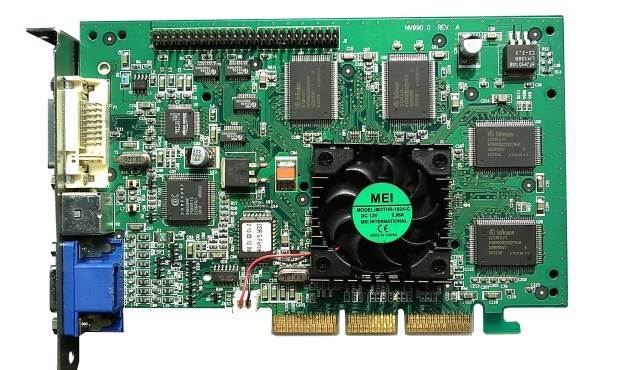
Chinese artificial-intelligence developers have found a way to use the most advanced American chips without bringing them to China. They are working with brokers to access computing power overseas, sometimes masking their identity using techniques from the cryptocurrency world. The tactic comes in response to U.S. export controls that have prevented Chinese companies from directly importing sought after AI chips developed by U.S.-based Nvidia. While it is still possible for Chinese users to physically bring Nvidia’s chips to China by tapping a network of gray-market sellers, the process is cumbersome and can’t supply all the needs of big users.

One entrepreneur helping Chinese companies overcome the hurdles is Derek Aw, a former bitcoin miner. He persuaded investors in Dubai and the U.S. to fund the purchase of AI servers housing Nvidia’s powerful H100 chips. In June 2024, Aw’s company loaded more than 300 servers with the chips into a data center in Brisbane, Australia. Three weeks later, the servers began processing AI algorithms for a company in Beijing. “There is demand. There is profit. Naturally someone will provide the supply,” Aw said.

Renting far away computing power is nothing new, and many global companies shuffle data around the world using U.S. companies’ services such as Google Cloud, Microsoft Azure and Amazon Web Services. However, those companies, like banks, have “Know Your Customer” policies that may make it difficult for some Chinese customers to obtain the most advanced computing power.

The buyers and sellers of computing power and the middlemen connecting them aren’t breaking any laws, lawyers familiar with U.S. sanctions say. Washington has targeted exports of advanced chips, equipment and technology, but cloud companies say the export rules don’t restrict Chinese companies or their foreign affiliates from accessing U.S. cloud services using Nvidia chips. The Commerce Department in January 2014 proposed a rule that seeks to prevent malicious foreign entities from using U.S. cloud computing services for activities including training large AI models. U.S. cloud companies argue that the rule won’t prevent abuse and could instead undermine customer trust and weaken their competitiveness.

In platforms used by Aw and others, the billing and payment methods are designed to give the participants a high degree of anonymity. Buyers and sellers of computing power use a “smart contract” in which the terms are set in a publicly accessible digital record book. The parties to the contract are identified only by a series of letters and numbers and the buyer pays with cryptocurrency. The process extends the anonymity of cryptocurrency to the contract itself, with both using the digital record-keeping technology known as blockchain. Aw said even he might not know the real identity of the buyer. As a further mask, he and others said Chinese AI companies often make transactions through subsidiaries in Singapore or elsewhere.

The service of selling scattered computing power is called a decentralized GPU model.

Excerpts from Raffaele Huang, China’s AI Engineers Are Secretly Accessing Banned Nvidia Chips, WSJ, Aug. 26, 2024

Strangling China with Hong Kong: the Politics of Fear

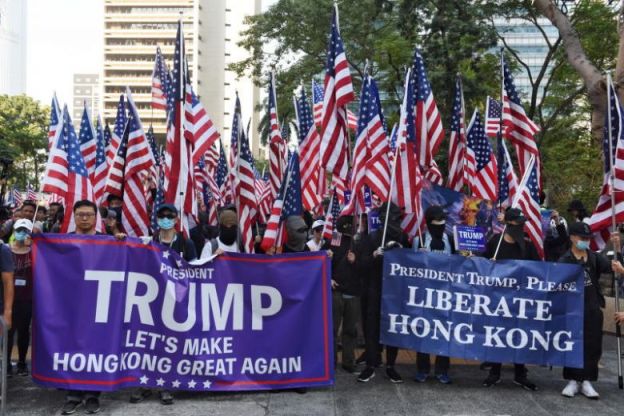
The U.S. determination  that Hong Kong is no longer autonomous from mainland China, under the Hong Kong Policy Act of 1992, will have significant implications for the city’s exporters and businesses.  Sensitive U.S. technologies could no longer be imported into Hong Kong, and the city’s exports might be hit with the same tariffs levied on Chinese trade.

But the act doesn’t cover the far more extensive role Hong Kong plays as China’s main point of access to global finance.  As of 2019, mainland Chinese banks held 8,816 trillion Hong Kong dollars ($1.137 trillion) in assets in the semiautonomous city, an amount that has risen 373% in the last decade…. China’s banks do much of their international business, mostly conducted in U.S. dollars, from Hong Kong. With Shanghai inside China’s walled garden of capital controls, there is no obvious replacement.

While the U.S. doesn’t directly control Hong Kong’s status as a financial center, Washington has demonstrated its extensive reach over the dollar system, with penalties against Korean, French and Lebanese financiers for dealing with sanctioned parties. The U.S. recently threatened Iraq’s access to the New York Federal Reserve, demonstrating a growing willingness to use financial infrastructure as a tool of foreign policy.  Even though the U.S. can’t legislate Hong Kong’s ability to support Chinese banks out of existence, the role of an international funding hub is greatly reduced if your counterparties are too fearful to do business with you.

Putting the ability of Chinese banks to conduct dollar-denominated activities at risk would be deleterious to China’s ability to operate financially overseas, posing a challenge for the largely dollar-denominated Belt and Road global infrastructure initiative. It would also put the more financially fragile parts of the country, like its debt-laden property developers, under strain.  China’s hope to develop yuan into an influential currency also centers on Hong Kong’s remaining a viable global financial center—more than 70% of international trade in the yuan is done in the city.

Excerpts from Mike Bird, How the US Could Really Hurt China, WSJ, May 290, 2020

Who is Afraid of the United States?

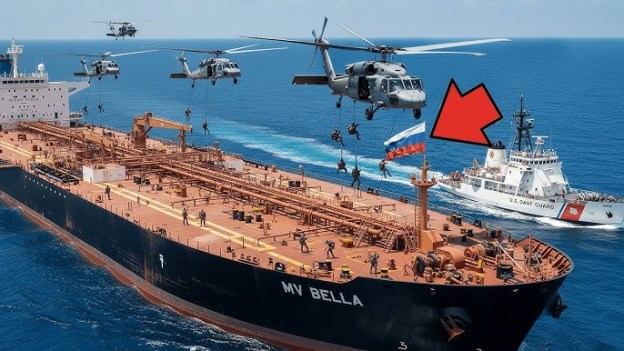
In 2018 America imposed sanctions on about 1,500 people, firms, vessels and other entities, nearly triple the number in 2016. The past six months of 2019 have been particularly eventful. America began imposing sanctions on Iran in November, and in January on Venezuela, another big oil exporter. On May 9th 2019, for the first time, it seized a ship accused of transporting banned North Korean coal.

Second, blackballed countries and unscrupulous middlemen are getting better at evasion. In March 2019advisers to the un, relying in part on Windward data, and American Treasury officials published separate reports that described common ways of doing it. Boats turn off their transmissions systems to avoid detection. Oil is transferred from one ship to another in the middle of the ocean—ships trading on behalf of North Korea find each other in the East China Sea using WeChat, a popular Chinese messaging service. Captains disguise a ship’s identity by manipulating transponder data to transmit false locations and identity numbers of different vessels.

Such methods have helped Iran and Russia transport oil to Syria, American officials say. In 2018 North Korea managed to import refined petroleum far in excess of the level allowed by multilateral sanctions. The situation in Venezuela is different—technically, America’s sanctions still allow foreigners to do business with the country. But fear that sanctions will expand mean that traditional trading partners are scarce. Nicolás Maduro’s regime this month found a shipowner to transport crude to India, according to a shipbroker familiar with the deal, but Venezuela had to pay twice the going rate.

Businesses keen to understand such shenanigans can be roughly divided into two categories. The first includes those who can profit from grasping sanctions’ impact on energy markets, such as hedge funds, analysts and traders. A squadron of firms is ready to assist them, combing through ship transmission data, commercial satellite imagery and other public and semi-public information. They do not specialise in sanctions, but sanctions are boosting demand for their tracking and data-crunching expertise.

A main determinant of Venezuela’s output, for instance, is access to the diluent it needs to blend with its heavy crude. A firm called Clipper Data has noted Russian ships delivering diluent to vessels near Malta, which then transport it to Venezuela. Kpler, a French rival, uses satellite images of shadows on lids of storage tanks to help estimate the volume of oil inside. Using transmissions data, images, port records and more, Kpler produces estimates of Iran’s exports for customers such as the International Energy Agency and Bernstein, a research firm—including a recent uptick in Iranian exports without a specific destination (see chart).

The second category of companies are wary of violating sanctions themselves. They need assistance of a different sort. Latham & Watkins, a firm that advised the chairman of EN+, which controls a Russian aluminium giant, as he successfully removed the company from America’s sanctions list this year, has seen a surge in sanctions-related business. Refinitiv, a data company, offers software which permits clients to screen partners and customers against lists of embargoed entities. Windward uses machine learning to pore over data such as ships’ travel patterns, transmissions gaps (some of which may be legitimate) and name changes to help firms identify suspicious activity. Kharon, founded last year by former United States Treasury officials, offers detailed analysis of anyone or anything on sanctions lists.

HIde and Seek: Sanctions Inc, Economist, May 18, 2019