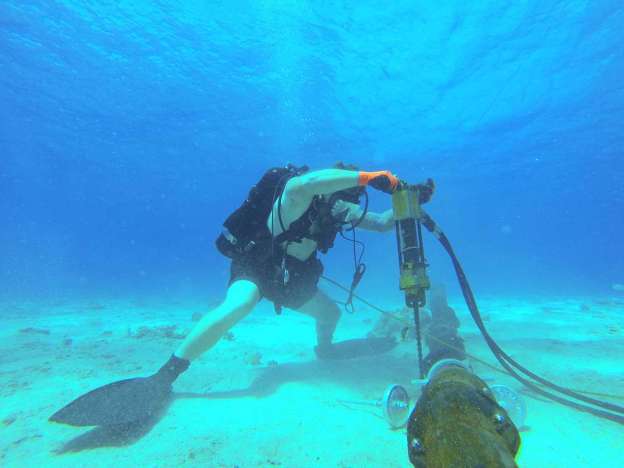
Facebook said it would back two new underwater cable projects—one in Africa and another in Asia in collaboration with Alphabet — that aim to give the Silicon Valley giants greater control of the global internet infrastructure that their businesses rely on.
The 2Africa project, a partnership between Facebook and several international telecom operators, said that it would add four new branches: the Seychelles, Comoro Islands, Angola and Nigeria. The project’s overall plan calls for 35 landings in 26 countries, with the goal of building an underwater ring of fiber-optic cables around Africa. It aims to begin operating in 2023… Separately, Facebook that it would participate in a 7,500-mile-long underwater cable system in Asia, called Apricot, that would connect Japan, Taiwan, Guam, the Philippines, Indonesia and Singapore. Google said that it would also join the initiative, which is scheduled to go live in 2024.
Driving the investments are costs and control. More than 400 commercially operated underwater cables, also known as submarine cables, carry almost all international voice and data traffic, making them critical for the economies and national security of most countries…Telecom companies own and operate many of these cables, charging fees to businesses that use them to ferry data. Facebook and Google used so much bandwidth that they decided about a decade ago that it would make sense to cut out the middleman and own some infrastructure directly.
Excerpts from Stu Woo, Facebook Backs Underwater Cable Projects to Boost Internet Connectivity, WSJ, Aug. 17, 2021
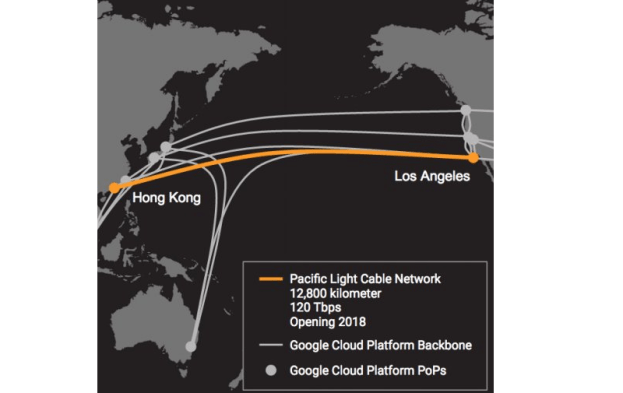
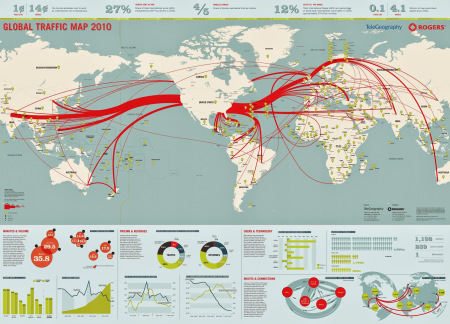
 A real-estate magnate is financing Google’s and Facebook Inc.’s new trans-Pacific internet cable, the first such project that will be majority-owned by a single Chinese company. Wei Junkang, 56, is the main financier of the cable between Los Angeles and Hong Kong, a reflection of growing interest from China’s investors in high-tech industries. It will be the world’s highest-capacity internet link between Asia and the U.S.
 Law-In-Action