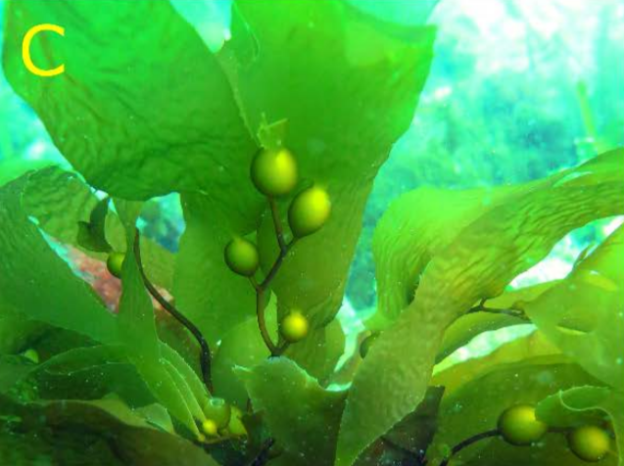
At a salmon farm in Tasmania Australia is an experiment that researchers hope can save an entire ecosystem from warming oceans. Beneath the waves, scientists are growing several types of giant kelp—which in the wild can grow up to 175 feet tall—on rope to track which ones can thrive in hotter conditions. Rising water temperatures, more frequent marine heat waves and invasive sea urchins have already destroyed some 95% of the giant kelp forests in Tasmania, scientists say. The island south of Australia’s mainland is a global hot spot for ocean warming, with sea temperatures in the island’s east rising faster than the global average, a dynamic that has already wreaked havoc on some marine species in a place where fishing remains a key industry.
In Tasmania, scientists are conducting experiments to identify heat-tolerant giant kelp, plan to use artificial intelligence and genetic analysis to better understand why some types fare better than others, and will then have to figure out a way to plant them in the wild without it costing a fortune. Eventually, they could use the genetic information to breed kelp to be even more heat tolerant…But success is far from guaranteed. Running lab tests on kelp can be tricky, given the great size the plants can reach. Efforts to control the invasive long-spined sea urchins, including with government subsidies that encourage fishermen to catch them, could fail. Marine heat waves could increase beyond the ability of any kelp to cope. Scientists also still aren’t sure to what extent genetic factors allow giant kelp to survive in warmer water, or whether environmental factors—such as nutrient and light availability—are more important.
Excerpts from Mike Cherney, Inside the Quest for a Super Kelp That Can Survive Hotter, WSJ, Feb. 22, 2024
 Law-In-Action