
Tag Archives: internet fragmentation

U.S. CIA In China

The U.S. Central Intelligence Agency (CIA) released a new video on on Feb. 13, 2026 seeking to capitalize on upheaval at the top of China’s armed forces to recruit potential spies. The 95-second Mandarin-language video shows an officer walking through a military installation musing about ruthless power struggles at the top of the armed forces. “What the leaders are truly protecting is only their own selfish interests,” the narrator states. “Their power is built on countless lies. But now, these walls of lies are crumbling, leaving us only to clean up the mess.” The highly produced video was released less than a month after Chinese leader Xi Jinping purged two top generals, including his highest-ranking deputy in the military, Gen. Zhang Youxia

“Anyone with leadership ability will inevitably be feared and ruthlessly eliminated,” the narrator says. “I cannot allow these madmen to shape my daughter’s future world.”

Xi has removed more than 60 top officers and defense-industry executives since 2023…The turmoil has left the Central Military Commission, the top body that controls the military, with just two members: Xi himself and the head of the military’s body for internal investigations.

The video concludes with the officer opening a laptop while parked in an isolated spot and calling up a page that says “Contact the CIA” in Chinese. The closing credits display a CIA address on Tor, an anonymizing network.

The CIA posted the videos on YouTube, which is blocked in China, as are many other Western social-media and news sites. Those sites can be accessed using VPNs, and the CIA’s advertisements occasionally run in Hong Kong, where YouTube isn’t blocked.

CIA’s efforts in China were devastated between 2010 and 2012 when nearly 20 spies working for the CIA were executed or imprisoned, leaving the agency struggling to rebuild its human espionage capabilities in China.

Excerpt from CIA Seeks to Recruit Spies Out of China’s Military Turmoil, WSJ, Feb. 13, 2026
Why a Dumb Internet is Best

Functional splintering [of the internet] is already happening. When tech companies build “walled gardens”, they decide the rules for what happens inside the walls, and users outside the network are excluded…

Governments are playing catch-up but they will eventually reclaim the regulatory power that has slipped from their grasp. Dictatorships such as China retained control from the start; others, including Russia, are following Beijing. With democracies, too, asserting their jurisdiction over the digital economy, a fragmentation of the internet along national lines is more likely. …The prospect of a “splinternet” has not been lost on governments. To avoid it, Japan’s G20 presidency has pushed for a shared approach to internet governance. In January 2019, prime minister Shinzo Abe called for “data free flow with trust”. The 2019 Osaka summit pledged international co-operation to “encourage the interoperability of different frameworks”.

But Europe is most in the crosshairs of those who warn against fragmentation…US tech giants have not appreciated EU authorities challenging their business model through privacy laws or competition rulings. But more objective commentators, too, fear the EU may cut itself off from the global digital economy. The critics fail to recognise that fragmentation can be the best outcome if values and tastes fundamentally differ…

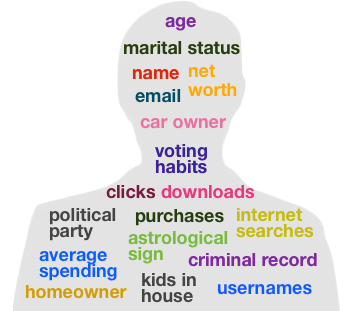
If Europeans collectively do not want micro-targeted advertising, or artificial intelligence-powered behaviour manipulation, or excessive data collection, then the absence on a European internet of services using such techniques is a gain, not a loss. The price could be to miss out on some services available elsewhere… More probably, non-EU providers will eventually find a way to charge EU users in lieu of monetising their data…Some fear EU rules make it hard to collect the big data sets needed for AI training. But the same point applies. EU consumers may not want AI trained to do intrusive things. In any case, Europe is a big enough market to generate stripped, non-personal data needed for dumber but more tolerable AI, though this may require more harmonised within-EU digital governance. Indeed, even if stricter EU rules splinter the global internet, they also create incentives for more investment into EU-tailored digital products. In the absence of global regulatory agreements, that is a good second best for Europe to aim for.

Excerpts from Martin Sandbu,  Europe Should Not be Afraid of Splinternet,  FT, July 2, 2019