Tag Archives: Kurds

US Military Leaves but CIA Remains: Syria

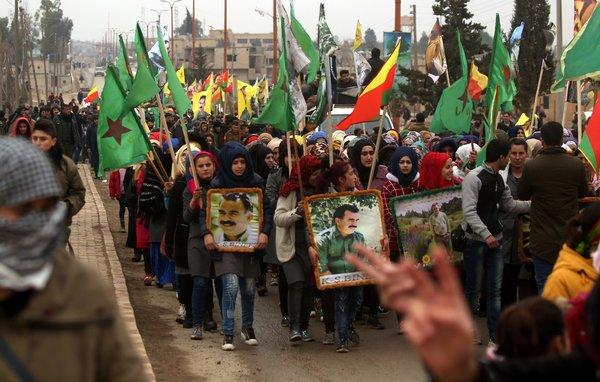
Is there a way for the United States and its allies to remain in northeastern Syria, even after President Trump pledged in December 2018 to withdraw U.S. military forces there? Officials are struggling to devise such a “workaround” strategy…One possibility, according to U.S. and foreign officials, would be to have paramilitary officers from the Central Intelligence Agency take over the training and advising of the Kurdish-led Syrian Democratic Forces (SDF). Since 2015, those duties have been carried out by U.S. Special Operations forces.  This approach, still in the discussion stage, would allow Trump to claim he is delivering on his pledge to withdraw troops from Syria, without creating a vacuum in the northeast that would be exploited by Turkey, Iran, Russia and the Syrian regime…

This new option, in the language of government lawyers, would mix Title 10 overt military operations and Title 50 covert action. Reduced military activity could continue under Title 10 authority, to provide air cover and logistical support for U.S. and allied troops on the ground, but the SDF’s advisers might be CIA officers. The CIA operatives, like existing Special Forces personnel, wouldn’t be involved directly in ground combat…

A paramilitary advisory force, operating under Title 50, would have some significant disadvantages…. Current U.S. military forces in Syria can deter adversaries because they carry the U.S. flag, literally and figuratively. A paramilitary force wouldn’t have that same deterrent capability, or the ability to deconflict operations with other forces in the area, such as Russia and Turkey. ..

Given the U.S. and European policy muddle, SDF commanders must weigh whether to make their own accommodation with Russia and the Syrian regime. The United Arab Emirates is said to favor such an approach, and some longtime SDF supporters say a deal with the regime would be safer for the Kurds than depending on a fickle United States and a gun-shy Europe.

Excerpts from David Ignatius, How the U.S. might stay in Syria, and leave at the same time, Washington Post, Feb. 16, 2019
An Independent Kurdistan? Ask the Oil Companies

Iraq is blessed with abundant oil that is cheap to extract and close to newly built export terminals. Production has hit a three-decade high and continues to rise steadily. By 2035, predicts the International Energy Agency (IEA) Iraqi output could more than double, to 8.3m barrels per day (b/d).  But Western oil firms are increasingly reluctant to play a part in this boom. ExxonMobil appears keen to sell its stake in West Qurna, one of the giant fields in southern Iraq that will provide much of the production growth. Royal Dutch Shell and BP are both still working in the south, but unhappily so. Suffocating bureaucracy and onerous contract terms make life difficult. Heavier-than-expected costs and delays to infrastructure undercut profits.

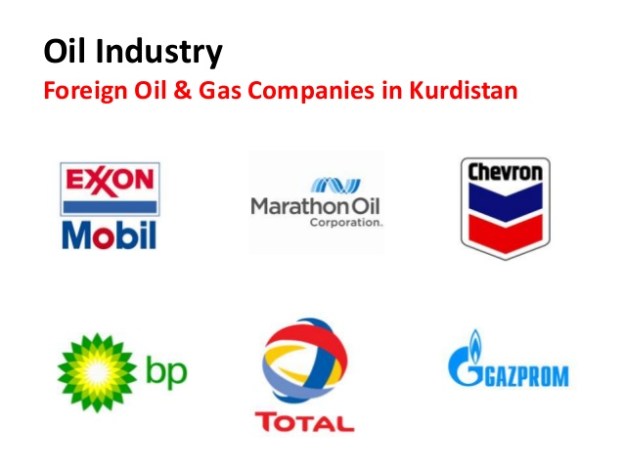
Three years ago when they signed contracts with the Iraqi government, the oil majors were prepared to accept hiccups. But their patience has thinned with the arrival of an alternative source of Iraqi oil. Kurdistan, the semi-autonomous province in the country’s north, has been offering competing and much more lucrative deals. ExxonMobil’s decision last year to acquire six blocks in the region angered the central government, which considers the deal illegal and lays claim to Kurdish oil. But the world’s largest oil company started a trend. In July Total, Chevron and Gazprom all signed contracts with the Kurdistan regional government, potentially dooming their chances of winning future business in the south. BG, a British firm, was in Erbil, the Kurdish capital, on a scouting mission in late October.

“Kurdistan is 11 years ahead of the rest of Iraq in terms of political and commercial development,” says Luay al-Khatteeb, head of the Iraq Energy Institute, a London-based think-tank. Kurdistan’s potential oil reserves of around 45 billion barrels are less than a third of those in southern Iraq. Still, the Kurdish oil minister, Ashti Hawrami, believes output of 1m b/d is possible within three years.

The tricky part is getting the oil to market. The Kurds today export around 200,000 b/d through pipelines controlled by the central government. Mr Hawrami wants to build a new Kurdish-owned pipe to Turkey, feeding long-held dreams of Kurdish independence. That unnerves Turkey which is fighting Kurdish separatists in its south-east. Some Turkish officials seem to acknowledge the possibility of an eventual Kurdish state in northern Iraq and seek to make it commercially dependent on Turkey. Co-operating with the Iraqi Kurds would also generate lucrative transit fees and offer Turkey an alternative to oil from Russia and Iran.

The Iraqi government is pondering how to respond. It could sweeten the terms of its contracts with the oil firms in the south. That might staunch the flow of Western capital to Kurdistan. In the meantime, the main beneficiaries of the majors’ receding interest in southern Iraq are Asian oil firms. Chinese will account for about 2m b/d of Iraq’s production by 2020. Fatih Birol, the IEA’s chief economist, talks of a “Baghdad-to-Beijing” axis.

Iraq’s oil: The Kurdish opening, Economist,Nov. 3, at 49