Tag Archives: pangolins

Mining the Ocean: the Fate of Sea Pangolin

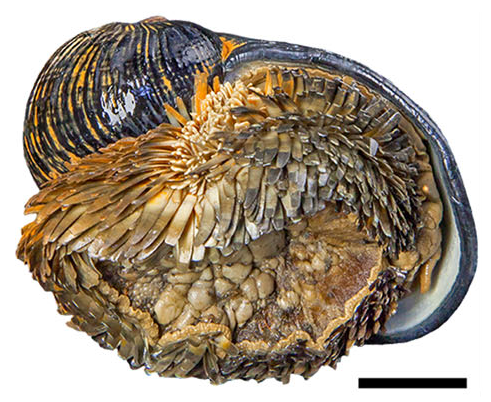
A snail that lives near hydrothermal vents on the ocean floor east of Madagascar has become the first deep-sea animal to be declared endangered because of the threat of mining.  The International Union for Conservation of Nature (IUCN) added the scaly-foot snail (Chrysomallon squamiferum) to its Red List of endangered species on 18 July, 2019 — amid a rush of companies applying for exploratory mining licenses…. The scaly-foot snail is found at only three hydrothermal vents in the Indian Ocean.  Two of those three vents are currently under mining exploration licences,…Even one exploratory mining foray into this habitat could destroy a population of these snails by damaging the vents or smothering the animals under clouds of sediment..

Full-scale mining of the deep seabed can’t begin in international waters until the International Seabed Authority (ISA) — a United Nations agency tasked with regulating sea-bed mining — finalizes a code of conduct, which it hopes to do by 2020….The biggest challenge to determining whether the scaly-foot snail warranted inclusion on the Red List was figuring out how to assess the extinction risk for animals that live in one of the weirdest habitats on Earth…

When the IUCN considers whether to include an organism on the Red List, researchers examine several factors that could contribute to its extinction. They include the size of a species’ range and how fragmented its habitat is…The IUCN settled on two criteria to assess the extinction risk for deep-sea species: the number of vents where they’re found, and the threat of mining.   In addition to the scaly-foot snail, the researchers are assessing at least 14 more hydrothermal vent species for possible inclusion on the Red List.

Excerpts from Ocean Snail is First Animal to be Officially Endangered by Deep-Sea Mining, Nature, July 22, 2019

On Sea Pangolins see YouTube video
The Most Trafficked Animal in the World: Pangolin

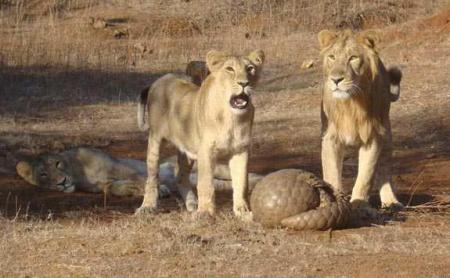
Pangolins are a smuggler’s dream. For defence, and when asleep, they roll themselves up into spheres, scales on the outside, to thwart any predator. That makes them easy to handle and pack. And handled and packed they have been, in enormous numbers. The International Union for Conservation of Nature, a worldwide wildlife-preservation organisation, reckons that more than 1m pangolins were traded illegally from their African and Asian homelands over the decade to 2014. That may be a conservative estimate. A paper published in 2017 in Conservation Letters calculates the number of pangolins hunted in central Africa alone as between 400,000 and 2.7m a year. Based on statistics such as these it seems likely that pangolins, of which there are eight species, four African and four Asian, are the most trafficked type of animal in the world.

Some are consumed locally. That is not necessarily illegal, for laws vary from place to place. International trade, though, is a different matter. Early in 2017 CITES, the Convention on International Trade in Endangered Species, listed all eight pangolins as part of what is known as Appendix 1. This means signatories to the convention (which most countries are) cannot permit them to be imported or exported.

Most of those that are, nevertheless, exported illegally from their homelands end up in China and Vietnam. In these countries pangolins’ meat is a treat and their scales are used in folk medicine, even though those scales are made of keratin, the same substance as hair and fingernails, and thus have no medicinal value. Pangolin scales fetch as much as $750 a kilogram in China. A 12-tonne stash of them, the world’s biggest seizure, was found last summer by the authorities in Shenzhen….

Cracking down on poachers and traders is difficult, particularly in poor places…Part of the blame lies with ignorance. Awareness of pangolins is patchy. They are nocturnal and shy, and thus rarely feature on tourists’ tick-lists. That makes them a low priority, even to game-management authorities who know they are there. …The Hywood Foundation’s initiative is part of a larger effort in Uganda, sponsored by the Uganda Wildlife Authority (UWA), the government’s conservation agency. Now that pangolins are on the UWA’s radar, it has stepped up intelligence and investigative work on poachers and traffickers…At the consumption end of the trafficking routes, too, things are starting to happen…. In theory, eating pangolin meat (along with that of many other wild species) is already illegal in China—not for conservation reasons, but as a reaction to the outbreak of SARS, a fatal respiratory disease…Persuading people to stop using the animals’ scales may be harder.

Excerpts from  Conserving Pagolins: A Problem of Scale, Economist, Feb 3, 2018