Tag Archives: rape culture

Why Arab Men Rape Black Women in Darfur

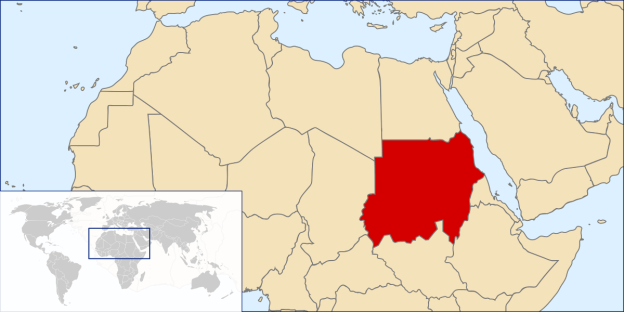
Sudan’s civil war is taking a jarring turn in Darfur, where an Arab-led militia is now using state-of-the-art drones and execution squads to dominate the region’s Black population. Rights researchers already are warning that the killings have the potential to surpass the genocide that played out in Rwanda just over 30 years ago. The group behind the violence, the Rapid Support Forces (RSF), led by Lt. Gen. Mohamed Hamdan Dagalo, has previously been accused by the U.S. of pursuing a genocide of Darfur’s Black population. Two decades ago, its predecessor was involved in the killing of more than 200,000 people in Darfur.

This time, the killings are the work of a closely-drilled and well-armed rebel force that already has established a parallel government to run Darfur, an expanse of western Sudan roughly the size of Spain. RSF fighters are armed with bomb-carrying Wing Loong II and FeiHong-95 drones, made in China, and supplied by the United Arab Emirates to help expand its own interests in the region.

The RSF have been conducting door-to-door searches, picking out non-Arab men and boys before executing them… Witnesses and residents say militia members swept through the city, raping Black women, detaining aid workers and forcing the last remaining residents to leave… Black women with long hair are systematically separated and raped, according to interviews with multiple aid workers and victims.

According to Eric Reeves, a fellow with the Nairobi-based Rift Valley Institute: “The fierce ethnic animus of the RSF toward non-Arab civilians is equal to that of the Hutus toward the Tutsis in Rwanda. The obscene violence is clearly comparable.”

Excerpt from Nicholas Bariyo, Sudan Militia, Armed With Drones, Hunts Down Black Population of Darfur, WSJ, Oct. 31, 2025
How Not To Get Raped: Lessons from India

When Ajita Topo, a cook in an affluent neighborhood in Delhi, leaves work in the evening, she holds her bag like a shield against her chest, keeps her fists clenched and carries a black umbrella with a very sharp end to ward off a possible attack. She makes sure to wear lots of layers—no matter how hot it is—to deter someone from trying to grope her chest, and secures her bun with a sharp metal stick as an additional weapon.  Topo isn’t being paranoid. Last year, she was followed by two men when she left work after 10 p.m. She managed to scare them away by shouting as she passed homes with guards outside. “Workplace, public transport, public places, we feel safe nowhere,” said Topo, the sole breadwinner for her two children. “The only solution is to stay alert at all times.” For many women in India, taking steps to ward off a violent attack—and reassuring their families they are safe while at work and on their commutes—is an invisible form of labor that is a central element of their work life. 

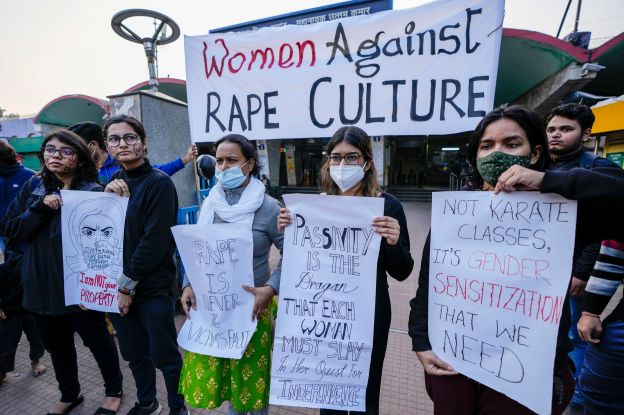
The killing and rape of a trainee doctor in the city of Kolkata in August  2024 was a fresh reminder for Indian women who work of the dangers lurking in public spaces where women are far less visible than men, from the deserted corners of a hospital or corporate park, in public transport or on city streets. The 31-year-old was found dead in a seminar hall of the state-run hospital after she went on break during a night shift. A volunteer at the hospital has been arrested as a suspect. The killing prompted protests by women across the country. 

A decade ago, Indian laws dealing with crimes against women were overhauled in the wake of the gang-rape of a 23-year-old woman on a moving bus. But women’s rights advocates say that entrenched patriarchal attitudes haven’t budged significantly, and are at the root of frequent violence against women, both in the home and outside it. In other widely publicized incidents, female call-center workers have been assaulted and killed as they commuted to or from night shifts. Last year, a receptionist disappeared from the hotel where she worked and was found dead days later. Each time such a crime takes place, women experience another jolt of fear for their own safety

Vidhi Pandey, a digital-marketing professional, has an almost 90-minute commute between her home in Gurgaon and her office in the Indian capital, and frequently attends evening events. If an international client is involved, her day can end at 2 a.m. When she books a cab, she makes sure to look at the driver’s performance rating and reads riders’ feedback regarding his behavior. If she is wearing a skirt, she changes into something more covered up before getting into a taxi for her ride home. On her phone, she keeps the Delhi Police panic button app open throughout the ride. The app, developed after the 2012 bus attack and called “Himmat” or “courage,” allows the user to quickly send an alert to the Delhi Police, with a link to the user’s location on Google Maps, as well as notifications to family and friends. She makes sure to share her live location and trip status with her husband and at least one friend. Sometimes she keeps a phone call going with her mother or a friend throughout the car ride. “I keep thinking about how to escape if something goes wrong,” said Pandey. “I dream of a day when our society is safe enough for me to travel alone anytime, anywhere without any fear or worry.”

Excerpts from  Vibhuti Agarwal and Tripti Lahiri, For Working Women in India Staying Safe Can Feel Like a Full Time Job, WSJ, Oct. 16, 2024

What Happens When 48 Women are Raped Every Hour?

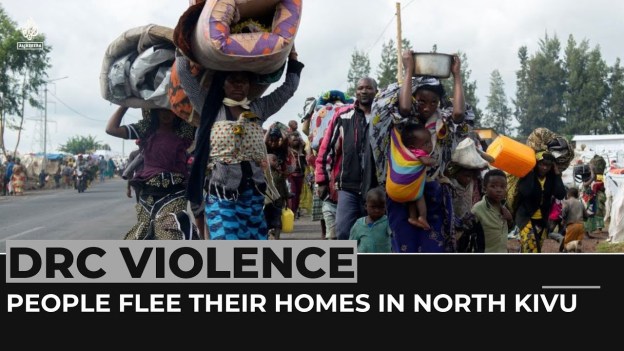
Congo is considered the rape capital of the world. On average, 48 women are raped every hour. Gang rapes, genital mutilation, and sexual violence are committed by armed groups, gangs, and government and police forces. Many of the victims are children and babies. Rape victims and children born of rape are often rejected by their families. HIV is rampant, and cases often go untested and untreated. Rapists almost always go unpunished.

Darfur Forever: when a country is not a country

Iran unsuccessfully pressed Sudan to let it build a permanent naval base on the African country’s Red Sea coast, something that would have allowed Tehran to monitor maritime traffic to and from the Suez Canal and Israel, according to a senior Sudanese intelligence official. Iran has supplied Sudan’s military with explosive drones to use in its fight with a rebel warlord and offered to provide a helicopter-carrying warship if Sudan had granted permission for the base…

Sudan had close ties with Iran and its Palestinian ally Hamas under longtime strongman Omar al-Bashir. After Bashir’s ouster in a 2019 coup, the leader of the country’s military junta, Gen. Abdel Fattah al-Burhan, initiated a rapprochement with the U.S. in an effort to end international sanctions. He also moved to normalize relations with Israel. Iran’s request to build a base highlights how regional powers are seeking to take advantage of Sudan’s 10-month-old civil war to gain a foothold in the country, a strategic crossroads between the Middle East and sub-Saharan Africa with a 400-mile Red Sea coastline.  Sudan’s military has been fighting the paramilitary Rapid Support Forces (RSF), led by Burhan’s former second-in-command, Lt. Gen. Mohamed Hamdan Dagalo, since mid-April 2023. The conflict has killed tens of thousands of people, displaced millions and triggered one of the world’s worst humanitarian crises The Biden administration has accused both the Sudanese military and the RSF of committing war crimes. The U.S. alleges the RSF also has committed crimes against humanity, including murder, rape and ethnic cleansing in the Darfur region in western Sudan.  U.N. officials have criticized Sudan for aerial bombing of civilian neighborhoods and depriving Sudanese civilians of desperately needed humanitarian aid. U.N. agencies have also accused the RSF of atrocities, including ethnically motivated attacks in Darfur…

The Wall Street Journal reported in October 2023 that Egypt has supplied drones to the Sudanese military and trained Sudanese troops in how to use them. The United Arab Emirates, meanwhile, has been sending weapons to the RSF, the Journal reported in August 2023…Dubai is the biggest importer of Sudanese gold and in 2022 a U.A.E.-based consortium signed a $6 billion deal to build a new port facility on Sudan’s Red Sea coast.

Excerpts from Nicholas Bariyo, Iran Tried to Persuade Sudan to Allow Naval Base on Its Red Sea Coast, WSJ, Mar. 3, 2024

Rapes and Razor Blades: Raping Children to Death in War Zones

Sexual abuse of young children happens all around the world. But children living in war-torn countries are at much higher risk. Those in countries recovering from conflict, such as Liberia, may also face greater dangers. The UN has recorded 15,000 cases of rape and sexual violence against children in conflict zones over the past 15 years. This, it warns, is probably a fraction of the true number. Around 72m children live in war zones in which fighters sexually attack children, according to research by Ragnhild Nordås of the University of Michigan and co-authors. That is almost ten times the number in 1990. In 2021, Liberia recorded 1,275 sexual assaults or rapes of people of all ages, according to official figures. Fully 10% of the victims were younger than six and 36% were younger than 13.

At a sexual-violence clinic in Monrovia, the capital, a nurse recounts how an eight-month-old baby was raped by her step father. A soft toy to comfort children perches on the examination table next to a large doll which young victims, often unable to speak, can point at to show what happened to them… In 2020,  another three-year-old was lured away from a water pump by a 15-year-old who used a razor blade to cut open her genital area to penetrate her. That attack caused large protests in Monrovia, which prompted President George Weah to declare rape a “national emergency”.

Why so many men rape young children in war and its aftermath is not well understood. Some experts think that war warps not just morality but also common sense. Between 2013 and 2016 in Kavumu, a village in eastern Congo, at least 11 men kidnapped and raped about 40 girls under the age of ten. Some were as young as 18 months. After each rape the men would take some blood from the victim’s hymen, believing this would protect them from bullets in battle. In 2017 a court convicted the 11 men of murder and rape.

Many of their victims were treated at Panzi Hospital, which was founded by Denis Mukwege, who was jointly awarded the Nobel peace prize in 2018 for his efforts to end sexual violence in war. The number of babies and infants treated for rape at the hospital dipped in the year after the trial, says Sylvain Mwambali, a doctor who works there. But it soon shot up again, to a higher level than in the three years before the convictions. In the past three years the hospital has treated 103 raped children aged five or younger, or about one every ten days. In 2020 Dr Mwambali treated a baby just a few months old whose vagina and intestines were mutilated by rape. “I could not sleep for weeks,” she says. “How can someone carry on, creating a wound like that? She would have been suffering, crying, they destroyed her vulva, up until the anus, yet they continued.”

Sometimes rebels may rape children to terrorise and control the population. Other men may copy them, perhaps because it makes them feel powerful. A breakdown in law and order may allow rapists to escape any punishment. “There is a social deterioration,” says Dr Mwambali. “People can rape your mother in front of you…there are rapes in churches.” In Liberia, warped beliefs of a different kind are a common explanation for why men rape young children. Some traditional healers tell people, “If you have intercourse with a young girl, you will become rich,” says Margaret Taylor of Women Empowerment Network, an NGO. “The younger the person is, the more riches they get.”

Excerpt from: The Sexual Abuse of Children: Child rape is far too common in some war-torn African countries, Economist, Feb. 5, 2022