Tag Archives: rhino horn

How to Save Rhinos? Make them Radioactive

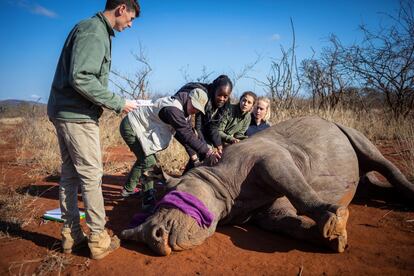
In a pioneering effort to combat wildlife trafficking of the threatened rhinoceros, a South African University began implementing a project supported by the International Atomic Energy Agency (IAEA). The project combines the safe insertion of radioactive isotopes into rhino horns… to deter and detect illegal poaching.

With over 10,000 rhinos lost to poaching in the past decade, South Africa – home to the world’s largest population of rhinos – remains a target for criminals driven by the illegal trade of rhino horn. In the first quarter of 2025 alone, the South African Ministry of Forestry, Fisheries and the Environment reported 103 rhinos poached. In response, this project run by the University of the Witwatersrand is using radiation to support conservation and enforcement efforts.

The Rhisotope Project was created in 2021 with the idea to tag rhino horns with radioactive material. This makes the horns detectable by radiation portal monitors (RPMs) already deployed at borders, ports and airports worldwide. These RPMs, commonly used to detect nuclear and other radioactive material, can now be harnessed against wildlife crime.

Excerpt from Nuclear Science and Nuclear Security Infrastructure to Protect Rare Rhinos: IAEA-Supported Project Marks a Milestone, IAEA News, July 2025

Colossal Efforts to Bring Back Species on the Brink of Extinction

Colossal Biosciences, the world’s first de-extinction company, announced on October 1, 2024 the formation of The Colossal Foundation…The Foundation is launching with three core programmatic focuses.

Saving today’s at-risk species: Colossal Foundation plans to build a model for integrating cutting-edge biotechnology with conservation efforts to bring back species that have been driven to the brink of extinction. The long term goal is to create a toolkit approach to simplify genetic rescue for conservationists. Initial projects include efforts focused on the Vaquita, Northern White and Sumatran Rhinos, Red Wolf, Northern Quoll, Ivory Billed Woodpecker, and Pink Pigeon.

R&D for Conservation: Colossal will partner to fund and deploy technologies that leverage artificial intelligence…Current projects include the Colossal drone-based anomaly detection system used by Save the Elephants, a vaquita acoustic monitoring program, and an AI-enabled orphaned elephant monitoring system leveraged by Elephant Havens in Botswana.

Ensuring Tomorrow’s Biodiversity: Developing a distributed genetic repository of species (a biobank) which can act as an insurance policy against unforeseen threats to biodiversity and provide a safety net for species facing extinction. The focus will be on those species closest to extinction to ensure their genetic diversity is not lost and the potential to bring them back, should the worst happen, remains. 

Vaquitas, a porpoise endemic to the Sea of Cortez/Gulf of California in Baja California, Mexico and the smallest of all living cetaceans, is on the brink of extinction. As of May 2023, only between 10 and 13 vaquitas remain. The loss of the vaquita could be a harbinger of further declines in the Gulf’s marine ecosystems, and the extinction of the vaquita would represent a cultural and symbolic loss. Colossal, in partnership with the Vaquita Monitoring Group and in support of the Mexican government’s La Comisión Nacional de Áreas Naturales Protegidas (CONANP) believes that there are low-impact technical solutions that can be used to safely biobank the existing animals while also helping to grow the vaquita population. …

Fewer than 80 Sumatran rhinos survive in tiny fragmented populations across the Indonesian islands of Sumatra and Borneo…Colossal Foundation will  supporting the Indonesian government’s work to breed Sumatran rhinos under their national conservation breeding program…in collaboration with Global Experts on the advance Assisted Reproductive Technology (a-ART) and Biobank program for the species…

The Colossal BioVault is an initiative, in partnership with Re:wild and others, to collect the primary materials needed to prevent extinction. By collecting tissue samples of the world’s most imperiled species in the Colossal BioVault, the Foundation intends to preserve and store biodiversity. 

Excerpts from Colossal Launches The Colossal Foundation, Business Wire, Oct. 1, 2024

How to Save the Rhino: Fake Rhino Horns Flood the Market

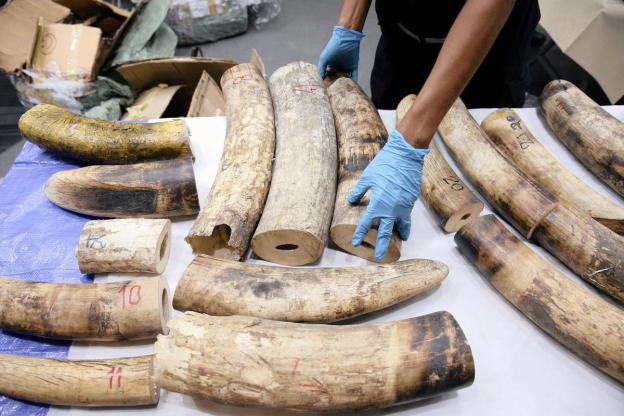
Rhinoceros horns are big business. Traditional Chinese medicine uses them to treat rheumatism and gout… And Yemeni craftsmen carve them into dagger handles. A kilogram can thus command as much as $60,000, so there is tremendous incentive for poachers to hunt the animals. Since almost all rhinoceros populations are endangered, several critically, this is a serious problem. Some conservationists therefore suggest that a way to reduce pressure on the animals might be to flood the market with fakes. This, they hope, would reduce the value of real horns and consequently the incentive to hunt rhinos.

That would require the fakes to be good. But Fritz Vollrath, a zoologist at Oxford University, reckons his skills as a forger are up to the challenge. As he writes in Scientific Reports, he and his colleagues from Fudan University, in Shanghai, have come up with a cheap and easy-to-make knock-off that is strikingly similar to the real thing.  The main ingredient of Dr Vollrath’s forged horns is horsehair. Despite their differing appearances, horses and rhinos are reasonably closely related. Horses do not have horns, of course. But, technically, neither do rhinos. Unlike the structures that adorn cattle and bison, which have cores made of bone, the “horns” of rhinoceros are composed of hairs bound tightly together by a mixture of dead cells.  Examination under a microscope showed that hairs collected from horses’ tails had similar dimensions and symmetry to those found in the horns of rhinos. 

The next task they tackled was making a suitable glue. This is made from a fibrous protein-rich glue of the sort produced naturally by spiders and silkworms. They bundled the treated horse hairs as tightly as they could in a matrix of this glue, and then left the bundles in an oven to dry.  The result was a material that, with some polishing, looked like rhino horn….DNA analysis would certainly reveal fakes, but such analysis is complicated and therefore hard to do in the sorts of back rooms in which rhino-horn sales tend to take place. The forgeries passed other tests with flying colors, though…

Excerpts from How to forge rhinoceros horn, Economist, Nov. 16, 2019

For more details see Creating artificial Rhino Horns from Horse Hair

7 Frozen Embryos and the Resuscitation of Rhinos

SUDAN, the last male northern white rhinoceros on Earth, died in March 2018. He is survived by two females, Najin and her daughter Fatu, who live in a conservancy in Kenya. This pair are thus the only remaining members of the world’s most endangered subspecies of mammal. But all might not yet be lost. Thomas Hildebrandt of the Leibniz Institute for Zoo and Wildlife Research, in Berlin, in collaboration with Avantea, a biotechnology company in Cremona, Italy, is proposing heroic measures to keep the subspecies alive. In a paper published in Nature, he and his colleagues say that they have created, by in vitro fertilisation (IVF), apparently viable hybrid embryos of northern white rhinos and their cousins from the south. This, they hope, will pave the way for the creation of pure northern-white embryos.

Though stored sperm from Sudan and several other males are available, both Najin and Fatu now seem unable to conceive. This means, if the subspecies is to be preserved, that one or both of them will have to have some eggs removed from their ovaries and combined with stored sperm in a Petri dish;… and subsenquently implanted in the uterus of a southern white, who would act as a surrogate mother, with a reasonable hope of success.  That has not yet happened. The seven embryos are now in a freezer awaiting the results of research on how best to transfer them to surrogates. In the meantime, having proved their technique with these hybrids, Dr Hildebrandt and his colleagues now hope to create more embryos, this time using eggs from the two remaining female northern whites.

Even if they succeed, though, it will be a long haul back for the northern white rhino. Members of any new generation resulting from IVF will have then to be bred with each other to create subsequent generations—with all the risks of reduced biological fitness which such incest entails. It is not so much a gene pool that Dr Hildebrandt is working with as a gene puddle.

Then there is the question of what to do with the resulting animals. Analysis of other rhinoceros species, both in Africa and Asia, points to a viable population in the wild needing to be at least 500 strong. Even if such a group could be created, and not collapse from lack of genetic diversity, releasing it into the tender mercies of what remains of Kenya’s savannah would be risky.

Excerpts from Animal Conservation: Drinking in the last-chance saloon, Economist, July 7, 2018, at 66.

Extreme Markets: the fascination for wild genitalia

Tomohon, in the highlands of North Sulawesi, Indonesia is …the “extreme market”. There is certainly something extreme about the serried carcasses, blackened by blow torches to burn off the fur, the faces charred in a rictus grin.   The pasar extrim speaks to Sulawesi’s striking biogeography. The Indonesian island straddles the boundary between Asiatic and Australian species—and boasts an extraordinary number of species found nowhere else. But the market also symbolises how Asia’s amazing biodiversity is under threat. Most of the species on sale in Tomohon have seen populations crash because of overhunting (habitat destruction has played a part too)…

An hour’s drive from Tomohon is Bitung, terminus for ferry traffic from the Moluccan archipelago and Papua, Indonesia’s easternmost province. These regions are even richer in wildlife, especially birds. Trade in wild birds is supposedly circumscribed. Yet the ferries are crammed with them: Indonesian soldiers returning from a tour in Papua typically pack a few wild cockatoos or lories to sell. One in five urban households in Indonesia keeps birds. Bitung feeds Java’s huge bird markets. The port is also a shipment point on a bird-smuggling route to the Philippines and then to China, Taiwan, even Europe. Crooked officials enable the racket.

The trade in animal parts used for traditional medicine or to denote high status, especially in China and Vietnam, is an even bigger racket. Many believe ground rhino horn to be effective against fever, as well as to make you, well, horny. Javan and Sumatran rhinos were not long ago widespread across South-East Asia, but poaching has confined them to a few tiny pockets of the islands after which they are named. Numbers of the South Asian rhinoceros are healthier, yet poachers in Kaziranga national park in north-east India have killed 74 in the past three years alone.

Name your charismatic species and measure decline. Between 2010 and 2017 over 2,700 of the ivory helmets of the helmeted hornbill, a striking bird from South-East Asia, were seized, with Hong Kong a notorious transshipment hub. It is critically endangered. As for the tiger, in China and Vietnam its bones and penis feature in traditional medicine, while tiger fangs and claws are emblems of status and power. Fewer than 4,000 tigers survive in the wild. The pressure from poachers is severe, especially in India. The parts of over 1,700 tigers have been seized since 2000.

Asia’s wildlife mafias have gone global. Owing to Asian demand for horns, the number of rhinos poached in South Africa leapt from 13 in 2007 to 1,028 last year. The new frontline is South America. A jaguar’s four fangs, ten claws, pelt and genitalia sell for $20,000 in AsiaSchemes to farm animals, which some said would undercut incentives to poach, have proved equally harmful. Lion parts from South African farms are sold in Asia as a cheaper substitute for tiger, or passed off as tiger—either way, stimulating demand. The farming of tigers in China, Laos, Thailand and Vietnam provides cover for the trafficking of wild tiger parts. Meanwhile, wild animals retain their cachet—consumers of rhino horn believe the wild rhino grazes only on medicinal plants.

Excerpts from  Wasting Wildlife, Economist, Apr. 21, 2018, at 36