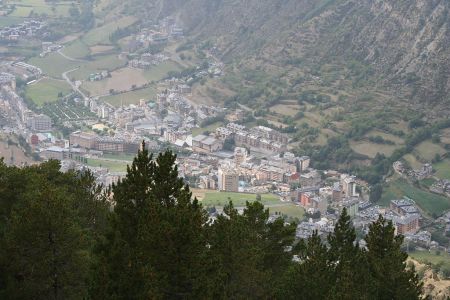
On March 2015 Financial Crimes Enforcement Network (FinCEN), part of America’s Treasury branded Banca Privada d’Andorra (BPA) as a “primary money-laundering concern”, saying its top managers had moved cash for criminal groups. This so-called “311” measure (after the relevant section of the Patriot Act of 2001) is usually crippling for the bank concerned, because in effect it cuts it off from the American financial system and any banks that participate in it. BPA was no exception: the government of Andorra, a mountainous financial haven nestled between France and Spain, ended up taking over the bank despite objections from its majority shareholders, the Cierco family; its Madrid-based wealth-management arm was liquidated. The Ciercos, insisting there was no legal basis for FinCEN’s move, sued in the American courts.
On February 19, 2016, the FinCEN withdrew its designation of BPA as a money-laundering concern….FinCEN’s explanation for its reversal was that Andorra had taken steps to protect BPA from money-laundering risks, and the bank therefore no longer poses a threat. The Ciercos are having none of this. They argue that it was instead a “blatant effort to avoid judicial scrutiny” of the 311 measure. They point to the timing: the court was to hear a motion to dismiss the case next month. That would have required much more detailed evidence to be aired in support of the 311 action.
The Americans wanted to avoid this because their case was flimsy, critics say. The Ciercos have argued from the start that it was based on cases of suspected money-laundering which the bank itself had reported to Andorran regulators and had brought in KPMG, an accounting firm, to investigate.
If BPA was already cleaning up its act, why go after it at all? Some suspect the bank was a pawn in a tussle between governments: miffed that Andorra was slow to adopt American-style anti-money-laundering rules, including limits on cash transactions, America decided to show who was boss by selecting a bank to pick on. There is some evidence to support this sacrificial-lamb theory. In unscripted comments last year, for instance, an American diplomat suggested that America chose to “use the hammer” on BPA as a way of resolving wider concerns about Andorra.
The Treasury has been challenged in another 311-designation case. FBME Bank of Tanzania sued it after being accused of servicing all manner of bad guys. In the fall of 2015 an American court issued an injunction blocking the government’s action until the bank received more information about why it was deemed a threat to the financial system. The case continues. Meanwhile, FBME’s operations have been severely disrupted: it has sought an injunction to stop the authorities closing an important subsidiary in Cyprus.
These cases highlight two problems with FinCEN’s money-laundering cudgel. The first is double-standards. It tends to go after only small banks in strategically unimportant countries; its use of 311 has been likened to using a sledgehammer to crack nuts. The second is its lack of openness. It faces no requirement to make detailed evidence public, or even available to a court, at the time of action. By the time any challenge is heard, it may be too late for the bank in question.
Whoops Apocalypse, Banks and Money Laundering, Economist, Feb. 27, 2016, at 60
 Law-In-Action