Tag Archives: tax transparency

The Essence of Capitalism: Shelters

SKU Distribution in Mesa, Arizona., is experiencing rapid growth as companies seek to access foreign-trade zones and navigate rising U.S. tariffs. Companies can use foreign-trade zones to defer tariff payments until products are sold, which operators say helps them manage supply chains and avoid bottlenecks. The foreign-trade zone program dates back to the 1930s, with roughly 260 such facilities now in the U.S. In some, inquiries from companies have recently quadrupled.

SKU Distribution had just one customer in 2024 at its Mesa, Arizona, warehouse. In 2025, it is teeming with new business from companies storing items such as aluminum poles, ice picks, carabiners and firearm safes. That is because the warehouse is the ultimate U.S.-based tariff refuge

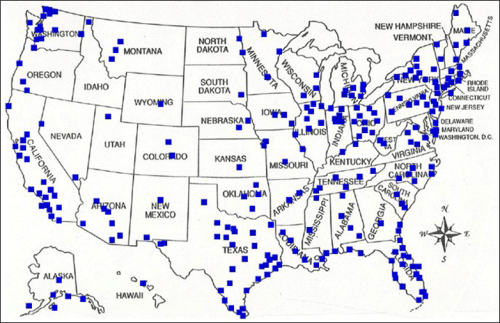
Arizona is the foreign-trade zone capital of America, its facilities employing more workers than those of any other state, Commerce Department data shows. Apple, Intel, Honeywell Aerospace, Sub-Zero and Ball Corp. all manufacture within the Arizona facilities, together processing more than $7.5 billion in merchandise in 2023. The program has helped turn this strip of the Phoenix-area desert into a chip-making hot spot. Now, Trump’s tariffs are drawing a clientele of smaller companies looking for refuge from the trade war.

Excerpt from Owen Tucker-Smith, Inside the Arizona Warehouse That Has Become Shelter in Tariff Storm, WSJ, May 12, 2025

See also United States as a Tax Haven

Out-of-Fashion: Aggressive Tax Planning

In December 2019, Royal Dutch Shell voluntarily published its revenue, profit, taxes and other business details in each of 98 countries. The disclosure aligns with a drive by the energy company, which often attracts criticism from environmental activists, to present itself as forward-thinking, transparent and socially-minded.  That didn’t stop the information feeding a predictable host of headlines in the U.K., where the company is partly based, that it didn’t pay taxes in the country (because of losses carried forward and tax refunds). In the U.S., Shell accrued $137 million of tax—a rate of 8%.  This kind of detailed reporting is required by tax authorities in about 100 countries including the U.S. since 2017, based on rules agreed by the Organisation for Economic Cooperation and Development, but it is rarely made public.

Companies that don’t jump may soon be pushed. Economy ministers from European Union countries are considering a proposal that would require all large companies with total revenue of more than €750 million ($834 million) operating in the bloc to publish the information annually. The Global Reporting Initiative, an organization that establishes sustainability standards, recently agreed to include a similar requirement. Greater transparency could also spur reform efforts and reduce incentives for complex tax arrangements. Companies, investors and states all agree that it is best to find a global solution to the problem of aggressive tax planning.

Excerpts from Rochelle Toplensky, Beginning of the End of Tax Secrecy, WSJ, Dec. 20, 2019