Tag Archives: trade sanctions

The New Trump Doctrine: Kiss the Hand you Cannot Bite

Four US major automakers are racing to find workarounds to China’s stranglehold on rare-earth magnets, which they fear could force them to shut down some car production within weeks. Several traditional and electric-vehicle makers—and their suppliers—are considering shifting some auto-parts manufacturing to China to avoid looming factory shutdowns, people familiar with the situation said.

Ideas under review include producing electric motors in Chinese factories or shipping made-in-America motors to China to have magnets installed. Moving production to China as a way to get around the export controls on rare-earth magnets could work because the restrictions only cover magnets, not finished parts, the people said.

If automakers end up shifting some production to China, it would amount to a remarkable outcome from a trade war initiated by President Trump with the intention of bringing manufacturing back to the U.S.  “If you want to export a magnet [from China] they won’t let you do that. If you can demonstrate that the magnet is in a motor in China, you can do that,” said a supply-chain manager at one of the carmakers.

China in April 2025 began requiring companies to apply for permission to export magnets made with rare-earth metals, including dysprosium and terbium. The country controls roughly 90% of the world’s supply of these elements, which help magnets to operate at high temperatures. Much of the world’s modern technology, from smartphones to F-35 jet fighters, rely on these magnets….In May 2025, industry groups representing most major automakers and parts suppliers told the Trump administration that vehicle production could be reduced or shut down imminently without more rare-earth components from China.

Excerpt from Sean McLain et al., Automakers Race to Find Workaround to China’s Stranglehold on Rare-Earth Magnets, WSJ, June 4, 2025

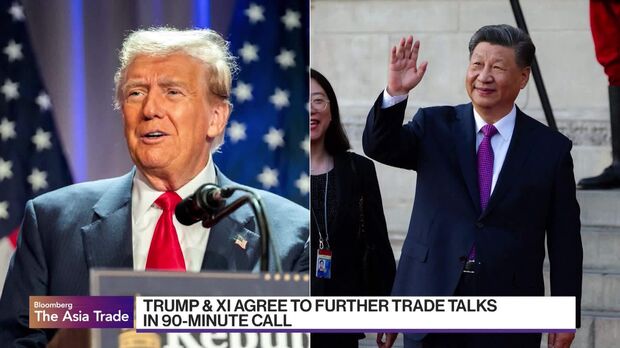
Two days after the publication of this WSJ article, Trump announced, on June 6, 2024, that Xi agreed to let rare earth minerals flow to US (in exchange of? not revoking Chinese student visas? what else?)
Strangling China with Hong Kong: the Politics of Fear

The U.S. determination  that Hong Kong is no longer autonomous from mainland China, under the Hong Kong Policy Act of 1992, will have significant implications for the city’s exporters and businesses.  Sensitive U.S. technologies could no longer be imported into Hong Kong, and the city’s exports might be hit with the same tariffs levied on Chinese trade.

But the act doesn’t cover the far more extensive role Hong Kong plays as China’s main point of access to global finance.  As of 2019, mainland Chinese banks held 8,816 trillion Hong Kong dollars ($1.137 trillion) in assets in the semiautonomous city, an amount that has risen 373% in the last decade…. China’s banks do much of their international business, mostly conducted in U.S. dollars, from Hong Kong. With Shanghai inside China’s walled garden of capital controls, there is no obvious replacement.

While the U.S. doesn’t directly control Hong Kong’s status as a financial center, Washington has demonstrated its extensive reach over the dollar system, with penalties against Korean, French and Lebanese financiers for dealing with sanctioned parties. The U.S. recently threatened Iraq’s access to the New York Federal Reserve, demonstrating a growing willingness to use financial infrastructure as a tool of foreign policy.  Even though the U.S. can’t legislate Hong Kong’s ability to support Chinese banks out of existence, the role of an international funding hub is greatly reduced if your counterparties are too fearful to do business with you.

Putting the ability of Chinese banks to conduct dollar-denominated activities at risk would be deleterious to China’s ability to operate financially overseas, posing a challenge for the largely dollar-denominated Belt and Road global infrastructure initiative. It would also put the more financially fragile parts of the country, like its debt-laden property developers, under strain.  China’s hope to develop yuan into an influential currency also centers on Hong Kong’s remaining a viable global financial center—more than 70% of international trade in the yuan is done in the city.

Excerpts from Mike Bird, How the US Could Really Hurt China, WSJ, May 290, 2020