Tag Archives: underground urban spaces

The Underground War

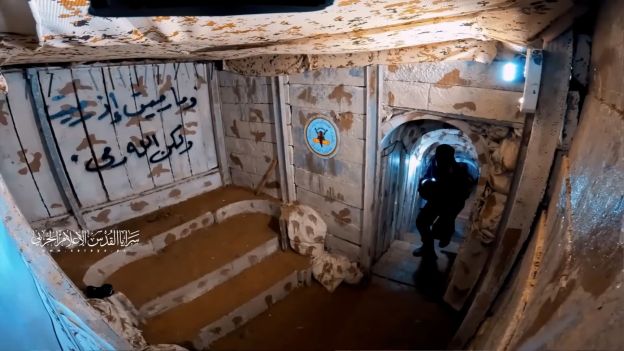
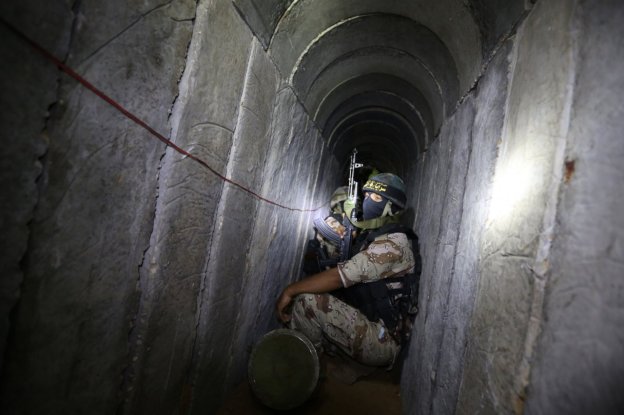
Israeli troops are mapping out the tunnels of eastern Rafah [December 2025], where the local Hamas brigade is trapped, and using massive drills to dig into the underground system and destroy it with explosives, according to Israeli military statements. Israel estimates there were around 100 to 200 fighters in the tunnels when the cease-fire began in October 2025…In some areas, Israel is flooding tunnels with water to push out the trapped fighters…

Rafah, where Hamas first began digging tunnels around two decades ago, has a particularly complicated underground system. Despite having full control above ground in Rafah, Israel’s military is still struggling to fully map out the underground network where the Hamas fighters are hiding…

Excerpt from Summer Said, srael Closes In on Hamas Fighters Trapped in Tunnels, Testing Cease-Fire, WSJ, Dec. 7, 2025

Underground Empires: Hamas v. Israel

Senior members of Hamas’s leadership in exile met in Doha, Qatar, earlier in February 2024 amid concerns that its fighters were getting mauled by an Israeli offensive in the Gaza Strip. Enemy troops were killing dozens of militants each day as they methodically overran Hamas strongholds. Then a courier arrived with a message from Yahya Sinwar, the head of Hamas in Gaza, saying, in effect: Don’t worry, we have the Israelis right where we want them.  Hamas’s fighters, the Al-Qassam Brigades, were doing fine, the upbeat message said. The militants were ready for Israel’s expected assault on Rafah, a city on Gaza’s southern edge. High civilian casualties would add to the worldwide pressure on Israel to stop the war, Sinwar’s message said, according to people informed about the meeting… 

Hamas fighters are now trying to avoid large firefights and instead use small-scale ambushes—using tools ranging from rocket-propelled grenades to recorded voices of hostages to lure Israeli troops into traps.  The ambushes have little chance of holding territory against Israel’s armored maneuvers. But they’re tailored to Hamas’s limited capabilities…Many in Israel’s military, from senior commanders to ordinary soldiers who spoke to The Wall Street Journal, worry that their accumulation of tactical wins on the battlefield might not add up to a lasting strategic victory. After nearly five months of intense fighting, Israel is still far from its declared war aim of eliminating Hamas as a significant military and political entity. “Fighting the enemy is like a game of whack-a-mole,” said an Israeli reservist in Khan Younis with the 98th Division….

Degrading Hamas’s capabilities is a realistic goal for Israel’s military, said Hussein Ibish, a scholar at the Arab Gulf States Institute, a think tank in Washington. But sustaining it would require fully occupying Gaza, which would give Hamas a target for a never-ending insurgency, he said. “Recent history shows that you can be an effective insurgency on a shoestring,” said Ibish. “Anyone can make an IED,” or homemade bomb, he said. “It’s easy to get a pistol. If you’re willing to die, you can kill soldiers.” 

Hamas… has shifted to hit-and-run attacks by tiny groups of two or three men, sometimes just one individual….Other Hamas ambushes use so-called sticky bombs, improvised explosives that attach themselves to Israeli armored vehicles with magnets or duct tape.…Hamas also tries to kill Israeli troops by putting booby traps in buildings throughout Gaza, many Israeli soldiers say. Booby traps have been widely found in the homes of Hamas operatives, but also in many civilians’ homes, Israeli soldiers said. Early on the explosives were placed around the buildings’ entrances. The Israelis soon stopped using the front door, instead blasting or bulldozing their way through the walls of a house. Hamas has adapted, placing explosive traps in items inside buildings, from gas storage balloons to children’s’ toys, Israeli soldiers said….In other cases, Hamas used voice recordings of hostages begging for help in Hebrew to try to draw soldiers into an ambush…

The Israelis have made only partial progress in finding and destroying Hamas’s vast tunnel network. Israeli officials now estimate that Hamas built around 350 miles of tunnels under Gaza, which is less than 30 miles long and up to 8 miles wide. There are thought to be several hundred tunnels under Khan Younis alone, which occupies an area roughly the size of the Bronx in New York…Hamas uses the tunnels as military headquarters, to maneuver across the enclave’s cities, protect its leaders, hide Israeli and other hostages, manufacture weapons and conduct hit-and-run attacks. The tunnels also contain a fixed-line phone system that Hamas used to communicate earlier in the war, along with walkie-talkies, burner SIMs and satellite phones. But with Israel hacking into those systems, the militants have increasingly shifted to using runners to convey verbal or written messages. 

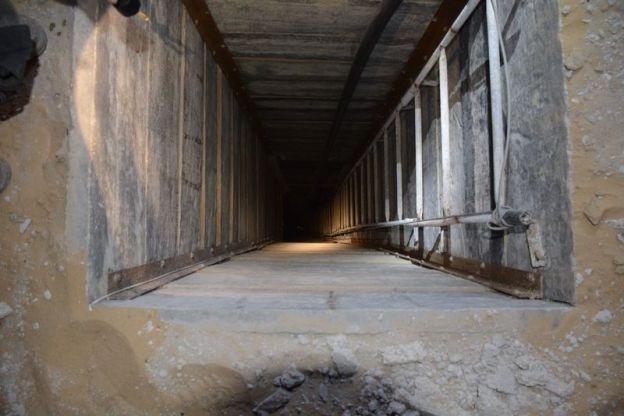
The Israeli army has found no systematic solution for finding and destroying Hamas’s tunnels, many soldiers said. Tunnel entrances have been found in homes, schools, mosques, courtyards, streets and farm fields. Some are covered by steel doors, others by mattresses in a home. Israeli forces have mostly relied on drones and robots to search tunnels, only sending soldiers in later to avoid firefights in the narrow passages.

Excepts from Marcus Walker, Why Hamas Thinks it Still Could Win the War, WSJ, Feb.29, 2024
How to Detect Humans Under-the-Ground: Surveillance Best

Tunnel-digging in times of conflict has a long history. These days, secret tunnels are used to move weapons and people between Gaza and Egypt, and by Kurdish militia operating on the frontier between Syria and Turkey. But the same principle applies. What happens underground is hard for the enemy to observe. Digging for victory is therefore often a good idea…

That, though, may be about to change. Real-time Subsurface Event Assessment and Detection (RESEAD), a project being undertaken at Sandia National Laboratories in New Mexico, uses novel sensors to make accurate maps of what is happening underground. This will, no doubt, have many civilian applications. But Sandia is principally a weapons lab…The sensors themselves are a mixture of accelerometers, which pick up vibrations, current detectors, which measure the electrical-resistance of rocks and soil, and subsurface radar…

Exactly how RESEAD sensors would be put in place in a zone of active conflict remains to be seen. But the system could certainly be useful for other sorts of security. In particular, America has a problem with tunnels under its border with Mexico being used to smuggle drugs and migrants into the country. RESEAD would be able to detect existing tunnels and nip new ones in the bud. 

Excerpts from Tunnel Vision: How to detect the enemy when they are underground, Economist, June 24, 2021

The Underground War

U.S. Army leaders say the next war will be fought in mega-cities..In 2017, the Army launched an accelerated effort that funnels some $572 million into training and equipping 26 of its 31 active combat brigades to fight in large-scale subterranean facilities that exist beneath dense urban areas around the world….For this new type of warfare, infantry units will need to know how to effectively navigate, communicate, breach heavy obstacles and attack enemy forces in underground mazes ranging from confined corridors to tunnels as wide as residential streets. Soldiers will need new equipment and training to operate in conditions such as complete darkness, bad air and lack of cover from enemy fire in areas that challenge standard Army communications equipment…

“This training circular is published to provide urgently needed guidance to plan and execute training for units operating in subterranean environments, according to TC 3-20.50 “Small Unit Training in Subterranean Environments,” published in November 2017.

The Army has always been aware that it might have to clear and secure underground facilities such as sewers and subway systems beneath densely-populated cities. ..An assessment last year estimates that there are about 10,000 large-scale underground military facilities around the world that are intended to serve as subterranean cities…The endeavor became an urgent priority because more than 4,800 of these underground facilities are located in North Korea, the source said… But in addition to its underground nuclear missile facilities, North Korea has the capability to move thousands of troops through deep tunnels beneath the border into South Korea, according to the Army’s new subterranean manual.

“North Korea could accommodate the transfer of 30,000 heavily armed troops per hour,” the manual states. “North Korea had planned to construct five southern exits and the tunnel was designed for both conventional warfare and guerrilla infiltration. Among other things, North Korea built a regimental airbase into a granite mountain.”

For its part, Russia inherited a vast underground facilities program from the Soviet Union, designed to ensure the survival of government leadership and military command and control in wartime, the manual states. Underground bunkers, tunnels, secret subway lines, and other facilities still beneath Moscow, other major Russian cities, and the sites of major military commands.  More recently, U.S. and coalition forces operating in Iraq and Syria have had to deal with fighters from the Islamic State of Iraq and Syria operating in tunnel systems.

Toxic air, or a drop in oxygen, are other challenges soldiers will be likely to face operating deep underground. The Army is evaluating off-the-shelf self-contained breathing equipment for units to purchase.”Protective masks without a self-contained breathing apparatus provide no protection against the absence of oxygen,” the subterranean manual states. ”  Soldiers can find themselves exposed to smoke, carbon monoxide, carbon dioxide, hydrogen sulfide, methane natural gas underground, according to the manual. Breathing gear is expensive; some apparatus cost as much as $13,000 apiece, the source said.

Underground tunnels and facilities are often lighted, but when the lights go out, soldiers will be in total darkness. The Army announced in February that it has money in its fiscal 2019 budget to buy dual-tubed, binocular-style night vision goggles to give soldiers greater depth perception than offered by the current single-tubed Enhanced Night Vision Goggles and AN/PVS 14s.

Excerpts from Matthew Cox, Army Is Spending Half a Billion to Train Soldiers to Fight Underground, Military.com, June 24, 2018

See also DARPA on Underground War

The Subterraneans

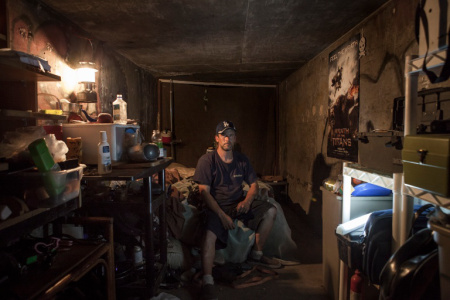
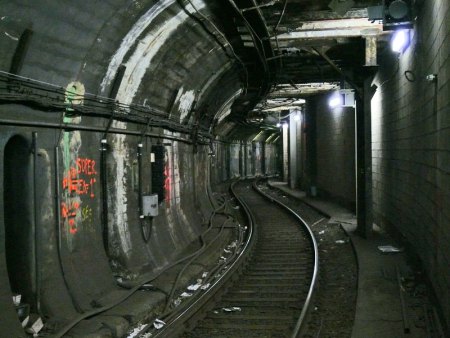
Underground settings are becoming increasingly relevant to global security and safety. Rising populations and urbanization are requiring military and civilian first responders to perform their duties below ground in human-made tunnels, underground urban spaces [e.g. mass transit, water infrastructure] and natural cave networks. Recognizing that innovative, enhanced technologies could accelerate development of critical lifesaving capabilities, DARPA today announced its newest challenge: the DARPA Subterranean Challenge.

The DARPA Subterranean or “SubT” Challenge aims to explore new approaches to rapidly map, navigate, and search underground environments. Teams from around the world will be invited to propose novel methods for tackling time-critical scenarios through unknown courses in mapping subsurface networks and unpredictable conditions, which are too hazardous for human first responders.

“One of the main limitations facing warfighters and emergency responders in subterranean environments is a lack of situational awareness; we often don’t know what lies beneath us,” said Timothy Chung, program manager in DARPA’s Tactical Technology Office (TTO). “The DARPA Subterranean Challenge aims to provide previously unimaginable situational awareness capabilities for operations underground.”

“We’ve reached a crucial point where advances in robotics, autonomy, and even biological systems could permit us to explore and exploit underground environments that are too dangerous for humans,” said TTO Director Fred Kennedy.“Instead of avoiding caves and tunnels, we can use surrogates to map and assess their suitability for use. Through the DARPA Subterranean Challenge, we are inviting the scientific and engineering communities—as well as the public—to use their creativity and resourcefulness to come up with new technologies and concepts to make the inaccessible accessible.

Excerpts from DARPA Subterranean Challenge Aims to Revolutionize Underground Capabilities, Dec. 21, 2017