Tag Archives: vaccine supply chains

The New Opium War: How the World Got Addicted to China

 A fundamental axiom of economics is that when two individuals or countries trade, both are better off. In the decades after World War II, the U.S. was the world’s largest exporter and economy and as it grew, it imported more, helping its partners. As they grew, they bought more of what the U.S. made. Expanding trade helped everyone specialize, leading to more competition, innovation and choice, and lower costs.

China is now the world’s second-largest economy and its largest exporter, but its philosophy is quite different. It has never believed in balanced trade nor comparative advantage. Even as it imported critical technology from the West, its long-term goal was always self-sufficiency. In 2020, Chinese leader Xi Jinping codified this approach as “dual circulation.” This would, he said, “tighten the international industrial chain’s dependence” on China while ensuring China’s production was “independent” and “self-sustaining.”

And as China expands into high-end manufacturing such as aircraft and semiconductors, Xi has decreed it must not relinquish low-end production such as toys and clothes. Beijing has discouraged Chinese companies that invest abroad from transferring key know-how, such as in the production of iPhones and batteries. Xi has rejected fiscal reforms that would tilt its economy away from investment, exports and saving and toward household consumption and imports.

Excerpt from Greg Ip, World Pays a Price for China’s Growth, WSJ, Dec. 6, 2025

How Boeing Maimed Itself and Killed 346 People

Spirit AeroSystems is going full circle, from part of Boeing till 2005 to independent supplier in 2005 (when Boeing sold to a private equity firm) and back to part of Boeing in 2024. It is the perfect example of a realization dawning on corporate America: Outsourcing isn’t all it was once cracked up to be. The deal’s logic of vertical reintegration makes sense in light of recent history, with air-travel safety likely benefiting from centralized supervision and a simpler workflow between plants. Yet it is also an indictment of what executives in most industries have been doing for almost three decades….’

At the core of the outsourcing trend that lasted 30 years was the idea that an “asset-light” firm focused on intellectual property and its “core” expertise would be better run. With this mindset, jettisoning aerostructures operations seemed like a no-brainer….
It wasn’t just aerostructures: In the 2000s, Boeing outsourced more than 70% of the 787 Dreamliner program. But the problems with becoming an assembler of planes, as opposed to a true manufacturer, gradually became apparent. The company lost control of supply, resulting in years of delays and cost overruns…

Aerospace isn’t the only industry to revive vertical integration. Intel is beefing up chip manufacturing in the U.S., General Motors is building battery plants and Sweden’s IKEA is acquiring containerships. One general flaw of the asset-light model is that, over time, firms can lose their innovative edge because a lot of “learning by doing” happens when production processes interact. Another is that low-margin bits of the supply chain get worn down to just a few sources. These may not have the financial muscle to make big investments in times of turmoil, or they may be geopolitically sensitive. Such risks were underscored by post-Covid shortages, particularly in the largely “fabless” U.S. microchip industry, which has outsourced chip making to foundries in East Asia in a way that echoes what happened to aerostructures.

Excerpts from Jon Sindreu, Boeing Calls Time on the Great American Outsourcing, July 2, 2024

A Gun to their Head: the Exclusive Vaccine Club

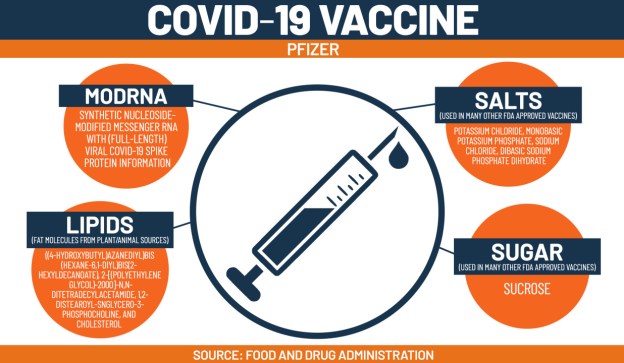
International tensions over access to Covid-19 vaccines have intensified as supply hiccups disrupt mass rollouts of shots. But trade experts warn that restrictions on vaccine exports risk making a bad situation worse. That’s because the world’s major vaccine producers rely on each other for the essential ingredients to manufacture vaccines through a web of cross-border supply chains in complex chemicals, fatty acids and glass vials. If governments restrict vaccine exports, they risk retaliation from other members of this exclusive club of vaccine makers, who could withhold vital supplies, squeezing production just when it is needed most.

These supply chains stretch across the world, drawing in producers of basic chemicals that provide critical ingredients as well as the pharmaceutical powerhouses that make the vaccines. The  U.S. , the  European Union  and  China  are among a handful of territories that produce vaccine ingredients and final vaccines for the entire world. More than half of global vaccines and of key vaccine ingredients come from the  U.S.  and  EU . These 12 countries and the EU make up the “Vaccine Club”—producers that make both the key ingredients as well as final vaccines

The members of the vaccine club, though, source on average 88.3% of the imported ingredients used in vaccine production from other club members, according to economists led by Simon Evenett, professor of international trade and economic development at the University of St. Gallen in Switzerland, who have mapped trade flows between the world’s major vaccine producers. Limiting vaccine exports to another major producer would therefore risk retaliatory action that could undermine production, threatening the mass vaccination drives that are the key to ending the pandemic, Prof. Evenett said. “Everyone has a gun to each other’s heads,” he said.

Excerpts from The Covid-19 Vaccine Club: How the World’s Biggest Producers Depend on Each Other, WSJ, May 1, 2021