
Daily Archives: May 14, 2025

What is the Real Trump Card of China

Chinese officials acknowledged in a secret December 2024 meeting that Beijing was behind a widespread series of alarming cyberattacks on U.S. infrastructure, according to people familiar with the matter, underscoring how hostilities between the two superpowers are continuing to escalate. The Chinese delegation linked years of intrusions into computer networks at U.S. ports, water utilities, airports and other targets, to increasing U.S. policy support for Taiwan, the people, who declined to be named, said.  …The Chinese official’s remarks at the December meeting were indirect and somewhat ambiguous, but most of the American delegation in the room interpreted it as a tacit admission and a warning to the U.S. about Taiwan, a former U.S. official familiar with the meeting said.

Excerpts from Dustin Volz, In Secret Meeting, China Acknowledged Role in U.S. Infrastructure Hacks, WSJ, Apr. 10, 2025
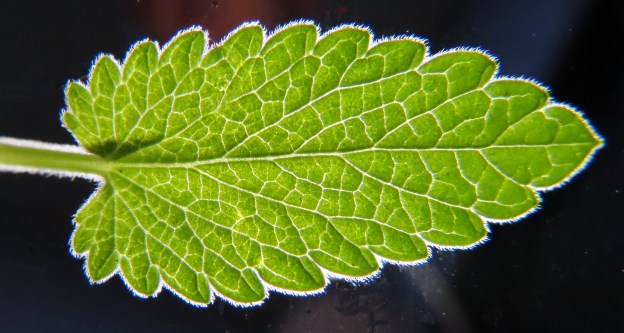
How Microplastics Enter Plants

Plastic production is increasing sharply. This has raised concerns about the effects of microplastics (typically defined as plastic particles smaller than 5 millimetres in diameter) and nanoplastics (smaller plastic particles that are less than 1,000 nanometres in diameter) on human health. These concerns are partly influenced by alarming findings of the presence of microplastics in various human tissues, including the brain and placenta.

Most attention is focused on soil and water as common sources of plastics that enter the food chain. However, writing in Nature, Li et al. provide strong evidence supporting the air as being a major route for plastics to enter plants. Plants can absorb plastic particles directly from the air. Particles in the air can enter leaves through various pathways, such as through structures on the leaf surface called the stomata and through the cuticle. Stomata are small openings made of cells, and the cuticle is a membrane, covered in insoluble wax, that is well suited for absorbing microplastics…

Microplastics can also travel to and enter the plant’s water- and nutrient-transporting system (called the vascular bundle) and from there reach other tissues… Given that leaves are a key part of the food chain, microplastic particles that accumulate here can easily pass to herbivores and crop leaves, both of which can be directly consumed by humans.

Excerpt from Willie Peijnenburg, Plant Leaves Absorb Microplastics—And They End Up in Our Food, Scientific American, Apr. 18, 2025