Today I am reading on how AI models can blackmail and spy.
See How LLMs could be insider threats
DECEPTION IN LLMS: SELF-PRESERVATION AND AUTONOMOUS GOALS IN LARGE LANGUAGE MODELS
Chilling…
Today I am reading on how AI models can blackmail and spy.
See How LLMs could be insider threats
DECEPTION IN LLMS: SELF-PRESERVATION AND AUTONOMOUS GOALS IN LARGE LANGUAGE MODELS
Chilling…
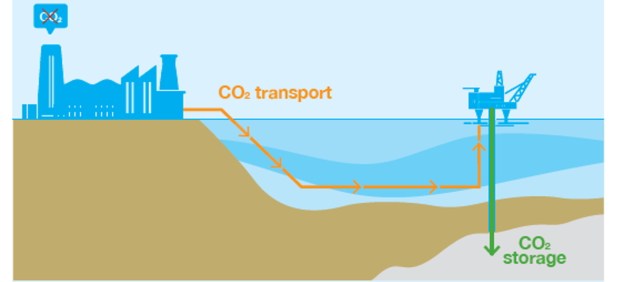
Drawing down carbon from the air and stashing it in underground rock formations has been framed as an essential way to slow and reverse global warming. But new research published in the journal Nature finds there are far fewer suitable places to do this than previously thought.
After screening out “risky” areas, like those that are vulnerable to earthquakes, a team of researchers from Europe and the U.S. found that the Earth can only safely store about 1,460 gigatons of injected carbon in its sedimentary basins. This is an order of magnitude less than previous estimates…
Carbon storage “can no longer be considered an unlimited solution to bring our climate back to a safe level,” one of the study’s co-authors, Joeri Rogelj, said in a statement. “Geological storage space needs to be thought of as a scarce resource that should be managed responsibly to allow a safe climate future for humanity.” Rogelj is director of research at the Grantham Institute on climate change and the environment at Imperial College London.
Carbon storage refers to the injection of carbon dioxide into underground reservoirs where it theoretically can’t contribute to climate change.
According to the study’s authors, no previous global or regional estimate of the Earth’s technical carbon storage potential has taken into account key risk factors that would make some areas undesirable for storage. Starting from an estimate of all potentially available storage sites, their analysis cuts out areas that are too shallow, too deep, and too prone to earthquakes, as well as environmentally protected areas and areas near where people live. This reduces the total available capacity for carbon storage from 11,780 gigatons to just 1,460 gigatons of CO2, 70 percent of it on land and 30 percent on the seafloor.
They also noted some geographical disparities in the potential for carbon storage: While some historical climate polluters such as the U.S. and Canada have lots of space to safely stash carbon, others in Europe don’t. If those countries intend to make carbon storage a significant piece of their climate mitigation plans, they will likely have to look for locations in countries that have done little to contribute to climate change, potentially in Africa.
Except from Joseph Winters, How much carbon can we safely store underground? Much less than previously thought, Yale Climate Connections, Sept. 10, 2025
 Law-In-Action