Tag Archives: 5G technology

Which Tech Companies Work for the Military? All

Companies including Nokia, Dell, and Oracle are eager to apply decades of experience in civilian technology to the rapidly evolving battlefield. Drones, bodycams and digital sensors now stream real-time intelligence in volumes no human can digest. Military headquarters are crunching through that using artificial intelligence and pumping back to troops situational updates, tactical guidance and battle plans, constantly updated on computer screens and hand-held devices.  “We understand that the future weapon is data,” said Giorgi Tskhakaia, an adviser to Ukraine’s minister of digital transformation 

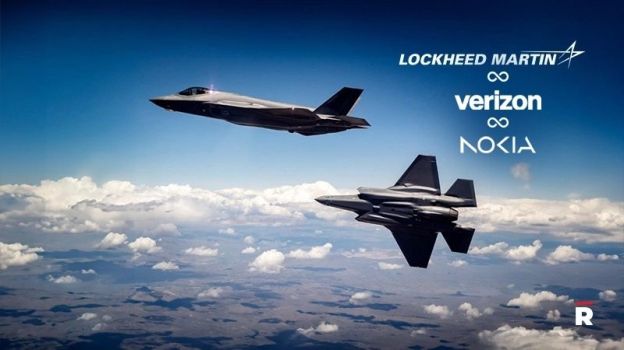
The first step is connectivity….Nokia is packaging 5G technology for ultra-secure use on battlefields and in national-security applications. It has developed backpacks with small 5G nodes and vehicle-based systems that can handle up to 1,000 users for a sort of tactical communications bubble. In 2025, it announced partnerships with military-equipment giants Lockheed Martin and Rheinmetall to integrate 5G communications into their systems.

Ericsson, the West’s only other maker of 5G networks and a producer of military radios going back to World War II, is also pushing into digital defense applications.

NATO is now working to adopt 5G as a military-communications standard across its 32 members. Alliance experts say the volume of military data is so great that 5G is best for transmission because the standard has at least 10 times the data capacity of earlier systems. It is also much more resilient against jamming

The second step is the extraction of data….Ukraine has spent three years developing AI systems to churn through all it collects… The Pentagon in 2017 launched a significant effort to adopt AI, Project Maven, tapping machine learning to digest mountains of data. Google’s role in the work sparked employee protests at the time…

Oracle, like many of its rivals, is no stranger to working with governments and militaries. The company began in 1977 out of a Central Intelligence Agency program—Project Oracle. But for decades it focused on corporate customers. Now, it and other cloud providers including Google, Amazon.com and IBM are applying to government and national-security work many lessons from their fierce commercial competition to move and process data fastest.

The final step in exploiting battlefield data is delivering it to fighters via gear that can handle combat conditions. Screens are proliferating on the battlefield, just as they did in offices and homes several decades ago, but warfare puts demands on equipment unlike any other environment…One Dell laptop is built to Pentagon standards for resistance to shocks, dust, sand, water and “explosive atmosphere,” meaning it won’t ignite flammable vapor. It can handle temperatures between minus 20 degrees and 145 degrees Fahrenheit.

Excerpt from Daniel Michaels, That 1990s Tech Brand? Its New Gig Is in Battlefield Data, WSJ, Sept. 9, 2025
Under Zero Trust: the U.S. Chip Resurgence

The Defense Advanced Research Projects Agency launched its Electronic Resurgence Initiative (ERI)  to help reboot a domestic chip industry that has been moving steadily offshore for decades…. Program officials and chip industry executives foresee the emergence of a “5th generation of computing” based on current cloud infrastructure while combining AI, the Internet of Things (IoT) and 5G wireless networks to deliver big data.

“The U.S. microelectronics industry is at an inflection point,” Ellen Lord, undersecretary of defense for acquisition and sustainment, told the virtual ERI summit. After decades of offshoring of chip fabrication, packaging and testing capabilities, “How do we reverse this trend?”  The Defense Department is expanding its technology base efforts by implementing a “step-by-step process for reconstituting the microelectronics supply chain,” focusing on various segments of the semiconductor ecosystem, including memory devices, logic, ICs and advanced packaging along with testing and assembly.

“While DoD does not drive the electronics market,” constituting only about 1 percent of demand, “we can drive significant R&D,” ERI is advancing public-private partnerships that provide a framework for commercial innovation. The result would be “pathfinder projects” geared toward a renewal of U.S. chip manufacturing. As trade frictions with China grow, ERI is placing greater focus on ensuring the pedigree of U.S. electronics supply chain. “We need to find a path to domestic sources,” said Lord.

While nurturing government-industry partnerships as part of an emerging next-generation U.S. industrial policy, this year’s DARPA summit also emphasized chip standards and processes for securing fabs, foundry services, devices and foundational microelectronics. In that vein, U.S. officials stressed new chips metrics like “quantifiable assurance” to secure dual-use devices that could end up in weapons or an IoT device.

“Our interests to protect both the confidentiality and the integrity of our supply chain are aligned with commercial interests, and we will continue to work across government and industry to develop and implement our quantitative assurance strategy based on zero trust,” said Nicole Petta, principal director of DoD’s microelectronics office. The “zero trust” approach assumes no device is safe, and that all microelectronics components must be validated before deployment. The framework marks a philosophical departure from DoD’s “trusted foundry” approach instituted in the 1990s, largely because “perimeter defenses” failed to account for insider threats…

DARPA Chip Efforts Pivots to Securing US Supply Chain, https://www.hpcwire.com, Aug. 24, 2020

Your Death, My Life: Ericsson versus Huawei

The Trump administration’s increasingly aggressive effort to cripple China’s Huawei has presented Ericsson the opportunity to lead the rollout of 5G technology around the world.  The Swedish company is emerging as the steadiest player in the $80-billion-a-year cellular-equipment industry, telecommunications executives and analysts say, because it makes a technically advanced product that one rival, Nokia,was late to develop and that Huawei may not be able to make in the future because of recent U.S. measures.

The Trump administration last month stepped up efforts to hamper Huawei by imposing export restrictions that make it harder for the company to buy computer chips that are produced using U.S.-designed equipment —a move that could prevent it from manufacturing advanced 5G hardware. The U.S. has also sought to boost Huawei’s rivals by providing loans to wireless carriers in developing countries so they can buy equipment from non-Chinese suppliers, among other moves.

U.S. Attorney General William Barr in February suggested that the U.S. government take a financial stake in Ericsson or Nokia, or both, to “make it a more formidable competitor and eliminate concerns over its staying power.”

The White House quickly backed away from the idea….Ericsson provides equipment for all three major U.S. carriers: AT&T Inc., Verizon Communications Inc. and T-Mobile US Inc….

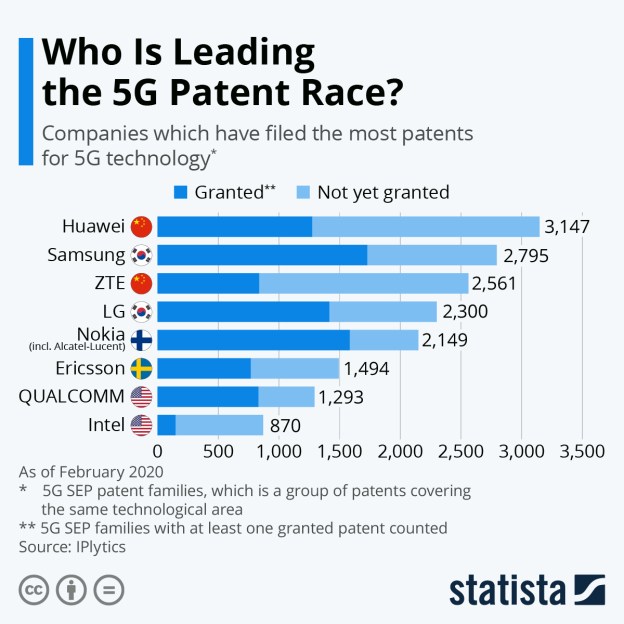
Ericsson struggled in the cellular-equipment industry against China’s Huawei and ZTE Corp., which sold comparable products, often at lower prices. Among Ericsson’s key innovations are cellular antennas. Ericsson’s use a new technology, called massive multiple-input multiple-output, or massive MIMO, that sends wireless signals in strong jets to different devices. Typical cellular antennas, which sit on steel towers or rooftops, send wireless signals in a wide cone, similar to the way a garden hose sprays water.

Wireless carriers want Ericsson’s concentrated wireless technology because it enables fast connections and allows them to serve more customers using existing cellular towers. Building new towers is unattractive because it is a bureaucratic process that can cost tens of thousands of dollars….Ericsson notched a victory the spring of 2020 when it joined Huawei in winning 5G contracts to supply all three major wireless carriers in China, the world’s second-biggest telecom-equipment market

The big question for wireless carriers and equipment makers is whether Huawei can continue making massive MIMO 5G equipment with the quality that wireless carriers have come to expect. The technology requires supplies from the world’s top semiconductor companies, but the Trump administration’s recent actions may mean even foreign chip suppliers must seek Washington’s approval to sell to Huawei. For now, Ericsson is assuming China has advanced its own semiconductor industry enough to continue supplying Huawei.

Excerpts from Stu Woo, Ericsson Emerges as 5G Leader After U.S. Bruises Huawei, WSJ,  June 2, 2020