Tag Archives: Basel Convention Hazardous Waste

Malaysia Says No to Plastics from U.S.

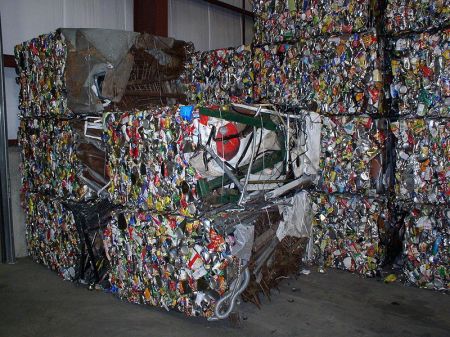
Malaysia emerged as a major destination for U.S. waste after China banned American waste imports in 2018. California shipped 864 shipping containers, or more than 10 million pounds of plastic waste, to Malaysia in 2024, according to the Basel Action Network, an advocacy group…

Under Malaysian waste guidelines announced recently, the country is no longer accepting plastic waste and hazardous waste from nations that didn’t ratify the Basel Convention, the international treaty designed to reduce the international movement of hazardous and other waste. The U.S. is one of just a handful of countries, including Fiji and Haiti, that hasn’t signed the pact….The coming ban has already disrupted trash export routes significantly, particularly for the plastics used in grocery bags, trash can liners and food wrap.

According to California’s waste agency, CalRecycle, the state exported 11.3 million tons of recyclable materials overseas to places such as Malaysia, Thailand, Vietnam, China, Taiwan, South Korea, Mexico and Canada — in 2022. That number includes 100 million pounds of scrap plastic…

Excerpt from Susanne Rust, Malaysia no longer takes U.S. plastic waste, creating a dilemma for California, Los Angeles Times, July 3, 2025

Who Gets By and Who Throws and Thrives?

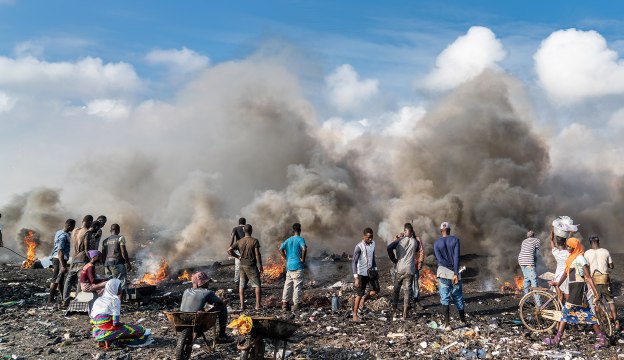
For years, a site called Agbogbloshie in Accra, Ghana was one of the largest e-waste processing sites in Africa, getting 15,000 tons of discarded phones, computers and other used electronics each year. Many Western media outlets depicted the site as a public health and environmental tragedy, rife with toxic chemicals that leach into the water and poison the air. While that’s undoubtedly true, it’s not the full story, according to a new collaborative photojournalism project. The project, called E-Waste in Ghana: Tracing Transboundary Flows, which won this year’s Fondation Carmignac photojournalism award, aims to capture both the positive and negative aspects of e-waste.

“The world cannot throw all its garbage here, it has truly negative consequences on the people,” says Anas Aremeyaw Anas, an investigative journalist in Ghana who co-led the project. “But there are positive aspects of sending us e-waste,” he says, as it’s sparked a dynamic, informal recycling economy in the country that, while often dangerous, can also help lift people out of poverty.

Globally, e-waste is an enormous problem. In 2022, humans discarded about 62 million tons of used electronics, enough to fill a line of trucks that spans the equator. But there’s opportunity too, as those trucks contain over $91 billion of valuable metals, the U.N. estimates….E-waste falls into two broad buckets: functional and non-functional. The line between them can be fuzzy, as what’s still usable or repairable to one person may not be to another, but the distinction is important. International laws prohibit trafficking of non-functional e-waste containing toxic substances, but the United Nations sees trading functional e-waste as beneficial, as it can lengthen the lifespan of a product…The project found that exporters often fail to separate functional from non-functional e-waste. “If you have a container full of TV screens, how on earth are you going to verify each and every one of them to make sure that they are functioning,” says photojournalist Bénédicte Kurzen, a co-author of the project. As a result, both kinds of e-waste get stuffed into container ships that make their way to low- and middle-income countries like Ghana.


Formally, Ghana prohibits the import of many forms of hazardous e-waste material. But the team found that a well-placed bribe can get port officials to look the other way. As a result, informal e-waste sites are growing across Ghana’s coast. There, both functional and non-functional e-waste get dumped into vast piles that are encroaching on residential areas. Thousands of “pickers” come to these sites, picking through the rubbish to separate items that might be repaired from waste that could contain valuable minerals.

It’s fraught, precarious work. To separate valuable minerals, like copper wire or iron, from useless plastic, pickers often burn the trash, producing noxious fumes. Burns, cuts and other injuries are common. E-waste workers — many of whom are children, the team found — are at risk of exposure to over 1,000 harmful chemicals, according to the World Health Organization, including lead, mercury and brominated flame retardants, which are linked to higher rates of diseases like cancer and diabetes.

A burgeoning recycling and repair industry has risen up alongside those harms. The team documented informal marketplaces, where vendors sell scores of busted cell phones to buyers looking to repair circuit boards or extract their precious metals. On Zongo Lane in Accra, the reporters say, hundreds of small, independent shops sell used or repaired equipment, ranging from televisions to computers….The most valuable minerals extracted from Ghana’s e-waste often don’t stay in Ghana. Many of the most valuable items get cherry picked and sent to more advanced smelters in Europe or Asia, the team found. “People are dismantling these items in toxic environments, and then the few piles that contain incredibly valuable minerals are going to be re-exported,” says Kurzen.

Excerpts from Jonathan Lambert, Stunning photos of a vast e-waste dumping ground — and those who make a living off it, NPR, Oct. 5, 2024
How to Spend $18 billion on Foreign Garbage

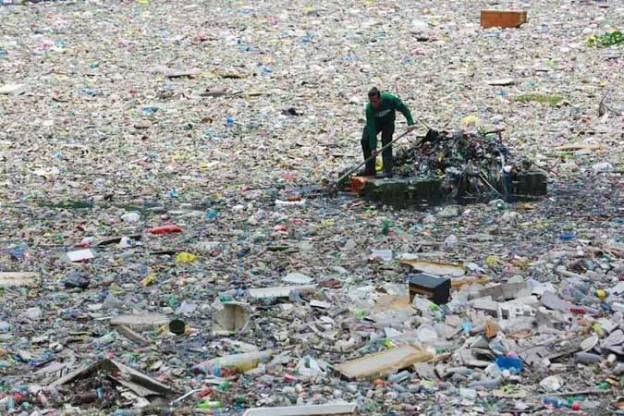
China sucked in more than half the world’s exports of scrap copper and waste paper in 2016, and half of its used plastic. All in all, China spent over $18bn on imports of rubbish in 2016. America, meanwhile, is an eager supplier. In 2016 nearly a quarter of America’s biggest exporters by volume were recyclers of paper, plastic or metal. Topping the list was America Chung Nam, a California-based supplier of waste paper which last year exported a whopping 333,900 containers, almost all of them to China.

This may soon change. On July 18, 2017 China told the World Trade Organisation that by the end of the year, it will no longer accept imports of 24 categories of solid waste as part of a government campaign against yang laji or “foreign garbage”. The Ministry of Environmental Protection says restricting such imports will protect the environment and improve public health. But the proposed import ban will disrupt billions of dollars in trade. Recyclers worry that other categories of waste may soon receive the same treatment.

It is often cheaper to recycle scrap copper, iron and steel, as well as waste paper and plastic, than to make such materials from scratch, especially when commodity prices are high. So as commodity prices rose during the 2000s, the burgeoning trade in waste benefited both exporters, who made money from previously worthless trash, and importers, who gained access to a reliable stream of precious feedstock. Between 1995 and 2016 Chinese imports of waste grew tenfold, from 4.5m to 45m tonnes.

But imports of recyclable waste are often dirty, poorly sorted or contaminated with hazardous substances such as lead or mercury. In 1996 factories in Xinjiang inadvertently imported more than 100 tonnes of radioactive metal from Kazakhstan. The following year an American businessman was convicted of smuggling over 200 tonnes of unsorted rubbish labelled as waste paper. Even when the intended material is imported, it is often recycled improperly. In 2002 the authorities faced widespread criticism after a documentary showed workers in Guangdong province crudely dismantling discarded electronic devices and dumping the toxic remains into a river. Officials may have been spurred into the latest restrictions by the release of Plastic China, an unflattering documentary about the plastic-recycling industry which was screened at Sundance, a grand American film festival, in January 2017,

The government had already been campaigning to block imports of illegal and low-quality waste under a crackdown called Operation Green Fence launched in 2013….Whereas Green Fence was aimed at improving the quality of imported waste, the government’s latest move bans several types of waste outright, threatening some $5bn in trade. But…. recyclers who rely on imports may now switch to grubbier domestic stock.

Excerpts from Waste Management: Anti-Dumping, Economist, Aug. 5, 2017, at 32

Illegal Waste from Canada to Philippines

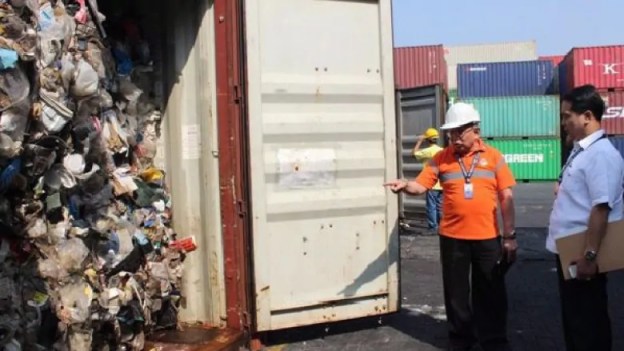
Fifty containers of Canadian garbage, including used adult diapers, have been languishing in the port of Manila in the Philippines for almost two years and setting off recent protests by environmental and public health activists.The activists, among them a Catholic priest, say the containers hold toxic and hazardous waste, although a recent study by Philippines officials suggests they’re simply stuffed with household garbage.

Late last year (2014), the Philippines government recommended the containers be returned to Canada under the provisions of the Basel Convention, which prohibits developed countries from shipping waste to developing nations.“The Basel Convention says, as a developed country, (Canada) cannot export waste,” Filipino environment secretary Ramon Paje said in a televised interview. “That would be considered as dumping.”…

A spokeswoman for Foreign Affairs (Canada) reiterated the government’s long-stated opinion that the case is a private commercial matter involving a Canadian company and its Philippines partner.….Chronic Inc., a plastics exporter based in Whitby, Ontario , shipped the containers — supposedly filled with recyclable Vancouver plastics — to the Philippines in the spring and summer of 2013. But upon inspection, the country’s Bureau of Customs found the containers were filled with stinking household garbage, including used adult diapers and kitchen waste.

The bureau said the material could “pose biohazard risks” and impounded the shipment.
Jim Makris, head of the Lee-Anne Goodmandenied last year that he shipped garbage to the Philippines….The Philippine Daily Inquirer reported in 2014 that the Bureau of Customs is investigating the 150-worker plant in Valenzuela City started by Makris to sort and sell the plastic he ships.

Excerpts from Lee-Anne Goodman, 50 containers of Canadian garbage rots in Manila for two years, Canadian Press, Mar. 20, 2015