Stark illustrations of the dangers from chemical weapons can be seen in attacks using toxic industrial chemicals and sarin against civilians and combatants in Syria and toxic industrial chemicals in Iraq, as well as more targeted assassination operations in Malaysia and the United Kingdom, employing VX and novichok nerve agents, respectively. . With the parties to the Chemical Weapons Convention (CWC) convening a Review Conference to address such issues beginning 21 November 2018, we highlight important scientific aspects .
The Chemical Weapons Convention (CWC) is a multilateral treaty in effect since 1997 that proscribes the development, production, stockpiling, transfer, and use of chemical weapons “under any circumstances” and requires their destruction within a specified time period. The CWC allows the use of toxic chemicals for a range of industrial, agricultural, research, medical, pharmaceutical, or other peaceful purposes, including law enforcement, as long as the “types and quantities” of chemicals employed are “consistent with such purposes.” …The Organisation for the Prohibition of Chemical Weapons (OPCW), which is the implementing body of the CWC, comprises the 193 State Parties and a Technical Secretariat that provides technical assistance to States, routinely inspects relevant State and commercial industrial facilities, and monitors activities to ensure compliance. It was awarded the Nobel Peace Prize in 2013 for overseeing and facilitating the verified destruction of most of the declared chemical weapons stocks produced in the last century—to date totaling more than 96% (69,750 metric tons) of the declared stockpiles of chemical agents.
Although the CWC includes three schedules of toxic chemicals for the application of verification measures, the scope of the CWC is not constrained to these schedules but by its General Purpose Criterion (GPC), which prohibits misuse of toxic chemicals based on intent rather than on this limited list of chemicals. [This GPC makes it possible to widen the authority of the OPCW. More, specifically issues to consider include]:
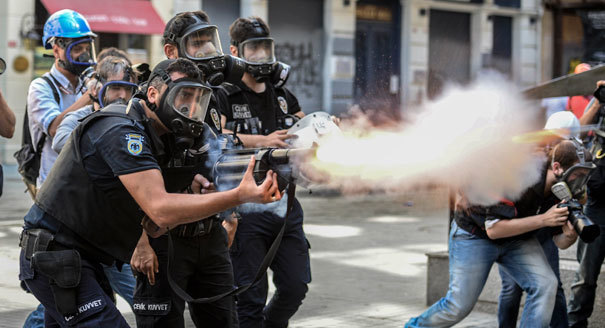
1) Riot control agents (RCAs). The CWC defines RCAs—such as tear gas and pepper spray—as “any chemical not listed” in one of its three schedules that can produce “rapidly in humans sensory irritation or disabling physical effects which disappear within a short time following termination of exposure.”…However, a recurring concern documented by the medical community and human rights monitors has been the widespread misuse of RCAs by police and security forces in excessive quantities, including in hospitals, prisons, homes, and automobiles, where targeted individuals cannot disperse. In such situations, serious injury or death can result from toxic properties of chemicals or from asphyxiation… [It is important to clarify] the nature and scope of “law enforcement” activities and develop guidance as to “types and quantities” of RCAs that can legitimately be used in such circumstances
2) Delivery systems… capable of delivering far greater amounts of RCAs (and potentially other toxic chemicals) over wider areas or more extended distances than current standard law enforcement delivery mechanisms, such as handheld sprays, grenades, and single launched projectiles. Such new systems include large-capacity spraying devices, automatic grenade launchers, multibarrel projectile launchers, large-caliber RCA projectiles, and unmanned ground or aerial vehicles capable of carrying spraying devices or projectile launchers. ..
3) Incapacitating chemical agent (ICA) weapons. Although the CWC permits use of appropriate types and quantities of RCAs for law enforcement, certain countries have conducted research into weapons employing other distinct toxic chemicals, so-called ICAs. Not separately defined under the CWC, ICAs can be considered as a range of toxic chemicals—only one of which [3-quinuclidinyl benzilate (BZ) and two of its immediate precursors] is currently scheduled—including anesthetics and other pharmaceutical chemicals that are purportedly intended to act on the body’s core biochemical and physiological systems, notably the central nervous system (CNS), to cause prolonged but nonpermanent disability. Such CNS-acting chemicals can produce unconsciousness, sedation, hallucination, incoherence, disorientation, or paralysis…An aerosolized mixture of two anesthetics—carfentanil and remifentanil—employed by Russian security forces to end the Moscow theatre siege of October 2002 caused the deaths of 125 of the 900 hostages…
Other chemical production facilities (OCPFs) are chemical plants that do not currently produce, but are capable of manufacturing, chemical warfare agents or precursors. At present, a small fraction of declared OCPFs are selected for verification by the OPCW; the Review Conference should consider authorizing a substantial increase in OCPF inspections per year. …Biological and biologically mediated processes for production of discrete organic chemicals Some products and processes used by the biomanufacturing industry are as relevant to the CWC as those used by other OCPF facilities The OPCW should build on the considerable progress made toward developing a network of designated laboratories for the analysis of biomedical and biological samples. Advances in other fields could also facilitate more effective evidence collection, for example, exploring the potential of unmanned aerial vehicles to support reconnaissance, detection, and chain of custody.
Excerpts from Michael Crowley at al., Preventing Chemical Weapons as Sciences Converge, Science, Nov. 16, 2018
 Law-In-Action