
Tag Archives: Dutch chemists and illegal drugs

For the Poor by the Poor: the Ethics of Cocaine Trade

The First Capital Command, known by its Portuguese initials PCC, started out as a disgruntled band of inmates fighting for soap and toilet paper in the 1990s.  It now has some 40,000 members behind bars and on the streets with a vast network of affiliates—making it the largest criminal group in the Americas by some estimates, operating in nearly 30 countries on every continent…With the scale of Italian organized criminal groups and the efficiency of a multinational corporation, the PCC has helped drive record cocaine seizures in Europe and sparked violent turf wars in the heart of major ports in Belgium and the Netherlands. 

 Unlike the narco-tycoons of Mexico, the heavily armed Colombian cocaine militias or the flashy drug lords of Rio de Janeiro’s Red Command gang, PCC members keep a low, businesslike profile, seeking fortune not fame—and shying away from the kinds of gratuitous violence that attract police and TV news crews. New recruits sign up to a strict internal code of conduct, their swearing-in ceremonies sometimes conducted by videoconference.

By adopting religious personas—pretending to be ministers—PCC figures have gone into far-flung regions of Brazil to gain the trust of locals and recruit new members, while securing routes to neighboring cocaine-producing countries…In 2023, prosecutors in Brazil’s northern state of Rio Grande do Norte investigated a PCC cell accused of setting up at least seven churches to launder drug money—a practice now so common that authorities have a name for it: narco-Pentecostalism. Drug profits are also laundered through gas stations, fintechs, real-estate funds, sex motels, car dealerships and construction firms…Few crimes are outside the PCC’s reach. Members today are involved in everything from illegal gold mining and cargo theft to cybercrimes and the trafficking of exotic birds…

When the PCC was born in August 1993 inside the grimy walls of the Taubaté high-security prison in São Paulo state, its founders weren’t seeking world domination. They demanded better sanitation and beds, among other basics. Brazil’s prisons were slum-like infernos—some of the world’s most overcrowded and violent, plagued by tuberculosis and lice—and rights groups said guards routinely beat inmates. Resentment was simmering at Taubaté after 111 inmates had months earlier been killed when police crushed a rebellion at another prison not far away…Alarmed by the growing jailhouse fraternity, authorities tightened prison controls and transferred inmates to other states. This only accelerated the PCC’s national expansion and hardened its resolve. “Peace, justice and freedom” became the PCC’s rallying call, as it cast itself as a parallel power to a state whose abuses—from prison officials to politicians—help the gang draw recruits….The PCC offers recruits a future in a system “made for the poor by the poor,” said Bruno Manso, a foremost authority on the gang and co-author of “The War: The Rise of the PCC and the World of Crime in Brazil.” Manso said the PCC provides what recruits feel they can’t get elsewhere: escape from “the utter misery of urban life.”

Excerpt from Samantha Pearson, How a Brazilian Prison Gang Became a Global Cocaine Power,WSJ, Apr. 23, 2026
Sponsors of War: Captagon at $25 Better than Alcohol

In Saudi Arabial party-goers prefer Captagon pills (to alcohol), nowadays the Gulf’s favorite drug, at $25 a pop. Part of the amphetamine family, it can have a similar effect to Viagra—and conquers sleep. “With one pill,” says a raver, “we can dance all weekend.”

For Syria’s president, Bashar al-Assad, the drug has become a boon—at least in the short run. His country has become the world’s prime pusher of Captagon. As the formal economy collapses under the burden of war, sanctions and the predatory rule of the Assads, the drug has become Syria’s main export and source of hard currency. The Centre for Operational Analysis and Research (COAR), a Cyprus-based consultancy, reckons that last year authorities elsewhere seized Syrian drugs with a street value of no less than $3.4bn. That compares with Syria’s largest legal export, olive oil, which is worth some $122m a year. The drug is financing the central government, says Ian Larson, who wrote a recent report on the subject for COAR…

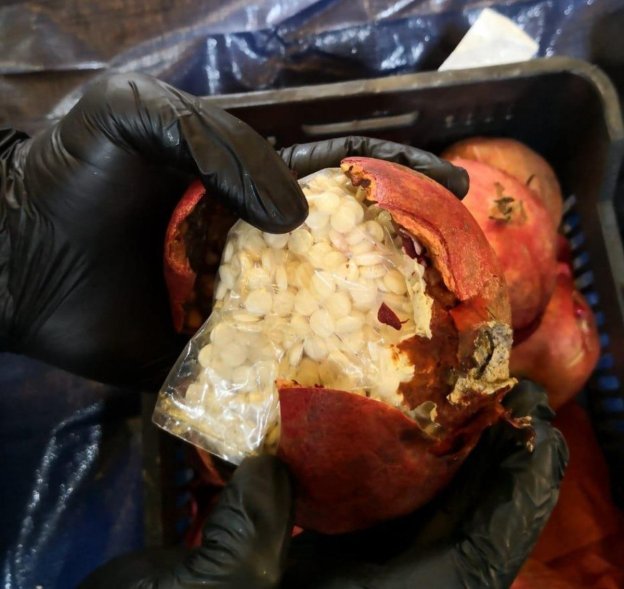
Chemical plants in the cities of Aleppo and Homs have been converted into pill factories. In the Gulf the mark-up for pills can be 50 times their cost in Syria. Smugglers hide them in shipments of paper rolls, parquet flooring and even pomegranates. Saudi princes use private jets to bring the stuff in

For the Syrians left behind, drugs may destroy what remains of society after a decade of civil war. “Young men who haven’t been killed, exiled or jailed are addicts,” says a social worker in Sweida, a city held by the Assads in the south. 

Excerpt from Pop a pill, save a dictator: Syria has become a narco-state, Economist, July 19, 2021

Netherlands, China and Mexico: Lethal Narco-States

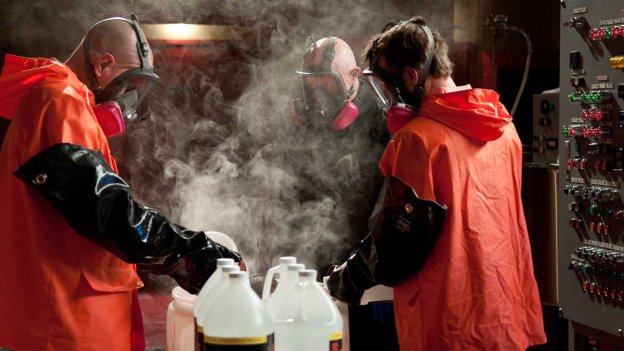
The setup—Mexican cooks using Dutch equipment to process chemicals from China—offered a window into the new global drug economy…Mexican cartels, which dominate drug trafficking in North America, are drawn to the Netherlands because it is a global trade nexus with sea and rail links to Asia that has long been Europe’s top manufacturer of synthetic drugs.

Piggybacking legitimate commercial channels, Mexican cartels are combining sophistication with ruthlessness to expand their reach world-wide. Their multinational drive is enabled by the advent over recent decades of highly potent synthetic drugs that don’t rely on crops or farmers and can be manufactured in compact facilities almost anywhere. Production experts instant-message instructions to overseas workers and hop the globe like factory troubleshooters in any industry.

With the U.S. drug market saturated and methamphetamine labs in Mexico already supersize, cartels that murder for market share see Europe as a new hub. The cartels are “like global corporations,” said DEA Regional Director for Europe Daniel Dodds. “If they can expand and broaden their customer base, they will.”

Mexican cartels first connected with Dutch drug smugglers in the 1990s, bringing cocaine through Rotterdam, Europe’s largest port. Cocaine remains Europe’s top illicit stimulant, but Dutch police say over the past two years surging quantities of Mexican meth have hit the Netherlands, Mexican “cooks” have arrived to teach local chemists, and Dutch technicians are honing production methods.

The Netherlands offers Mexican cartels an ideal production base because of its experienced chemists, unrivaled cargo networks and liberal attitude to drugs. Connections to labs in China supply chemicals that constantly adapt to remain legal. Dutch traffickers cultivated those links over decades as they perfected ecstasy manufacturing for party scenes in London, Berlin and New York…

Dutch officials are awakening to the impact of tolerating drug use for a long time and “allowing for too long a parallel economy to grow and become more influential,” Mr. Struijs said. “We have the characteristics of a narco-state.”

Excerpts from Valentina Pop, Cartels Are Now Cooking Chinese Chemicals in Dutch Meth Labs, WSJ, Dec. 8, 2020