Tag Archives: M23 rebels

How Murder, Torture and Rape Fuel the Technological Revolution

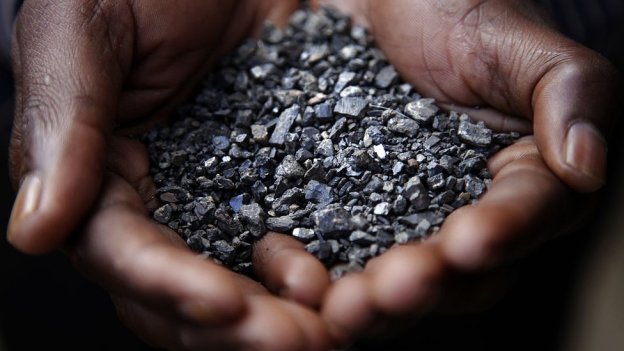
Congo is the world’s leading producer of coltan, from which tantalum is extracted. Tantalum is in hot demand because of its growing use in consumer products, from smartphones to laptops and it is critical for the defense industry (e.g., Apple iPhones, SpaceX rockets, IBM computers).

Coltan is mined in the country’s restive east, a region that has been engulfed in a decadeslong war between rebel groups and the Congolese army…A powerful militia backed by neighboring Rwanda has taken over swaths of eastern Congo, driving some two million people from their homes as fighters kill, torture and rape civilians. The militia, known as M23, has also seized control of Congo’s coltan production and transport, according to United Nations investigators, supply-chain experts, researchers and local traders. 

Now, a network of smuggling routes is increasingly being used to move ore illegally from militia-controlled mines in eastern Congo to neighboring Rwanda. From there, it is sold as Rwandan, and hence “conflict-free,” to smelters around the world, but primarily in China. 

M23 fighters levy taxes on informal coltan miners, who dig the ore from the ground, mostly by hand. The fighters also tax the movement of coltan, providing the militia with revenue to purchase weapons and other supplies. Overall, the trade generates around $300,000 a month for the fighters, according to Bintou Keita, the head of the U.N. mission in Congo….U.S. lawmakers have sought to prevent minerals commonly mined in eastern Congo—tin, tungsten, tantalum and gold—from financing conflict in the region. Legislation embedded in the 2010 Dodd-Frank Act requires U.S.-listed companies to disclose their use of the minerals, known as the 3TGs, as well as steps they are taking to prevent inadvertently financing armed groups. It doesn’t, however, oblige companies to remove potentially tainted materials from their supply chains…

Other armed groups are also profiting from the illegal coltan trade, including an alliance of militias that is helping the Congolese military fight M23, according to rights groups and U.N. researchers. The alliance, known as the Wazalendo, which U.N. investigators say is armed by Congo’s military, includes groups that are under international sanctions for war crimes. M23 and the Wazalendo are both recruiting child soldiers, raping women and girls, looting, murdering civilians and committing other atrocities, according to rights groups and U.N. investigators. Like M23, the Wazalendo are collecting illegal taxes on coltan at roadblocks along transportation routes, as well as from some mining sites. 

Excerpt from Alexandra Wexler, How This Conflict Mineral Gets Smuggled Into Everyday Tech,  WSJ, Oct. 6, 2024
Rape is a Way of Life in Congo

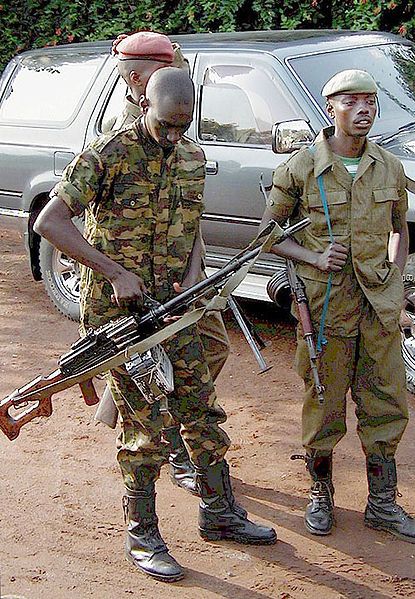
The U.N. peacekeeping mission in the Democratic Republic of Congo has threatened to stop supporting two Congolese army battalions unless soldiers accused of raping scores of women in an eastern town are prosecuted, said a senior U.N. official.  The United Nations said 126 women were raped in Minova in November 2012 after Congolese troops fled to the town as so-called M23 rebels briefly captured the nearby provincial capital of Goma.

The senior U.N. official, speaking on condition of anonymity, said the two Congolese battalions had been told to start prosecuting soldiers accused of raping the women in Minova this month or they would lose the support of U.N. peacekeepers, Reuters reports.  “Many rapes were committed. We have investigated, we have identified a number of cases and we demand that the Congolese authorities take action legally against those people,” said the official. He did not say how many soldiers had been accused. “Since nothing sufficient has happened at this stage we have already put two units of the armed forces of Congo on notice that if they do not act promptly we shall cease supporting them,” he said. “They have to shape up.”

U.N. spokesman Martin Nesirky said in December that alleged human rights abuses were committed in and around Minova between November 20 and November 30, including the 126 rapes and the killing of two civilians. Nesirky said at the time that two soldiers were charged with rape, while seven more were charged with looting.  The U.N. peacekeeping mission in Congo, known as MONUSCO, has a mandate to protect civilians and supports operations by the Congolese army. There are more than 17,000 troops in Congo – a country the size of Western Europe.

Peacekeepers have been stretched thin by the M23 rebellion in the resource-rich east of Congo and the U.N. Security Council is considering creating a special intervention force, which one senior council diplomat has said would be able to “search and destroy” the M23 rebels and other armed groups in the country.  M23 began taking parts of eastern Congo early last year, accusing the government of failing to honor a 2009 peace deal. That deal ended a previous rebellion and led to the rebels’ integration into the army, but they have since deserted.

African leaders signed a U.N.-mediated accord late last month aimed at ending two decades of conflict in eastern Congo and paving the way for the intervention force

U.N. threatens to stop working with Congo army units accused of rape, Reuters, Mar. 8, 2013


Why UN is Failing Congo?

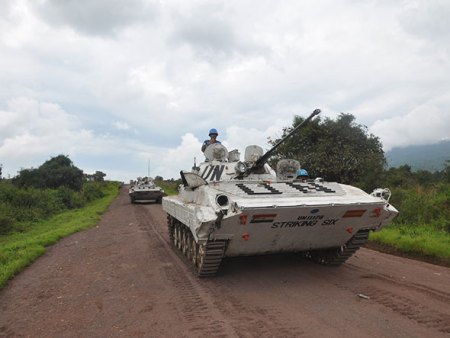
The United Nations said it had launched a comprehensive review of its Congo peacekeeping mission, which suffered a severe blow to its image last month after it stood aside and let rebels seize control of a major eastern city.  But U.N. Security Council diplomats and officials said any changes in the U.N.’s largest peacekeeping force would matter little if authorities in the Democratic Republic of the Congo did not improve their own army, and neighbouring Rwanda and Uganda continued to finance, equip and train rebel groups in mineral-rich eastern Congo.  U.N. officials have defended the U.N. Congo force, MONUSCO, for not preventing the well-equipped M23 rebels from taking the eastern city of Goma last month.  They said any attempt to have done so would have put Goma’s civilian population at risk. But they are painfully aware of the damage to the image of the mission, which U.N. officials say has been quite effective over the years, in Congo and across Africa.  “MONUSCO’s reputation has been severely damaged in the DRC and the region,” a U.N. diplomat told Reuters on condition of anonymity. “The U.N. is looking closely at MONUSCO now to consider whether there can be changes.

U.N. peacekeeping spokesman Kieran Dwyer said the United Nations was launching a comprehensive assessment of MONUSCO, and diplomats said U.N. Secretary-General Ban Ki-moon would present the results to the Security Council early next year…

One idea U.N. officials are considering is the creation of an “enforcement wing” of MONUSCO, that would take a more robust approach to dealing with insurgents in eastern Congo, U.N. diplomats and officials told Reuters on condition of anonymity.  “The idea would be to create a wing of MONUSCO that would do more than simply support the FARDC (Congolese army) but could take on more difficult battlefield tasks,” an envoy said.   Details are sketchy, since the review has just begun. But the idea is that the enforcement wing and the international neutral force could deploy along the Rwandan border, possibly with a separate, beefed-up mandate from the rest of MONUSCO, though they would all be part of the same overall mission.  Diplomats said the idea would have to be approved by troop-contributing countries and the Security Council.

A U.N. panel of experts has said M23 rebels are getting money, sophisticated equipment, training and reinforcements from Rwanda, as well as some additional support from Uganda. Analysts, diplomats and U.N. officials say Rwanda and Uganda have been interfering in eastern Congo for many years.  Rwanda and Uganda deny the charges….

It is not the first time Goma residents have felt let down by blue-helmeted U.N. troops. In 2008, the Security Council increased the size the peacekeeping force by 3,000 troops to help Congo’s weak army confront Tutsi rebels in eastern Congo.  At that time, angry displaced people and residents rioted and hurled stones at the peacekeepers, accusing them of failing to protect them from raping and pillaging Tutsi rebels led by renegade General Laurent Nkunda.  Despite recent setbacks sparked by the M23 rebellion and political instability in Congo, U.N. officials and diplomats say MONUSCO has done much good in Congo, which has seen five different peacekeeping forces over the last five decades…One problem in eastern Congo is that the army itself is in shambles. Not only is it widely seen as incapable of providing security in the region, it routinely faces accusations of rape and other atrocities.  Another problem is the weakness of President Joseph Kabila’s government, which has virtually no control over eastern Congo, an area the size of France. U.N. officials have spoken of Rwanda’s de facto annexation of Congo’s eastern provinces.

By Louis Charbonneau, U.N. launches review of Congo force with battered reputation, Reuters, Dec 13 2012