Tag Archives: rhino breeding programs

How to Save Rhinos? Make them Radioactive

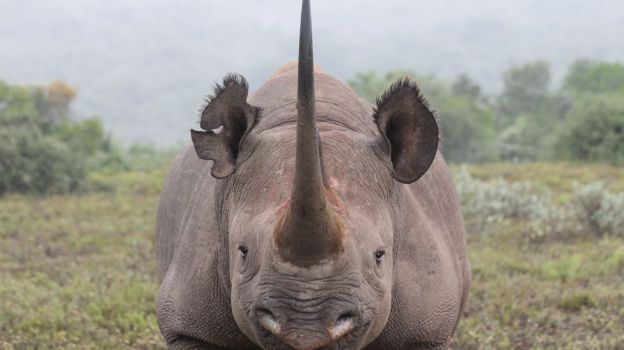
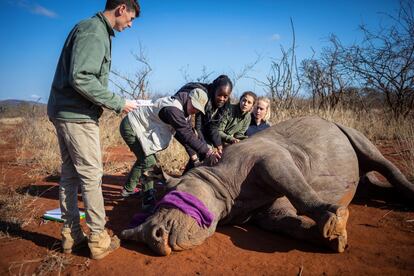
In a pioneering effort to combat wildlife trafficking of the threatened rhinoceros, a South African University began implementing a project supported by the International Atomic Energy Agency (IAEA). The project combines the safe insertion of radioactive isotopes into rhino horns… to deter and detect illegal poaching.

With over 10,000 rhinos lost to poaching in the past decade, South Africa – home to the world’s largest population of rhinos – remains a target for criminals driven by the illegal trade of rhino horn. In the first quarter of 2025 alone, the South African Ministry of Forestry, Fisheries and the Environment reported 103 rhinos poached. In response, this project run by the University of the Witwatersrand is using radiation to support conservation and enforcement efforts.

The Rhisotope Project was created in 2021 with the idea to tag rhino horns with radioactive material. This makes the horns detectable by radiation portal monitors (RPMs) already deployed at borders, ports and airports worldwide. These RPMs, commonly used to detect nuclear and other radioactive material, can now be harnessed against wildlife crime.

Excerpt from Nuclear Science and Nuclear Security Infrastructure to Protect Rare Rhinos: IAEA-Supported Project Marks a Milestone, IAEA News, July 2025

Colossal Efforts to Bring Back Species on the Brink of Extinction

Colossal Biosciences, the world’s first de-extinction company, announced on October 1, 2024 the formation of The Colossal Foundation…The Foundation is launching with three core programmatic focuses.

Saving today’s at-risk species: Colossal Foundation plans to build a model for integrating cutting-edge biotechnology with conservation efforts to bring back species that have been driven to the brink of extinction. The long term goal is to create a toolkit approach to simplify genetic rescue for conservationists. Initial projects include efforts focused on the Vaquita, Northern White and Sumatran Rhinos, Red Wolf, Northern Quoll, Ivory Billed Woodpecker, and Pink Pigeon.

R&D for Conservation: Colossal will partner to fund and deploy technologies that leverage artificial intelligence…Current projects include the Colossal drone-based anomaly detection system used by Save the Elephants, a vaquita acoustic monitoring program, and an AI-enabled orphaned elephant monitoring system leveraged by Elephant Havens in Botswana.

Ensuring Tomorrow’s Biodiversity: Developing a distributed genetic repository of species (a biobank) which can act as an insurance policy against unforeseen threats to biodiversity and provide a safety net for species facing extinction. The focus will be on those species closest to extinction to ensure their genetic diversity is not lost and the potential to bring them back, should the worst happen, remains. 

Vaquitas, a porpoise endemic to the Sea of Cortez/Gulf of California in Baja California, Mexico and the smallest of all living cetaceans, is on the brink of extinction. As of May 2023, only between 10 and 13 vaquitas remain. The loss of the vaquita could be a harbinger of further declines in the Gulf’s marine ecosystems, and the extinction of the vaquita would represent a cultural and symbolic loss. Colossal, in partnership with the Vaquita Monitoring Group and in support of the Mexican government’s La Comisión Nacional de Áreas Naturales Protegidas (CONANP) believes that there are low-impact technical solutions that can be used to safely biobank the existing animals while also helping to grow the vaquita population. …

Fewer than 80 Sumatran rhinos survive in tiny fragmented populations across the Indonesian islands of Sumatra and Borneo…Colossal Foundation will  supporting the Indonesian government’s work to breed Sumatran rhinos under their national conservation breeding program…in collaboration with Global Experts on the advance Assisted Reproductive Technology (a-ART) and Biobank program for the species…

The Colossal BioVault is an initiative, in partnership with Re:wild and others, to collect the primary materials needed to prevent extinction. By collecting tissue samples of the world’s most imperiled species in the Colossal BioVault, the Foundation intends to preserve and store biodiversity. 

Excerpts from Colossal Launches The Colossal Foundation, Business Wire, Oct. 1, 2024
Dirty Little Secrets: Farming Tigers for their Meat and Bones

The area around the Golden Triangle Special Economic Zone (SEZ), a swathe of north-western Laos..is famous for its tigers. Not wild ones, which have nearly all been killed in Laos, but captive animals, illegally trafficked and bred for their parts, which sell for thousands of dollars. 

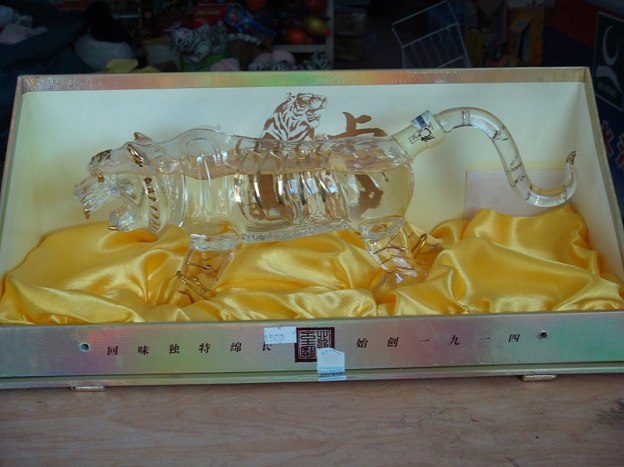
A century ago, around 100,000 tigers roamed the world’s jungles. Because of habitat loss and poaching, there are fewer than 4,000 wild ones today. More than twice as many are being held in at least 200 farms across East and South-East Asia. These range from small backyard operations to enclosures breeding hundreds in “battery-farm style”, says the Environmental Investigation Agency (EIA), an international NGO focusing on wildlife crime.  Breeding tigers and trading them and their parts is banned by the Convention on International Trade in Endangered Species, but this treaty is widely flouted in Asia because of poor law-enforcement and high demand for tigers. Belief in their medicinal properties has deep roots, especially in China. Tiger-bone wine, skins and jewelry featuring claws and teeth are status symbols. In Laos, carcasses can sell for as much as $30,000, officials reckon.

Some criminals choose to operate in Laos because…the government of Laos is allegedly complicit. America’s State Department recently reported that Laos was one of three countries that had recently “actively engaged in or knowingly profited from the trafficking of endangered or threatened species”. In 2016 an investigation by Britain’s Guardian newspaper found the Lao government had licensed two tiger farms and cut lucrative deals with wildlife traffickers smuggling millions of dollars’ worth of endangered animals—including tigers—through Laos.

The government has a 20% stake in Golden Triangle SEZ, a resort complex run by Zhao Wei, a Chinese businessman whom America’s Treasury last year accused of engaging in illegal trade in wildlife, as well as trafficking drugs and people (he denies the allegations). With its flashy casino and hotels, the SEZ is designed to attract Chinese tourists (gambling is illegal in China). In 2014 and 2015, EIA investigators found that restaurants in the SEZ were advertising “sauté tiger meat” and tiger-bone wine; shops were selling tiger skins and ivory tusks. Near the casino, 26 tigers stalked the length of their enclosure, destined for the slaughterhouse. Their bones were to infuse rice wine. Since the EIA’’s report, these establishments have closed.

Excerpt from: Tiger Farms in Laos: Law of the Jungle, Economist, Nov, 30, 2019

7 Frozen Embryos and the Resuscitation of Rhinos

SUDAN, the last male northern white rhinoceros on Earth, died in March 2018. He is survived by two females, Najin and her daughter Fatu, who live in a conservancy in Kenya. This pair are thus the only remaining members of the world’s most endangered subspecies of mammal. But all might not yet be lost. Thomas Hildebrandt of the Leibniz Institute for Zoo and Wildlife Research, in Berlin, in collaboration with Avantea, a biotechnology company in Cremona, Italy, is proposing heroic measures to keep the subspecies alive. In a paper published in Nature, he and his colleagues say that they have created, by in vitro fertilisation (IVF), apparently viable hybrid embryos of northern white rhinos and their cousins from the south. This, they hope, will pave the way for the creation of pure northern-white embryos.
Though stored sperm from Sudan and several other males are available, both Najin and Fatu now seem unable to conceive. This means, if the subspecies is to be preserved, that one or both of them will have to have some eggs removed from their ovaries and combined with stored sperm in a Petri dish;… and subsenquently implanted in the uterus of a southern white, who would act as a surrogate mother, with a reasonable hope of success.  That has not yet happened. The seven embryos are now in a freezer awaiting the results of research on how best to transfer them to surrogates. In the meantime, having proved their technique with these hybrids, Dr Hildebrandt and his colleagues now hope to create more embryos, this time using eggs from the two remaining female northern whites.

Even if they succeed, though, it will be a long haul back for the northern white rhino. Members of any new generation resulting from IVF will have then to be bred with each other to create subsequent generations—with all the risks of reduced biological fitness which such incest entails. It is not so much a gene pool that Dr Hildebrandt is working with as a gene puddle.

Then there is the question of what to do with the resulting animals. Analysis of other rhinoceros species, both in Africa and Asia, points to a viable population in the wild needing to be at least 500 strong. Even if such a group could be created, and not collapse from lack of genetic diversity, releasing it into the tender mercies of what remains of Kenya’s savannah would be risky.

Excerpts from Animal Conservation: Drinking in the last-chance saloon, Economist, July 7, 2018, at 66.

Re-Creating the Rhino

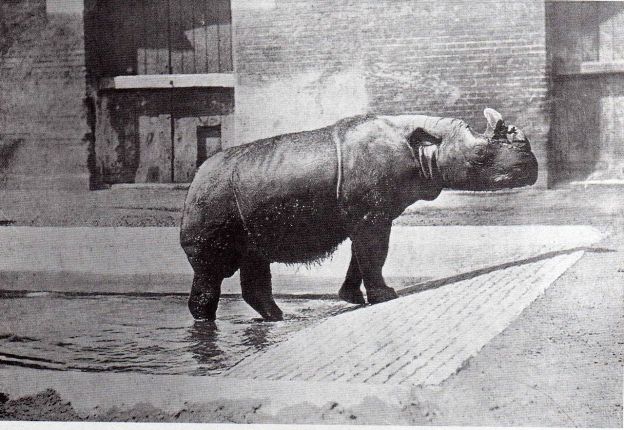
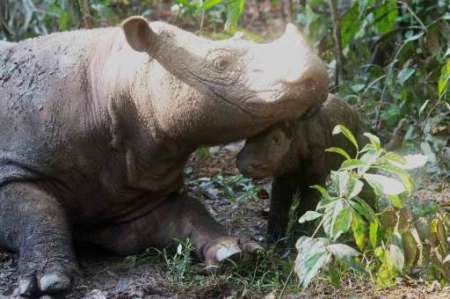
A Sumatran rhinoceros born in Indonesia has given renewed hope to environmentalists looking to save the critically endangered species.  A rhino named Ratu gave birth to the female calf on May 12, 2015, at a rhino sanctuary in the Way Kambas National Park on the island of Sumatra.

The new arrival for 15-year-old Ratu, and her mate Andalas*, follows the couple’s first baby Andatu, who made history in 2012 as the first rhino born in captivity in Indonesia in more than a century.

* Andalas, was born at the Cincinnati Zoo in 2001…. In 2001 he was the first captive Sumatran rhino born in 112 years  He moved to the sanctuary in Indonesia in 2007.

Excerpts from Rare Sumatran rhino born in Indonesia, Reuters,  May 13, 2016

Sumatran Rhinos

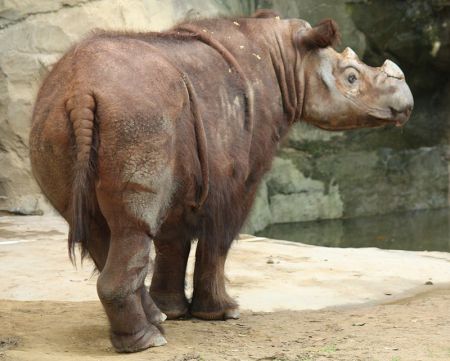
The last Sumatran rhino in the Western Hemisphere began a journey on October 30, 2015 from Ohio, United States to its ancestral southeast Asian homeland on a mission to help preserve the critically endangered species. …Conservationists hope Harapan can mate with one or more of the three females in the Sumatran Rhino Sanctuary in Way Kambas National Park….Numbers of the two-horned “hairy rhinos,” descendants of Ice Age wooly rhinos, have fallen by some 90 percent since the mid-1980s as development of their forest habitat and poachers seeking their horns took their toll. Including three Sumatran rhinos in a sanctuary in Malaysia, only nine are in captivity globally.

Harapan’s departure ends the Cincinnati Zoo’s captive breeding program for the species that produced three rhinos….Indonesian officials are anxious to get Harapan to their sanctuary. They have said they don’t want to be dependent on other countries in conservation efforts by sending rhinos to be bred abroad, but welcome technological or scientific assistance for their breeding program.Conservationists and government officials met in Singapore in 2013 for a Sumatran Rhino Crisis Summit to discuss ways to save the species.

Excerpts from DAN SEWELL, Sumatran Rhino Begins US-Asia Trip to Ancestral Home, Associated Press, Oct. 30, 2015