China filed a complaint in March 2024 at the World Trade Organization over the U.S.’s Inflation Reduction Act, saying that it was discriminatory and distorted fair competition. Under the Inflation Reduction Act, which President Biden signed into law in August 2022, consumers in the U.S. won’t be able to claim a $7,500 clean-vehicle tax credit if they buy cars containing battery components from a “foreign entity of concern” starting in 2024. The policy will extend to the minerals that go into battery components in 2025. The move was seen by industry players as a way to reduce China’s role in the U.S. EV-industry supply chain.
The definition covers any firm based in China, including subsidiaries of U.S. companies, as well as companies elsewhere that are 25% or more owned by state-backed entities from China. The rules also apply to Iran, North Korea and Russia. In February 2024, Biden ordered the U.S. Commerce Department to open an investigation into foreign-made software in cars, citing Chinese technology as a potential national-security risk. The probe could lead to restrictions on the use of certain parts in cars in the U.S.
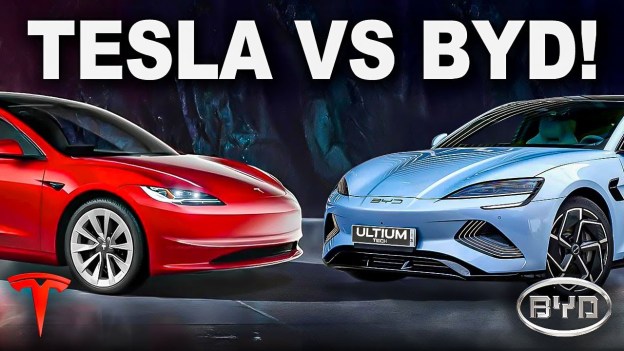
In 2023, China became the world’s biggest car exporter, surpassing Japan and Germany, while China’s EV maker BYD overtook Tesla to become the bestselling pure EV maker in the world in the fourth quarter of 2023.
Excerpts from Sha Hua, China Files WTO Complaint Against U.S. Over Electric-Vehicle Subsidies, WSJ, Mar. 26, 2024
 Law-In-Action